Arkansas State Broadband Office receives fed approval for digital plan

by Talk Business & Politics staff (staff2@talkbusiness.net)

The Arkansas State Broadband Office has received approval for its Digital Skills and Opportunity Plan from the U.S. Department of Commerce’s National Telecommunications and Information Administration (NTIA).

In 2022, the NTIA awarded the State Broadband Office $843,673 to develop its Digital Skills and Opportunity Plan. This funding was awarded as part of the Digital Equity Planning Grant Program – one of three broadband grant programs created in the Infrastructure Investment and Jobs Act of 2021.

“Expanding broadband infrastructure in Arkansas is critical to ensuring the success of our residents in the new digital economy,” said Glen Howie, director of the Arkansas State Broadband Office.

Arkansas State Broadband Office receives fed approval for digital plan

State officials take steps to avoid spread of avian influenza in dairy cattle

by George Jared (gjared@talkbusiness.net)

The U.S. Department of Agriculture (USDA) Animal Plant Health Inspection Service (APHIS) has confirmed highly pathogenic avian influenza (HPAI) in dairy herds in Texas, Kansas, Michigan, Idaho, and New Mexico.

Symptoms of the virus in dairy cattle include decreased lactation, low appetite, and thickening of milk.

To date, there have been no reported cases of HPAI in livestock within Arkansas, the state’s Department of Agriculture has reported. The Centers for Disease Control and Prevention (CDC) confirmed that a dairy farm worker tested positive for HPAI in Texas on April 1.

State officials take steps to avoid spread of avian influenza in dairy cattle

Cotton, Sullivan, Colleagues to Austin: NATO is Not a Charity

Washington, D.C. — Senator Tom Cotton (R-Arkansas), along with Senator Dan Sullivan (R-Alaska) and 20 of their Senate Republican colleagues, today sent a letter to Secretary of Defense Lloyd Austin requesting an update on how the Department of Defense evaluates U.S. activities as they relate to North Atlantic Treaty Organization (NATO) members’ defense expenditures, in compliance with the requirement in the FY24 NDAA.

Co-signing the letter were Senators Rick Scott (R-Florida), Marsha Blackburn (R-Tennessee), Joni Ernst (R-Iowa), Ted Budd (R-North Carolina), Kevin Cramer (R-North Dakota), Pete Ricketts (R-Nebraska), Mike Braun (R-Indiana), Ted Cruz (R-Texas), John Hoeven (R-North Dakota), Katie Britt (R-Alabama), Jerry Moran (R-Kansas), James Lankford (R-Oklahoma), Bill Hagerty (R-Tennessee), Marco Rubio (R-Florida), Tim Scott (R-South Carolina), Deb Fischer (R-Nebraska), Cynthia Lummis (R-Wyoming), Mike Rounds (R-South Dakota), Lindsey Graham (R-South Carolina), and Josh Hawley (R-Missouri).

In part, the senators wrote:

“NATO is not a charity; it’s a military alliance. All NATO members must bear a meaningful share of the burdens of collective defense.”

Full text of the letter may be found here and below.

April 4, 2024

The Honorable Lloyd J. Austin III
Secretary of Defense?
1000 Defense Pentagon
Washington, D.C. 20301-1000

Dear Mr. Secretary,

We write to you inquiring how the Department of Defense is implementing Section 1250 of the Fiscal Year 2024 National Defense Authorization Act (NDAA). This provision of law requires you to consider whether a NATO partner “has achieved defense spending of not less than 2 percent of its gross domestic product” when weighing decisions related to U.S. military basing, training, and exercises within the alliance.

We are committed to the historic NATO alliance and are encouraged that NATO countries collectively increased defense spending by 11% in 2023. However, a total of only 11 out of 32 NATO countries presently meet their defense spending commitments under the 2014 Wales and 2023 Vilnius Summit Declarations. According to optimistic estimates, 18 NATO nations are expected to meet their defense spending commitments this year. This means that barely half of NATO members will meet the deadline to increase defense spending to a minimum of two percent of gross domestic product—a deadline that was self-imposed and agreed to by unanimous consent.

Many wealthy NATO members have chronically shortchanged their own militaries and relied on other members of the alliance, particularly the United States, to make the investments necessary to achieve collective defense. The United States cannot be expected to satisfy its financial obligation if other NATO members are unwilling or unable to do the same. Our government must hold these allies accountable and Section 1250 of the FY24 NDAA is an important step in that direction.

NATO is not a charity; it’s a military alliance. All NATO members must bear a meaningful share of the burdens of collective defense.

We therefore request an update no later than April 25 on how the Department of Defense evaluates U.S. activities as they relate to NATO members’ defense expenditures, in compliance with the requirement in the FY24 NDAA.

We appreciate your attention to this important matter.

 Sincerely,

UAMS Jones Eye Institute Advises Eye Protection for April Eclipse

By Benjamin Waldrum

Proper eye protection is highly important when viewing an eclipse, said experts at the University of Arkansas for Medical Sciences’ (UAMS) Harvey & Bernice Jones Eye Institute.

On April 8, the continental United States will be treated to a total eclipse of the sun. This amazing phenomenon will be the first total eclipse to cross Arkansas since 1918. The path of totality, where the sun is completely covered by the moon, will last a little over two minutes in Little Rock and up to twice as long in the southwestern corner of the state.

“This amazing phenomenon is worth seeing, but you need proper eye protection to see it safely,” said Katie Brown, O.D., an optometrist with the Jones Eye Institute.

UAMS Jones Eye Institute Advises Eye Protection for April Eclipse

Pre-weaned calf deworming study showed improved weight-gain, added value

By John Lovett
University of Arkansas System Division of Agriculture
Arkansas Agricultural Experiment Station

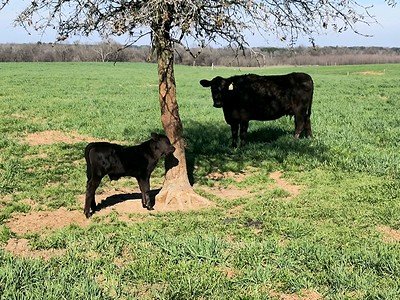
FAYETTEVILLE, Ark. — A recent Arkansas Agricultural Experiment Station study showed deworming calves about two months before weaning improved weight gain and added value for producers.

PRE-WEANED TREATMENT — Calves in a study at the Southwest Research and Extension Center in Hope showed more advancement when dewormed before being weaned. (U of A System Division of Agriculture photo)

Daniel Rivera, associate professor of animal science, said the weight gain translated to adding about $13 of value per head of cattle 21 days after weaning. With roughly 400,000 calves in Arkansas at 400 pounds or less, deworming before weaning could result in an additional $5.12 million to Arkansas beef cattle producers.

“Parasite burden can have a negative effect on performance,” Rivera said. “This can lead to reduced weight gain and other effects that are more difficult to measure, like immune response and vaccine efficacy. Some of these losses might be visible to producers, who will either sell their cattle at weaning or after a preconditioning program.”

A preconditioning program is a period, typically a minimum of 45 days, used to build the health status of a weaned calf before sale.

Rivera said most cattle ranchers usually do not handle their animals until they wean them. However, he had read studies that suggested pre-weaning management can have extended effects.

“I just wanted to see what the effect was, and we saw that small effect early on, but the fact that it carried through, even 56 days later, showed that some of these things that we do prior to weaning can have an impact later one,” Rivera said. “This, surprisingly, was one of them.”

The added labor for deworming pre-weaned calves, Rivera said, could be a full-day job for cow-calf producers in Arkansas and the cost of labor would need to be considered by the producer to determine if the process is right for them.

The calves dewormed before weaning averaged 4.5 pounds heavier than the control group that did not receive a dewormer before being weaned. That translated to $10.25 in value added per head at weaning time and $12.80 per head 21 days after weaning. The values are based on the Dec. 11, 2023, Arkansas Department of Agriculture market report for a 500-pound calf at $2.51 per pound. Calves have increased in value since then, with the late February-early March 2024 market report offering $3.04 per pound for 500-pound calves.

Finding answers

The study was conducted near Hope at the University of Arkansas System Division of Agriculture’s Southwest Research and Extension Center. Rivera is director of the facility and conducts research for the Division of Agriculture’s research arm, the Arkansas Agricultural Experiment Station.

For the study, Rivera's team randomly assigned calves to one of two groups. The calves in one group received a deworming treatment 60 days before the set date in October when they would be weaned. The other group was the control and did not receive deworming treatment before weaning. For the experiment, all calves were weighed and then either given a dewormer or not based on their assigned group. At weaning time, all the calves in the study were dewormed and vaccinated, including those already dewormed before being weaned.

Researchers took blood samples from the calves on their second round of vaccinations three weeks after weaning. The pre-weaned dewormed calves still had a 5.5-pound weight advantage over those that did not get a deworming treatment before being weaned.

A follow-up study will take place this summer at the center. Rivera’s team is analyzing the blood samples from the calves to see if pre-weaned, dewormed calves have different antibody levels than the control group. Antibodies are proteins the immune system produces to protect the body from illness.

“One of the things that happens when you have a parasitic infection is that the body starts to fight that infection and sometimes resources aren't available to mount other immune responses,” Rivera said. “One of our lines of thinking is that if we have this worm load on these calves, that may have a negative impact on their antibody production.”

Merck donated the dewormer used in the study. Use of a product name does not imply endorsement by the University of Arkansas System Division of Agriculture.

To learn more about Division of Agriculture research, visit the Arkansas Agricultural Experiment Station website: https://aaes.uada.edu. Follow on Twitter at @ArkAgResearch. To learn more about the Division of Agriculture, visit https://uada.edu/. Follow us on Twitter at @AgInArk. To learn about extension programs in Arkansas, contact your local Cooperative Extension Service agent or visit www.uaex.uada.edu.

Governor says Year 2 eligibility for Education Freedom Account participants is open

by Roby Brock (roby@talkbusiness.net)

Gov. Sarah Sanders said Monday (April 1) that a new cohort of eligible students could begin the application process for Education Freedom Accounts, the voucher program constructed under her LEARNS Act education overhaul that allows public school funding to follow students to other options, including private school or homeschooling.

Year 2 eligible children include those whose parents are veterans, military reserve members, first responders, and law enforcement officers, as well as students who previously attended D-rated schools.

The department began accepting applications for the 2024-2025 school year on Monday (April 1).

Governor says Year 2 eligibility for Education Freedom Account participants is open

Eperience the Eclipse April 8 in Arkansas

Arkansas State Parks

Embark on a celestial adventure in the heart of Arkansas during the highly anticipated Great North American Eclipse of 2024. Claim your viewing spot in the path of totality, stretching from the southwest corner to the northeast tip of The Natural State. Whether you crave the vibrant energy of a lively crowd or yearn for the serenity of wide-open spaces, Arkansas offers it all. Don't miss the opportunity to witness this phenomenon – let Arkansas be your front-row seat to the event of the year.

  • Path of Totality: The path of totality will stretch over 100 miles across The Natural State, extending from the southwest to the northeast. In some locations, lucky observers will experience over four minutes of total darkness.

  • Counties and Cities: 53 of Arkansas' 75 counties will fall within the path of totality, including major cities like Little Rock, Hot Springs, Texarkana, Conway, and Jonesboro.

  • Planning Your Adventure: Whether you want to be on water, in an urban setting, away from crowds, or at a park or museum, Arkansas boasts an abundance of great locations for your eclipse adventure.

2024 Attractions for Southwest Arkansas

Museum of Natural Resources/El Dorado
On January 10, 1921, near El Dorado a geyser of “black gold” spewed far over the 112-foot derrick of Arkansas’ first productive oil well. The town’s population quickly skyrocketed, creating the need for a new courthouse, more business space and larger churches. The prosperity would subsequently spread through 10 south Arkansas counties as more oil and natural gas was discovered. At the Arkansas Museum of Natural Resources in Smackover, the history of the state’s “oil boom” is told through films, historic photographs, geological and other exhibits, oil-era memorabilia and the Oil Field Park, which displays derricks and pumping equipment. Seven miles away, El Dorado’s downtown, centered around the Neo-classic 1928 Union County Courthouse, contains architecturally significant churches and other structures constructed in the 1920s and 30s and made possible by the new wealth. A diverse mix of shops, a variety of dining establishments and complementary landscaping and streetscape details add to the downtown atmosphere. The first phase of the Murphy Arts District (MAD) development project is open. The district centers on a state-of-the-art music, entertainment and restaurant complex and includes the Griffin Building.

Camden/McCollum-Chidester House
Civil War artifacts and displays on two of Camden’s historic products, Camark pottery and Grapette soft drinks are among exhibits housed in the Camden Visitors Center and Museum at 314 Adams Street S.W. In the spring of 1864, the Union Army briefly captured the town of Camden during a failed Civil War campaign. General Frederick Steele occupied the McCollum-Chidester House at 926 Washington Street, then the home of stagecoach operator John T. Chidester. Now hosting public tours, the house is mostly furnished with antiques original to the Chidester family, who moved into the home in 1857.

Cossatot River State Park-Natural Area
Designated a National Wild and Scenic River, the Cossatot offers adventurers the most challenging whitewater in Arkansas. The stream snakes over and between upturned Ouachita Mountains’ strata to create Cossatot Falls, with rapids and drops rated up to Class V in difficulty. Because of its upland watershed, the Cossatot rises and falls relatively quickly so floaters are advised to call ahead to verify sufficient water levels. The park’s Visitor and Education Center hosts exhibits focusing on the river and a wildlife viewing area. Interpretive programs are available. The park’s more than 5,480 acres extend about 11 miles on both sides of the river from just above the Ark. 246 bridge east of Vandervoort to about 1.5 miles below the U.S. 278 bridge east of Wickes. Facilities include campsites, picnic sites and hiking trails, including the 12.5-mile River Corridor Trail. A 24-hour river stage number is 870-385-3141. This gives paddlers the river stage in feet.

Crater of Diamonds State Park
Located southeast of Murfreesboro, Crater of Diamonds State Park is North America's only site where anyone can dig for diamonds and keep what they find. The park’s Diamond Discovery Center offers an audio-visual presentation giving tips on diamond hunting. Diamond displays and exhibits detailing the site’s history and geology can be found in the park’s visitor center. The park also has a campground, hiking trails, a picnic and play area, and a seasonal “Diamond Springs” water play area.

Daisy State Park
In this scenic setting in the foothills of the Ouachita Mountains, Lake Greeson, the Little Missouri River, and Daisy State Park are a draw for outdoor enthusiasts. Lake Greeson, 7,000 acres of clear water and mountain scenery, delights water enthusiasts. Catches of black and white bass, stripers, crappie, catfish, and bluegill account for its popularity with anglers. Daisy State Park is 1/4 mile south of Daisy off U.S. 70.

DeGray Lake Resort State Park
Arkansas’ only resort state park is located about eight miles north of Arkadelphia on 13,800-acre DeGray Lake, formed when the Caddo River was dammed in 1972. Located on an island and reached by a short causeway, is the park’s lodge. Hiking, water-skiing, sailing, jet-skiing, fishing, bird watching, and pleasure boating are popular DeGray activities. Visitors can get rental watercraft at the park marina to take advantage of the lake’s fishing or can launch their own craft for free. A full service marina is also available. The park also offers campsites equipped for RV or tent camping with water and electric hookups.

Felsenthal National Wildlife Refuge
This 65,000-acre refuge in south central Arkansas is widely regarded as one of the state’s best fishing venues. Other recreational options include hiking, wildlife observation and photography. Among birders, the refuge is known as a place where the endangered red-cockaded woodpecker can be added to one’s life list.

Garvan Woodland Gardens
The gardens are located on the shores of Lake Hamilton in Hot Springs and are part of the department of the University of Arkansas' Fay Jones School of Architecture. It is the only botanical garden in the nation that occupies all of a peninsula in a major water body. Popular garden attractions include the Anthony Chapel, a work of art that features a 57-foot, open-rafter ceiling supported by pine columns and crossbeams and the Joy Manning Scott Full Moon Bridge. There are also attractions such as the Evans Children’s Adventure Garden and the Fairy Village, which is made from objects and plants found from the Gardens’ 210-acre peninsula including tree stumps, twigs, stone, lichen, and ferns.The Bob and Sunny Evans Tree House can be found within the Evans Children's Adventure Garden and is an architectural marvel to see.

Historic Washington State Park
The town of Washington was founded in 1824 on the Southwest Trail just 15 miles from the Red River, which then separated American lands from the Mexican territory known as Texas. Because of its border proximity, Washington played a role in Texas’s 1835-36 war for independence. Evidence suggests that Sam Houston and others discussed plans for the revolt while Houston resided in one of the town’s taverns in 1834. The town also served as Arkansas’ Confederate capital after Union forces captured Little Rock in 1863. Historic Washington State Park preserves and showcases the town’s architecture, history and pioneer culture. Park visitors can get a sense of 19th- century life in Arkansas by taking historic tours and experiencing interpretive programs and demonstrations throughout the town. There are over 30 structures that date from the 1830s into the early 1900s. Authentic and splendidly furnished historic houses provide a glimpse of domestic life and contain many 19th century treasures such as furniture and ceramics. Noted attractions include the 1836 Hempstead County Courthouse that served as the Confederate capital, the reconstruction of a period blacksmith shop where the original Bowie knife was forged, the B.W. Edwards Weapons Museum, and a print museum showcasing 19th century printing techniques. In addition to tours and a variety of workshops, events, and distance learning programs, the park also offers rental facilities for group meetings, weddings and reunions. Williams Tavern Restaurant has country fare food with the capability of catering to various events utilizing park facilities. The park is nine miles northwest of Hope via U.S. 278.

Hope
This small town has two claims to fame: it is the birthplace of former U.S. President Bill Clinton and it showcases some of the world's largest watermelons. The town is located 25 miles northeast of Texarkana and 120 miles southwest of Little Rock. While here, check out the Hope Visitor Center and Museum. The museum is located in the restored 1912 railroad depot at Division and Main Streets. It contains exhibits on the town's history as a railway center for the cotton economy in earlier times and its on-going production of giant watermelons. The town is also home to the Klipsch Museum of Audio History. Klipsch is currently one of the leading loudspeaker companies in the nation. The museum tells the story of the company and Paul Klipsch (1904-2002), a Hope resident, audio pioneer and founder of the company.

Hot Springs
Hot Springs, the boyhood home of former U.S. President Bill Clinton, is one of Arkansas’ top tourist destinations. The city has a national park, a top flight Thoroughbred racetrack, a 210-acre botanical garden, a combination theme and water park, a thriving arts community, and attractions such as the Superior Bathhouse Brewery, the first brewery to be located inside a national park. The town is also home to Lake Catherine State Park and the nearby Lake Ouachita State Park. The city’s host of family attractions includes live music and magic shows  at the Maxwell Blade Theatre of Magic. The Bank OZK Arena is connected to the Hot Springs Convention Center and hosts concerts, sports events and touring shows. Three area lakes, Hamilton, Catherine and Ouachita, accommodate water-based recreation, private resorts and two state parks. Oaklawn has seasonal live racing and simulcast races during the rest of the year. Among the many features at Magic Springs Theme and Water Park is Splash Island, a giant interactive water play structure. Hot Springs has been rated a bronze-level Ride Center by the International Mountain Bicycling Association, IMBA, a designation that highlights communities that offer standout experiences for every style of rider, both on and off the bike.

Hot Springs National Park
Hot Springs and Hot Springs National Park owe their existence to an array of springs that still supply naturally heated water for thermal bathers. The Fordyce Bathhouse, located on famous Bathhouse Row, serves as the park’s visitor center. Hot Springs is the smallest and oldest of the parks in the National Park System. It dates back to 1832 when Congress established, 40 years ahead of Yellowstone, the first federally protected area in the nation's history. Hot Springs Reservation, which was renamed Hot Springs National Park in 1921, was created to protect the 47 naturally flowing thermal springs on the southwestern slope of Hot Springs Mountain.

Iron Mountain Trails
Some of the best-groomed mountain bike trails can be found at Iron Mountain on the south shore of DeGray Lake just outside of Arkadelphia. Fairly smooth with a few short technical sections thrown in, these are some of the best flow trails in the state of Arkansas.

Lake Ouachita
Arkansas’ largest reservoir is the 40,000-acre Lake Ouachita offers fishing for striped and largemouth bass and other sport fish in the backdrop of outstanding scenery. It is also a popular destination for scuba diving, pleasure boating, sailing and water skiing. A number of private resorts with marinas and other recreational amenities are located on its shores. Houseboat rentals are also available. Lake Ouachita State Park offers a marina, rental cabins, camping and hiking. Numerous U.S. Army Corps of Engineers recreation areas are also located on the lake, which was formed by the completion of Blakely Mountain Dam in the early 1950s.

Logoly State Park
At Arkansas' first environmental education state park, interpreters present workshops on ecological/environmental topics. The park's natural resources provide a living laboratory for students and visitors. Most of Logoly's 368 acres comprise a State Natural Area that includes unique plant species and mineral springs. Logoly State Park is located in McNeil.

Millwood State Park
In 1966, the longest earthen dam in Arkansas was completed on the Little River, forming in a mostly forested valley a lake so broad it covered portions of four counties. Relatively shallow and thick with timber, Millwood Lake soon became a fishing hotspot. Today, the lake and its environs enjoy a reputation as one of Arkansas’ top birding locations. Millwood has attracted migratory seabirds and shorebirds seldom if ever, seen elsewhere in the state. Due to its extreme southwestern Arkansas location, the lake is sometimes visited by species straying outside their normal ranges farther south and west. Campsites, a marina with watercraft rentals, a picnic area, trails and other amenities make Millwood State Park a great base for fishing and birding excursions. The park is located about nine miles east of Ashdown via Ark. 32.

Mount Ida/Quartz Crystals
The Ouachitas contains some of the world’s finest deposits of quartz crystals. Digging is available year-round. Several area mines allow patrons, for a fee, to dig and keep their finds. The area has many gem and mineral shops that sell crystals from all over the world. The area is also home to trails such as the Lake Ouachita Vista Trail, the Womble Trail and the Ouachita National Recreational Trail, which have all been designated IMBA (International Mountain Bicycling Association) Epics.

Northwoods Trails in Hot Springs
Experience world class mountain bike trails minutes from downtown Hot Springs. Designed and built by IMBA, the International Mountain Bicycling Association Trail Solutions crew, the Northwoods Trail system has something for all ages, skill level, and style of riding. Perfect for a day of XC riding or ripping down the flow trails catching some air. The trails include Green, Blue, and Black single track, multi-track, flow trails, and jump lines. The Northwoods is home to the annual Gudrun MTB Festival each November. northwoodstrails.org

Ouachita Mountains/Ouachita National Forest
The ancient Ouachitas now appear as the Rocky Mountains might look 300,000 millennia from now. The forest was established in 1907, making it the oldest and largest national forest in the South. Within the 1.8 million acre forest are hiking trails that provide visitors with an up-close experience of the aged mountains. Mountain views coupled with picturesque streams, rivers and lakes provide a highly valued setting for outdoor recreation. The forest, which is situated in central Arkansas and southeastern Oklahoma and headquartered in Hot Springs, offers nature related sightseeing and scenic driving as well as hunting, fishing and dispersed camping. An extensive trail system provides for all types of uses including hiking, mountain biking, horseback riding and routes for off-highway vehicles. Motor Vehicle Use Maps (MVUMs) for the Ouachita National Forest are available and it is legal to ride only those national forest roads, trails or areas shown on the maps. A variety of services can be found at developed campgrounds ranging from rustic tent pads to full-service RV hookups. Enjoy water-based recreation opportunities including fishing, non-motorized boating and enjoyment of streams, rivers and lakes. The forest has six wilderness areas (five in AR and one in OK) and two Wild and Scenic Rivers. The Talimena Scenic Byway winds along the top of Winding Stair and Rich Mountains on its way into Arkansas. Other highlights in the forest include the Ouachita National Recreation Trail, which traverses a lengthy 223 miles across the region, the Lake Ouachita Vista Trail, and the Womble Trail, which have all been designated IMBA ( International Mountain Bicycling Association) Epics.

President William Jefferson Clinton Birthplace Home National Historic Site
The two-story white frame house (which belonged to Clinton's grandparents) on South Hervey Street was where Clinton lived from his birth in 1946 until age four. The house is furnished with items that date to the time period when Clinton lived there. Clinton moved to Hot Springs when he was seven but the Hope home served as the center of his family life (he spent summers and weekends there) until his grandfather, Eldridge Cassidy, died in 1956 and the house was sold.

Poison Springs Battleground State Park
In the spring of 1864, three Civil War battles took place in south central Arkansas that were part of the Union Army's Red River Campaign. Arkansas' three state historic parks that commemorate these battles, Poison Springs Battleground State Park, Marks' Mills Battleground State Park and Jenkins Ferry Battleground State Park, are part of the Red River Campaign National Historic Landmark. Located ten miles west of Camden on Ark. 76.

Rick Evans Grandview Prairie Conservation Education Center
The nation’s largest contiguous tract of Blackland Prairie in public ownership is contained within this 4,885-acre, multi-use area owned by the Arkansas Game and Fish Commission. Outdoor recreation opportunities include fishing, seasonal hunting, hiking, and wildlife viewing. The limited availability of Blackland Prairie habitat makes wildflower walks and bird and butterfly watching of special interest at this site. Grandview is located in rural Hempstead County, two miles north of Columbus.

Texarkana
This city's boosters refer to it as Texarkana USA because it’s actually two towns with the same name – one in Arkansas; one in Texas. What's more, Tex-ark-ana is named after three states: Texas, Arkansas and Louisiana. The Arkansas-Texas boundary runs down the middle of State Line Avenue, passing through the State Line Post Office and Federal Building where tourists can pose on Photographer's Island with one foot in each state.

Queen Wilhelmina State Park/Talimena Drive National Scenic Byway
The Talimena Scenic Drive stretches for 54 miles along crests of the Ouachita Mountains between Mena, Arkansas and Talihina, Oklahoma and is a National Scenic Byway. Sitting atop Arkansas' second highest peak and located on the byway 13 miles west of Mena is Queen Wilhelmina State Park. Enjoy the panoramic view from Rich Mountain, Arkansas' second-highest mountain. Guests using the park’s campground often include hikers traversing the 223-mile Ouachita National Recreation Trail which runs through the park and motorcyclists riding the Talimena.

White Oak Lake State Park
Adjacent to Poison Spring State Forest, this park lies on the shore of White Oak Lake. Rich in wildlife, the park offers regular sightings of great blue heron, egret, osprey, and green heron, and in winter, bald eagles. The park marina offers boat and canoe/kayak rentals. A boat ramp provides access to the lake. The park, which is a few miles from Bluff City, has hiking and mountain biking trails.

National Weather Service Eclipse Weather Briefing for Arkansas

A large storm system will be over the southwest United States during the day of the eclipse. Ahead of the system, a south to southwest flow will bring increasing moisture and the possibility of clouds/chances of showers throughout the path of totality in Arkansas.  

Important to Remember: Despite vast improvements of weather models in recent years, any information over more than a few days of a specific time is subject to change. Forecast details will be fine tuned as additional data is received up to the time of the eclipse.   

ECLIPSE WEATHER BRIEFING

Severe Weather Briefing for Arkansas from the National Weather Service

Strong to severe thunderstorms are still expected to develop late this evening and continue into Monday night. The only real change to the forecast is the computer models continue to slow the progression of the system down.  

The northwest part of Arkansas continues to have the best chances of seeing severe weather with decreasing chances further to the southeast.

  •  Showers and thunderstorms are expected to develop Monday evening and into early Tuesday morning ahead of an approaching cold front. The computer models continue their trend of late in slowing the system down.

  • Some storms are expected to become strong to severe, especially over the northwest half of Arkansas. These locations will have the greatest overlap of severe thunderstorm ingredients Monday evening and into early Tuesday. While all severe weather hazards will be possible, large hail and damaging winds will be the primary concerns and isolated tornadoes will be possible.

  • Large hail and damaging straight-line winds are possible across the rest of the state as well, but chances decrease toward the south and east as the storms are forecast to weaken.

  • Southerly winds gusting upwards of 30 mph will be possible on Monday afternoon and evening.

Severe Weather Briefing PDF

Department of Agriculture launches ‘Arkansas Agritourism’ website

The Arkansas Department of Agriculture has added Arkansas Agritourism to the multi-platform website that includes the Arkansas Grown and Arkansas Farm to School websites. This collaboration connects consumers to local food, farm to school programs, and agritourism within the state and can be accessed through the following links:

aragritourism.com

arkansasgrown.org

arfarmtoschool.org

“Agriculture impacts every citizen in every community throughout our state,” said Arkansas Secretary of Agriculture Wes Ward. “This collaboration offers unique opportunities for producers, schools, and agritourism destinations to connect with one another and form partnerships that have positive, long-lasting impacts on our communities, state, and visitors.”

The connected website offers many features, including user-friendly interactive maps of Arkansas Grown and Arkansas Made products, school gardens, local procurement, farms, and agritourism destinations across the state. The site enables school nutrition directors and farmers to find each other and connect on one website platform with a simple click on the home page.

Department of Agriculture launches ‘Arkansas Agritourism’ website

UAMS Oral Health Clinic on Display at Open House

UAMS provost, chief academic officer and chief strategy officer Stephanie Gardner, Pharm.D., Ed.D., chats with staff.Image by Nathan Tidwell

By Nathan Tidwell

The Delta Dental of Arkansas Foundation Oral Health Clinic at the University of Arkansas for Medical Sciences (UAMS) recently welcomed visitors at an open house.

The Oral Health Clinic staff handed out oral hygiene supplies and spoke with the many guests who came through.

“The UAMS Oral Health Clinic is a tremendous asset not only to our patients and staff but also to the community,” said Stephanie Gardner, Pharm.D., Ed.D., UAMS provost, chief academic officer and chief strategy officer. “It’s an important aspect of our mission.”

The clinic celebrated its 10th anniversary in June 2023. An expansion added 3,490 square feet to bring the clinic’s total square footage to 12,800. The clinic went from 11 to 15 dental hygiene operatories, which are able to support three full-time hygienists.

UAMS Oral Health Clinic on Display at Open House

Arkansas planned acreage falls slightly overall; corn and wheat see deepest cuts

By Ryan McGeeney
U of A System Division of Agriculture

LITTLE ROCK — While overall intended crop acreage fell just 2.5 percent in Arkansas in 2024 to about 7 million acres, some crops saw significant shifts in acreage, according to a U.S. Department of Agriculture report released Thursday.

SHIFTING ACRES — The 2024 Prospective Plantings Report, compiled by USDA’s National Agricultural Statistics Service, found that acreage for most of the country’s principal row crops will likely only shift a few percentage points one way or the other this year. The report is based on self-reported planting intentions from growers across the United States. Nationally, projected crop acreage fell about 2 percent in 2024, to about 313.3 million acres. (Graphic courtesy USDA.)

The 2024 Prospective Plantings Report, compiled by USDA’s National Agricultural Statistics Service, found that acreage for most of the country’s principal row crops will likely only shift a few percentage points one way or the other this year. The report is based on self-reported planting intentions from growers across the United States. Nationally, projected crop acreage fell about 2 percent in 2024, to about 313.3 million acres.

Arkansas corn and wheat acreage take a nosedive

Arkansas intended corn acreage fell sharply, down 27 percent, from 850,000 acres to 620,000 acres. Wheat acreage also fell significantly in the state, down 41 percent from 230,000 acres to 135,000 acres. Nationally, corn acreage fell 5 percent to about 90 million acres, while producers said they planned to plant nearly 47.5 million acres of wheat, about 96 percent of what was planted in 2023.

Jason Kelley, extension wheat and feed grains agronomist for the University of Arkansas System Division of Agriculture, said that the significant drop in corn acreage was no surprise, given that the state was coming off a near-record-high year for acreage.

“Our acreage goes up and down every year,” Kelley said. “Last year, 2023, was the second-highest acreage we’d had since the early 1950s.”

He said profitability was likely the main driver for growers moving away from corn throughout the region.

“It looks like the whole Southeast was off quite a bit — 15 to 27 percent,” Kelley said. “The Mid-South was down 20-27 percent. So, it looks like most of our surrounding states had the same mindset.”

Similarly, wheat acreage was down in the East, falling in all but seven states.

Hunter Biram, extension agricultural economist for the Division of Agriculture, also said the drop in Arkansas corn acres, paired with a rise in soybean acres, was expected.

“Two factors that typically influence this shift are crop rotations and expected margins, with expected margins likely the driving force behind any acreage shifts beyond normal,” Biram said. “Last year, corn margins were far more favorable compared to soybeans, and that showed up in not only the Prospective Plantings report but also in the Crop Acreage Report released last June.

Over the past 20 years, soybean and corn acreage have both grown in the United States, with corn typically leading by as much as 50 percent some years. Over that span, however, soybean acreage has tightened the gap, actually tying the national acreage in 2017 at about 90 million acres each.

“This year, soybean margins appear more favorable, albeit not by much compared to corn,” Biram said. “Last year, the favorable margins were mostly driven by a relatively high corn-to-soybean price ratio, meaning corn prices were much higher relative to soybean prices. This year, there isn’t a crop price to get too excited about, but prices for key fertilizers have fallen to levels similar to the period prior to the Russian invasion of Ukraine.”

Projected Arkansas hay harvests appear to be keeping pace with the previous year, with growers expecting to harvest about 1.15 million acres, 99 percent of 2023’s total.

Arkansas long grain rice surges, medium grain falls back

Arkansas intended rice acreage shifted only slightly, growing 1 percent over 2023 acreage to 1.45 million acres. However, grower sentiment appeared bullish on long grain rice, jumping 11 percent from 2023 acreage to a projected 1.36 million acres, while pulling back on medium grain, falling by 58 percent to just 90,000 acres.

Nationally, planned rice acreage grew 1 percent to more than 2.93 million acres.

Jarrod Hardke, extension rice agronomist for the Division of Agriculture, said the report’s outlook for rice was in line with spring estimates.

“Long grain rice appears to be a profitable option, but seed supply issues are hindering further increases in acres,” Hardke said. “Medium grain is in lower demand for this year with few contracts or pricing premiums available in the wake of high acres and production last year.”

Biram added that the ambiguity of global markets is likely affecting acreage decisions.

“Among many drivers in rice acreage, one could be the possibility that India reverses their export ban on non-basmati rice, which was put in place in July 2023,” Biram said. “While that proved to be favorable for rice prices in the short run, with some cash prices reported at over $8 a bushel in the post-harvest window of January and February, the new crop futures contracts for rice are already indicating prices could land around $6.75 per bushel or lower. This is because when export supply is reduced in the global market, prices increases.

“Conversely, when export supply increases due to a lift on an export ban, for example, prices fall,” he said. “Perhaps producers were able to lock in price guarantees through area crop insurance, such as Enhanced Coverage Option or Margin Protection, trying to capture the tail end of a months-long price rally driven by the export ban. Otherwise, I suspect crop rotations and less-favorable corn margins are driving the increase in long grain rice acres.”

Arkansas soybeans rise steadily

Arkansas soybean acreage grew slightly, rising 4 percent over 2023 to 3,100 acres. This puts the state’s growers slightly ahead of the national soybean acreage outlook, which rose 3 percent to about 86.5 million acres.

Jeremy Ross, extension soybean agronomist for the Division of Agriculture, said it was no surprise to see Arkansas soybeans return to the “plus side” of 3 million acres.

“Historically, we’ve been above 3 million acres for the last several years, other than 2018-2019,” Ross said. “That’s when we had a lot of rainfall — the fall of 2018 and progressing into 2019. We had a lot of flooding issues, and 2019 was the lowest soybean acreage we’ve had since 1960.

“I think all of it points to China,” Ross said of the high acreage numbers. “China is our No. 1 destination for soybean exports. As their population increases, the demand for soybeans increases.”

He said much of 2023’s outstanding soybean yield was due to growers taking advantage of the early planting window, and that he foresees a similar fortune this year.

“Beans have been planted for almost a solid month in Arkansas,” Ross said. “Some of them look good, some not so good, mainly due to cooler weather. We had pretty much the earliest start ever last year, and we had record yields. I think some guys proved that when your beans are planted earlier, the yield potential is a lot better than delayed planting.

“Over the next seven days or so, it looks to be warm and dry, so I think there’s going to be a lot of land prep, and maybe some more beans planted,” Ross said Thursday. “I’m anticipating another good year.”

Peanuts hold, cotton grows

Arkansas producers appear to be holding steady, again planning to plant 35,000 acres of the legume, the same acreage as 2023.

Travis Faske, extension plant pathologist and acting peanut agronomist for the Division of Agriculture, said that peanut acreage throughout the state will likely be higher than the reported intentions.

“I still think we will be a few thousand acres north of 35,000 acres by the end of planting season, as the two primary peanut buying points in the state have indicated an increase in acreage,” Faske said.

Planned Arkansas cotton acreage grew 6 percent over 2023 numbers to 540,000 acres. This exceeded the national outlook, which grew 4 percent to more than 10.6 million planned acres.

“I suspect the reason cotton acreage increased by 6 percent is because cotton lint prices are more favorable compared to last year, but nothing like what we saw in 2021-2022,” Biram said.

“While crop rotations can explain most of the corn-soybean rotation, cotton acreage can likely be explained by the fact that a cotton farmer is going to farm cotton regardless of the price, due to the lack of versatility in equipment used to produce cotton,” he said. “The cotton lint price may shift acreage, but the degree of that shift will depend on what the cotton lint price is.”

To learn about extension programs in Arkansas, contact your local Cooperative Extension Service agent or visit www.uaex.uada.edu. Follow us on X and Instagram at @AR_Extension. To learn more about Division of Agriculture research, visit the Arkansas Agricultural Experiment Station website: https://aaes.uada.edu/. Follow on X at @ArkAgResearch. To learn more about the Division of Agriculture, visit https://uada.edu/. Follow us on X at @AgInArk. 

Inside the kitchen with Tyson Foods chef Thomas Wenrich

by Kim Souza (ksouza@talkbusiness.net)

Thomas Wenrich fell in love with food at age 15 while working in a small restaurant in his hometown of Hebron, Conn. As a teenager, he was hooked immediately. His family owned and operated an automotive parts store in Hebron, but Wenrich said he had no interest in working in that business.

“I love hospitality and the service of feeding people, the teamwork in the kitchen and the grunt and grind of taking these raw ingredients and turning them into a beautiful experience for someone. I fell in love with that process and knew that was what I wanted to do,” Wenrich said.

He worked in restaurants in the Northeast throughout high school and then attended Johnson & Wales Culinary School in Rhode Island. Over the next few years, he worked in restaurants and hotels in Providence. In 2008, Wenrich graduated with a bachelor’s degree in culinary nutrition, arts and chef training from Johnson & Wales. His first trip to Springdale was in 2009 for an intern position at the Discovery Center, where the company develops products for its customers. From that experience, he accepted a job as a chef with Newlywed Foods, a Tyson Foods supplier. Based in Springdale, he worked occasionally with the company’s culinary team.

Inside the kitchen with Tyson Foods chef Thomas Wenrich

UAM forestry program expands recruitment efforts with summer camp, grant funding

By Lon Tegels
U of A System Division of Agriculture 

The forestry program at University of Arkansas at Monticello is recruiting to expand the forestry workforce, powered in part by federal grant funding.

RECRUITMENT — Dr. Pipiet Larasatie (left) and her graduate student Kamala Chamlagain (right), who are working on the projects together.  (Division of Agriculture photo by Lon Tegels.)

Pipiet Larasatie, assistant professor of forestry for UAM, has received two federal grants to address recruitment in forestry. The first grant is part of an outreach project that will match eleven students from rural Arkansas high schools, vocational-technical institutions, or community colleges with eleven students from the UAM in a mentoring program. The program is designed to increase participation of underrepresented populations in science, technology, engineering, and math, commonly referred to as STEM, especially as they relate to forestry.

The $107,000 U.S. Department of Agriculture grant provides funding for students to attend summer camp at UAM’s campus and eventually prepare a project for a science competition in 4-H, Future Farmers of America or science fairs. The camp will be held June 3-6, and its application period is open through April 1. Interested individuals can apply at https://www.competitive-forest.com/wamsfor or email larasatie@uamont.edu for more information. Most Arkansas residents are eligible to apply.

Michael Blazier, dean of the UAM College of Forestry, Agriculture and Natural Resources, supports the mission.

“I think the action of doing these camps in and of themselves is important because even if these students that go through the program don't necessarily go right into forestry, it may open their eyes to similar opportunities,” Blazier said.

“It unlocks new potential in them,” he said. “That is the win that we at UAM get immediately from this. These students may be attracted to us sooner because they get quality time with our faculty, staff, and students while on campus. The longer-term benefit I’m hopeful for is that what we learn from these students will help our recruiting efforts by not only being better at reaching students geographically but culturally. That will be vital to our long-term success as a college and providing a workforce for the forestry profession.”

The program will pay participants a $1,000 stipend for their time at the summer camp and science project development.

“We have launched an open call,” Larasatie said. “We will initially interview 15 high school students, and depending on what motivates them, we will match the high school mentees with college mentors so that they can help them with their science journey and prepare for the science competitions. Once on the UAM campus, the mentee and mentor will spend time bonding to determine the student's science interests.

“They can choose their science project with the end goal that they will go to competitions such as 4-H, FFA, and Science Fair,” she said. After the UAM camp, the mentee and mentor will continue working on the science project online until the actual presentations.

The mentors will also receive mentorship training before the camp, Larasatie said.

“The project is twofold,” she said. “The first goal is to give them more exposure and opportunities to be involved in STEM-based forestry science projects and then be able to compete in the science competition.”

A second long-term goal is to encourage these young talents to enter forest sector workforce, Larasatie said.

Forest Grant to Research Attitudes of Workforce

The second grant that Larasatie is involved in focuses on identifying the existing workforce and exploring issues and opinions around recruitment and retention. The Forest and Wood Products Sector Inclusion Council funds the grant, led by the U.S. Endowment for Forestry and Communities.

Larasatie said she was particularly pleased about receiving this grant.

“This is an honor for us because this opportunity recognizes that we are doing the right thing,” she said. “This research is targeting all actors in the forestry and wood products workforce including students, employees, and recruiters. It includes participants along forest chains who manage forest ecosystem services across the United States' urban and rural landscapes.”

Larasatie is joined by graduate student Kamana Chamlagain, who completed her undergraduate degree in forestry study in Nepal and then worked as a conservationist with tigers and red pandas. For Chamlagain, her master's thesis will investigate the patterns of entry into the forestry workforce and the value of seeking natural resources careers.

“To sustain the forestry workforce, we want to make sure that we're recruiting students from a broad array of backgrounds, and we want to make sure that we're placing them in good jobs and continuing to be a resource for them,” Blazier said.

If you are in the forestry and natural resource sector, please fill the survey here: https://uark.qualtrics.com/jfe/form/SV_1NVKtClRXIG4SlE

About the Arkansas Center for Forest Business

Established in 2021, the Arkansas Center for Forest Business is part of the University of Arkansas, College of Forestry, Agriculture and Natural Resources. The Center provides technical assistance for market-based solutions to forest resource challenges, programs for degree and post-baccalaureate education, and information on timber supply, forest products markets and operational efficiency. The Center for Forest Business will provide market-based economic solutions to forest resource issues, improving business practices for forest enterprises, and enhancing economic competitiveness.

About the College of Forestry, Agriculture and Natural Resources and the Arkansas Forest Resources Center

The College of Forestry, Agriculture and Natural Resources, and the Arkansas Forest Resources Center, a University of Arkansas System Center of Excellence, brings together interdisciplinary expertise through a partnership between the University of Arkansas at Monticello and the University of Arkansas System Division of Agriculture. The College and Center are headquartered at the University of Arkansas at Monticello campus, but their programs range statewide with the mission of developing and delivering teaching, research, and extension programs that enhance and ensure the sustainability and productivity of forest-based natural resources and agricultural systems. Academic programs are delivered by the College of Forestry, Agriculture, and Natural Resources through the University of Arkansas at Monticello. Through the University of Arkansas System Division of Agriculture, research is administered by the Arkansas Agricultural Experiment Station, and extension and outreach activities are coordinated by the Arkansas Cooperative Extension Service.

The University of Arkansas at Monticello and the University of Arkansas System Division of Agriculture offer all of their programs to all eligible persons without regard to race, color, sex, gender identity, sexual orientation, national origin, religion, age, disability, marital or veteran status, genetic information, or any other legally protected status, and are Affirmative Action/Equal Opportunity Employers.

College of Medicine Class of 2024 Gathers on Gray Day for Colorful Match Day Celebration

By Linda Satter

The rain and fog outside didn’t dampen the bright smiles inside as students from the University of Arkansas for Medical Sciences’ (UAMS) College of Medicine Class of 2024 gathered March 15 in downtown Little Rock for its Match Day celebration.

Inside a second-story ballroom in Robinson Center, where the Broadway Bridge over the Arkansas River loomed large through glass walls, tension began filling the air at about 10:30 a.m., as seniors, sitting among family and friends, awaited the arrival of 11 a.m.

That’s when the National Resident Matching Program (NRMP) would release results showing which of  44,853 budding medical doctors, doctors of osteopathic medicine and graduates of foreign medical schools had matched to just 38,494 available residencies in the United States. The NRMP uses an algorithm to match the ranked lists of seniors and institutions, following weeks of applications and interviews.

College of Medicine Class of 2024 Gathers on Gray Day for Colorful Match Day Celebration

John Davis, political scientist, explains how Arkansas became a Republican state

KUAR | By Ronak Patel

In an interview with KARK Channel 4’s Capitol View, John Davis, executive director of the David and Barbara Pryor Center for Arkansas Oral and Visual History, explained how Arkansas went from being a Democratic state to a Republican state.

In an interview with KARK Channel 4’s Capitol View, Davis said the state took longer than the rest of the South to become a Republican state.

“Our demographics don’t really add up to the other southern states. A lot of the shifts really after the Civil War we saw more white conservatives feel alienated from the Democratic party and gravitate toward the Republican party. We didn’t really see that,” Davis said.

John Davis, political scientist, explains how Arkansas became a Republican state

Creative Commons

In recent years, Arkansas has become one of the reddest states in the nation. Prior to this, Arkansas used to be a Democratic stronghold.

Cotton, Colleagues to Biden: Hosting Iraqi Prime Minister is Inappropriate, Undermines Israel

Washington, D.C. — Senator Tom Cotton (R-Arkansas) and 7 of his congressional colleagues today sent a letter to President Joe Biden to express their deep concern with the White House’s plan to host Iraqi Prime Minister Mohammed Shia al-Sudani in April.

The letter notes that President Biden’s decision to meet with Prime Minister al-Sudani at this time sends the message that the Biden administration is more interested in appeasing Iran than supporting Israel defeat Hamas. The planned visit will occur even as Iraq continues to fund numerous terror groups and remains under significant Iranian influence.

Co-signing the letter were Senator Ted Budd (R-North Carolina), Senator Bill Hagerty (R-Tennessee), Senator Rick Scott (R-Florida), Congressman Jake Ellzey (Texas-06), Congressman French Hill (Arkansas-02), Congressman Mike Turner (Ohio-10), and Congressman Mike Waltz (Florida-06). 

Text of the letter may be found here and below.

March 28, 2024

President Joseph R. Biden
The White House,
1600 Pennsylvania Avenue NW
Washington, DC 20502

Dear President Biden,

We write to express our deep concern with your invitation to host Iraqi Prime Minister Mohammed Shia al-Sudani to the White House in April. 

Hosting the Iraqi Prime Minister, especially while failing to meet with leaders of some of our most trusted partners in the region, amplifies the message of your ongoing campaign to undermine Israeli Prime Minister Netanyahu: The Biden administration is interested in appeasing Iran, not supporting our allies. 

The Iraqi government remains under significant Iranian influence, and the Iraqi government provides some $3 billion per year to the Iran-backed Popular Mobilization Forces militias, including four U.S.-designated terrorist groups. These militias have attacked Americans and Kurdistan over 180 times just since October 7, 2023, resulting in three American servicemember deaths and over 100 casualties. Yet you continue granting sanctions waivers to the Iraqi government to import Iranian electricity and natural gas, all while using U.S. dollars transferred to Iraq from the Federal Reserve. And while you invite the Iraqi Prime Minister to visit Washington, you have refused to meet with Kurdistan Prime Minister Masrour Barzani, a critical partner and the host of the most U.S. forces in the region. 

The Iraqi government is actively working with Tehran against our Kurdish allies, including cutting off government funds and closing the Iraq-Turkey Pipeline, which represents most of Kurdistan’s economy. You should focus on reducing Iranian influence in Iraq and shoring up support for our partners in Kurdistan. As a precondition of any visit by Prime Minister al-Sudani, you should require the immediate reopening of the Iraq-Turkey Pipeline so that the Kurdistan Region is able to export oil and U.S. public and private financing are no longer threatened by Tehran’s influence in Baghdad. You should also require that the Iraqi government resume funding for the Kurdistan Region, the immediate sale of Kurdistan crude already at the Ceyhan port, and a full cycle of oil sales and payments to Kurdistan and its oil investors. Finally, you should not allow further U.S. dollar transfers to Iraq until the Treasury Department certifies that such transfers do not benefit the Iranian regime or its proxies.

Your appeasement of Iran has endangered American national security and weakened our relationship with our allies. While the corrective actions outlined here will not undo the damage you’ve caused, they represent an important first step.  Thank you for your attention to this important matter.

Sincerely,

Boozman, Heinrich, Kennedy Lead Introduction of Bipartisan Legislation to Restore Wetlands and Migratory Bird Habitat

WASHINGTON — U.S. Senators John Boozman (R-AR) and Martin Heinrich (D-NM), members of the Migratory Bird Conservation Commission, along with Senator John Kennedy (R-LA) lead their colleagues in introducing bipartisan legislation to reauthorize the North American Wetlands Conservation Act (NAWCA) through 2028. The legislation would also increase authorized annual funding for the program to $65 million. 

NAWCA was originally enacted in 1989 to provide federal matching grants —in partnership with funding from state and local governments, private industry and non-profit organizations—to projects that conserve North America’s wetlands, waterfowl and wildlife.  

“Tens of thousands of acres of wildlife habitat have been conserved in Arkansas thanks to NAWCA, which helps promote and maintain wetlands that serve as a world-class duck hunting environment. Ensuring we continue to protect and preserve it and other outdoor recreation sites not only benefits migratory bird populations and other species, it is also a sound economic investment. I’m proud to join Sen. Heinrich and our colleagues to introduce legislation reauthorizing this important program,” said Boozman.

“We owe it to our kids and grandkids to ensure they can inherit the full breadth of American wildlife and the wetlands that sustain them,” said Heinrich. “I’m proud to introduce this bipartisan legislation to bolster our nation’s most successful wetlands restoration program. By reauthorizing the North American Wetlands Conservation Act, this legislation will improve access to clean drinking water, invest in our thriving multi-billion-dollar outdoor recreation economy and conserve New Mexico’s wildlife and the habitats they depend on for future generations.” 

“Louisiana’s wetlands are a big part of our state’s outdoor sportsman culture and geographical beauty. The North American Wetlands Conservation Act is an important step to preserve our wildlife and protect our environment’s natural defense system,” said Kennedy

Wetlands secure freshwater supplies, recharge aquifers, and mitigate soil erosion and flooding. In addition, waterfowl, migratory birds, fish and other wildlife that depend on wetlands support multibillion-dollar outdoor recreation activities such as hunting, fishing, wildlife viewing, and photography. NAWCA funding has been critical to acquiring, restoring and enhancing this habitat in all 50 states, Canada and Mexico. In total, more than 3,300 NAWCA projects have contributed to the conservation and restoration of more than 32 million acres of habitat all across North America. 

NAWCA has provided a great return on investment, generating on average two additional dollars for every federal dollar. Over the program’s history, federal grants totaling more than $2.1 billion have spurred $4.3 billion for NAWCA projects through matching funds. NAWCA funds have also supported an average of 7,500 jobs each year and more than $5 billion in annual economic activity. 

The legislation was cosponsored by U.S. Senators Chris Coons (D-DE), Thom Tillis (R-NC), Debbie Stabenow (D-MI), Susan Collins (R-ME), Ben Cardin (D-MD), Amy Klobuchar (D-MN), Mike Crapo (R-ID), Tina Smith (D-MN), Jon Tester (D-MT) and Chris Van Hollen (D-MD). 

The North American Wetlands Conservation Act is endorsed by Delta Waterfowl, Boone and Crockett, Theodore Roosevelt Conservation Partnership, Backcountry Hunters and Anglers, Audubon, Association of Fish and Wildlife Agencies, Outdoor Industry Association, Chesapeake Bay Foundation and Restore America’s Estuaries. 

“NAWCA is a foundational pillar of the North American Model of Wildlife Conservation,” said Ducks Unlimited CEO Adam Putnam. “The voluntary, incentive-based approach has conserved millions of acres of habitat for waterfowl and other wildlife while helping improve water quality and quantity and making our communities more resilient.”  

“The North American Wetlands Conservation Act is one of the most cost-effective conservation investments we can make. Often matched at a rate of 3:1, this important program is a great example of how federal investments into conservation can be leveraged with private contributions to secure a significant return on investment to bolster on-the-ground conservation,” said Congressional Sportsmen’s Foundation President and CEO Jeff Crane.

“Wetlands shield against floods, help clean our drinking water and provide habitat for diverse plant and animal life. Reauthorizing the North American Wetlands Conservation Act is an opportunity for Congress to continue America's conservation legacy while sparking job creation and outdoor recreation opportunities.” said Tom Cors, Senior Legislative Director, The Nature Conservancy.  

“North America’s wetlands demonstrate what is possible for people, wildlife and clean water when we make strategic, concerted investments in conserving and restoring vital habitat,” said Andrew Wilkins, Land Conservation Policy Director, National Wildlife Federation. “This reauthorization bill will help keep our commitment to wetlands conservation strong and ensure that the people and wildlife whose work, water and way of life can endure for future generations. Congress should ensure the North American Wetlands Conservation Act remains one of America’s most successful conservation programs since it first passed in 1989.”  

The text of the bill is here

State's broadband director provides update on state's efforts to expand broadband

KUAR | By Ronak Patel

In a recent report ranking the broadband connectivity of the states, Arkansas ranked 49th. In an interview with Arkansas PBS, Glen Howie, the state’s broadband director, said the report does not reflect the progress the state has made.

“When you look at the remaining locations of 115,000 homes and businesses across the state that lack quality internet, you compare that to our geographic neighbors in the region and we’re ahead of them,” he said.

Howie said the state’s proactive approach to improving broadband access will help the state move forward. He said the state has already provided $550 million to communities to improve their internet. According to the Arkansas Department of Commerce, Arkansas is expected to receive about $1 billion in federal funding for broadband from the Infrastructure Investment and Jobs Act, which was passed by Congress in 2021.

State's broadband director provides update on state's efforts to expand broadband

Glen Howie Twitter Page

Glen Howie is responsible for helping the state expand broadband. He has been in the position of the state's broadband director since 2022.

Congressional candidate Jones forming veterans group, names Hollingsworth first campaign chair

by Steve Brawner (BRAWNERSTEVE@MAC.COM)

Marcus Jones, the retired U.S. Army colonel running as a Democrat to replace U.S. Rep. French Hill, R-Little Rock, said he would support veterans in Congress and announced he was creating a Veterans for Marcus group.

Jones made the announcement at the MacArthur Museum of Arkansas Military History March 28. He also announced that Pulaski County Clerk Terri Hollingsworth would be his first named campaign chair. The campaign plans to name others later.

Jones said there are 45,000 veterans in the 2nd District, which he said means there are more than 100,000 military-associated voters when their families are taken into account.

Congressional candidate Jones forming veterans group, names Hollingsworth first campaign chair