Group pushing for recreational marijuana in Arkansas releases first TV ad

by Marine Glisovic (msglisovic@sbgtv.com)

A new TV ad pushing for recreational marijuana is set to hit the airwaves on Wednesday (Aug. 31).

Responsible Growth Arkansas (RGA) is highlighting where some of the taxes derived from recreational cannabis sales will go in this new ad.

Whether Arkansans will see a recreational marijuana use question on the November ballot is yet to be determined as it is still being reviewed by the Arkansas Supreme Court. The State Board of Election Commissioners denied certification of the ballot title, but an appeal from the group’s supporters is being heard by the state’s high court. The court conditionally certified the measure to be on the November ballot while it decides whether the votes will count.

https://talkbusiness.net/2022/08/group-pushing-for-recreational-marijuana-in-arkansas-releases-first-tv-ad/

Sales tax gains push Arkansas tax revenue up 4.4% in August report

by Talk Business & Politics staff (staff2@talkbusiness.net)

Arkansas tax revenue in the first two months of the fiscal year (July-August) is $1.23 billion, up 3.5% thanks in large part to an 8.5% increase in sales and use tax collections. The year-to-date tax revenue is also 3.3% above the budget forecast.

After ending the previous fiscal year in June with a $1.62 billion surplus, the surplus after the first two fiscal months is 46 million, according to Friday’s (Sept. 2) report from the Arkansas Department of Finance and Administration (DFA).

Individual income tax revenue in the first two months was $518.5 million, up 2.3% compared to the same period in 2021, and 1% above the budget forecast. Sales and use tax revenue in the first two months was $560.5 million, up 8.5% compared with the same period in 2021 and up 6.9% above the forecast. Corporate income tax revenue was $42.1 million, down $9 million compared to the same period in 2021, and 0.5% below the forecast.

https://talkbusiness.net/2022/09/sales-tax-gains-push-arkansas-tax-revenue-up-4-4-in-august-report/

Pre-Labor Day gasoline prices highest since 2014

by Jeff Della Rosa (JDellaRosa@nwabj.com)

Headed into Labor Day weekend, retail gasoline prices have been the highest since 2014, but Arkansas has the lowest gasoline prices in the United States, according to recent reports.

On Aug. 29, the average prices in the United States were $3.83 per gallon, 69 cents per gallon, or 22%, higher than at the same time last year, according to the U.S. Energy Information Administration (EIA). On June 13, the prices reached a peak and have since fallen by $1.18 per gallon.

According to the AAA, Arkansas has the least expensive gas price average in the United States at $3.32 per gallon. The price is 7 cents less than last week but 48 cents more than last year.

https://talkbusiness.net/2022/09/pre-labor-day-gasoline-prices-highest-since-2014/

UA chancellor search zeroes in on 4 finalists, including interim chancellor Robinson

by Paul Gatling (pgatling@nwabj.com)

University of Arkansas System President Donald Bobbitt announced Friday (Sept. 2) four finalists to be the next chancellor for the UA campus in Fayetteville.

They are listed with their date of public forums:

  • Charles F. Robinson, Ph.D., interim chancellor, University of Arkansas, Fayetteville (Sept. 12)

  • Jay T. Akridge, Ph.D., provost and executive vice president for academic affairs, Purdue University (Sept. 14)

  • Daniel A. Reed, Ph.D., presidential professor of computational science, University of Utah (Sept. 16)

  • Cynthia Y. Young, Ph.D., founding dean of the College of Sciences, Clemson University (Sept. 19)

The finalists were selected with the help of a search committee chaired by Dr. Kim Needy, chair of the College of Engineering. According to a news release, the finalists will each participate in a public forum as a part of two-day visits to campus, including meetings with students, faculty, staff and university supporters.

https://talkbusiness.net/2022/09/ua-chancellor-search-zeroes-in-on-4-finalists-including-interim-chancellor-robinson/

Photo credit: Michael Barera

Researcher employs microorganisms to counter major disease affecting beef industry

By Fred Miller
U of A System Division of Agriculture

FAYETTEVILLE, Ark. — The little things living in a calf’s nose could be key to combating bovine respiratory disease, the single most costly illness affecting the beef industry.

MICROBIOMES — Jiangchao Zhao, associate professor of animal science, conducts research on the bovine respiratory microcbiome with an eye toward preventing or mitigating bovine respiratory disease in weaned calves. (U of A System Division of Agriculture photo by Fred Miller)

Jiangchao Zhao, associate professor of animal science at the Arkansas Agricultural Experiment Station, uses next-generation sequencing to identify the microorganisms populating the bovine nasal cavities, known as the respiratory microbiome. He has correlated those results with the presence or absence of bovine respiratory disease, also known as BRD, in calves to discover which microbiota benefit the animal’s health and which ones impair it.

The Agricultural Experiment Station is the research arm of the University of Arkansas System Division of Agriculture.

Costly disease

Zhao said BRD costs the beef industry as much as $2 billion per year, including animal death, reduction in feed efficiency and other ill effects, as well as for prevention and treatment costs. U.S. feedlots alone see up to $900 million in annual losses from BRD, according to an article, “Economic Effects of Bovine Respiratory Disease,” published in the Journal of Animal Science (https://bit.ly/3SWJRLg).

Feedlots, especially for calves that go straight there after weaning, present the greatest risk to the animals for acquiring BRD, Zhao said. More than 90 percent of large feedlots in the U.S. reported BRD as the most frequent disease, according to a report from the USDA’s National Animal Health Monitoring System in Fort Collins, Colorado.

“The calves are subjected to significant stress, going from weaning to shipping to the feedlot,” Zhao said. “Commingling with other animals adds to the risk. The first month at the feedlot is the highest period of vulnerability to the disease.”

Backgrounded calves, those that continue on pasture at a stocker operation after weaning, are less susceptible to BRD, Zhao said, but not immune. The animals are still under stress during transportation from the cow-calf farm to the backgrounding farm, which lowers their immune response when exposed to the disease.

Zhao said that backgrounding presents less stress and less exposure to BRD than going directly to a feedlot. “It’s a good practice. The calves develop healthier immune systems and are bigger and stronger when they finally go to the feedlot.”

However, more than half of U.S. calves go directly to feedlots after weaning, he said.

Microbiome correlation

Microbiomes are colonies of bacteria — good, bad or indifferent — that occupy cavities in animal bodies. Zhao and his research team investigate these microbiota in agricultural animals to determine how the populations affect the animals’ health.

In this study, funded by a four-year $400,000 grant from USDA’s National Institute of Food and Agriculture, Zhao is identifying microbiota species that correlate with occurrences of bovine respiratory disease in each animal.

Zhao’s research is being conducted in 30 calves at each of three Division of Agriculture research locations — the Milo J. Shult Agricultural Research and Extension Center in Fayetteville, the Southwest Research and Extension Center at Hope and the Livestock and Forestry Research Station near Batesville.

Zhao is collaborating on this research with animal science colleagues Beth Kegley and Jeremy Powell, Division of Agriculture statistician Jung Lee, and animal scientists John Richeson of West Texas A&M University and Sarah Capik of Texas A&M University.

“We’re working to understand the mechanisms of causation for the disease,” Zhao said.

BRD is almost always a co-infection, he said. A calf picks up a virus — not unlike humans catching a cold or flu — and then a pathogenic bacteria takes advantage of the animal’s compromised immune system.

“When you know what causes the illness,” Zhao said, “then you have a target for intervention.”

Using the next-generation sequencing, Zhao has been observing which genes are transcribed during a BRD infection, including genes both in the pathogen and in the animal’s immune system.

“Tracking the interaction between pathogen and host is very complicated, big data work,” Zhao said.

This study is combined with culturomics, Zhao said, to isolate both good and bad bugs from the bovine respiratory system. Microbiome samples from the swabs are spread onto petri dishes with different growth media and gases to simulate the respiratory system environment — a process known as “plating.” Then the bacterial colonies on the plates are analyzed for identification and characterization.

Zhao’s lab team has identified several potential probiotics based on big data analysis. Samantha Howe, a Ph.D. student in Zhao’s lab, was able to culture some of the bacteria. “She is working to verify the beneficial effects of these bugs to see if they can kill or inhibit the growth of pathogens,” Zhao said.

In follow up research, Zhao will feed those “good” bacteria back to the calves to see if they are able to stop or reverse a BRD infection.

This research could lead to the development of probiotic products that use the good bacteria as an intervention to cure or prevent BRD, Zhao said. Such products can be safer and more effective than antibiotics, to which bacteria can build resistance.

Advances in detection

In related research, Zhao has developed an easier method for detecting BRD or the pathogens that can lead to the disease.

The standard method for detecting BRD in sick or vulnerable cattle is to swab the nasopharyngeal cavity with a rhinostatics nasal swab. Zhao said the bovine nasopharyngeal cavity, the location of the respiratory microbiome, is very deep, reaching the entire length of the animal’s head to the top of the esophagus. Swabbing for a sample is a difficult procedure, and the cattle don’t much like it, either.

Zhao investigated the use of shorter swabs to sample the front of the calves’ nasal passage — the area immediately inside the nose. He was able to demonstrate that this easier method is as accurate as the standard method while causing far less discomfort to the animal. He is developing a test kit that beef producers can use in the field to collect samples that can be submitted to a lab for analysis.

In a second phase of the research, he wants to develop a self-test kit that uses a system similar to the now-familiar home test kits for COVID-19. After sampling, the swab is smeared on a prepared test paper that will indicate whether the animal is BRD positive or negative.

Such a test may be used to determine if a calf has a higher concentration of either the “bad” bacteria that may lead to BRD infection or of the “good” bacteria that help prevent it.

Being able to identify which animals are at higher or lower risk of infection means veterinarians can focus intervention on fewer animals, saving money and lowering the risk of developing antibiotic-resistant bacteria.

To learn more about Division of Agriculture research, visit the Arkansas Agricultural Experiment Station website: https://aaes.uada.edu/. Follow us on Twitter at @ArkAgResearch and on Instagram at @ArkAgResearch. To learn more about the Division of Agriculture, visit https://uada.edu/. Follow us on Twitter at @AgInArk.

RUTLEDGE JOINS COALITION SUPPORTING RELIGIOUS LIBERTY OF NAVY SEALS

LITTLE ROCK– Arkansas Attorney General Leslie Rutledge joined 21 attorneys general in filing an amicus brief before the U.S. Court of Appeals for the Fifth Circuit in support of the religious liberty of Navy SEALs seeking exemptions from the Biden Administration’s pursuit of universal COVID-19 vaccination requirements.

“The men and women of our armed forces have sworn to fight for our constitutional freedoms, including our religious freedoms. Now it is time we fight for theirs,” said Attorney General Leslie Rutledge. “The Biden Administration’s attempts to discount the religious beliefs of our servicemen contradict everything we stand for as Americans.”

The Biden Administration is urging the courts to defer to the executive branch regarding the vaccine mandate, even if it overrides constitutional, fundamental religious freedoms. The coalition argues that states have successfully balanced freedoms and sensitive state interests during the COVID-19 pandemic, and that Americans should be skeptical of the Biden Administration’s claims of broad legal authority.

The case has previously reached the Supreme Court of the United States. On an emergency motion, the Biden Administration asked the Court to partially stay an injunction against the vaccine mandate for the SEALs. The Supreme Court only allowed the requirements to remain if the mandates affected assignments, deployments or operational decisions. The case now continues in the Fifth Circuit.

The brief is led by Mississippi and signed on to by Attorneys General of Alabama, Alaska, Arizona, Arkansas, Florida, Indiana, Kansas, Kentucky, Louisiana, Missouri, Montana, Nebraska, New Hampshire, Oklahoma, South Carolina, Tennessee, Texas, Utah, Virginia, West Virginia and Wyoming in U.S. Navy SEALs 1-26 v. Biden, which can be found here.

Sevier County Judge, Greg Ray, passed away on Tuesday, August 30th, at age 61

Gregory Emmett Ray, Sr. age 61, a resident of De Queen, Arkansas died Tuesday, August 30, 2022 at his home.

Greg was born August 13, 1961 in De Queen, Arkansas. He was, and loved being, the Sevier County Judge. He was a Baptist and loved fishing, the Razorbacks and spending time with family.

He was preceded in death by his father, R.L Ray; two fathers in law, Tommy Jordan and Don Smith.

He is survived by his wife, Leslie Jordan Ray; one son and daughter-in-law, Emmett and Jennifer Ray; two granddaughters, Emma and Andi Kate Ray; his mother, Polly Ann Willis Ray Williams; one brother, Tony Bob Ray; one sister and brother-in-law, Melinda and Ricky Munn and a number of nieces and nephews.

Funeral services for Greg will be held at 10:00 a.m., Saturday, September 3, 2022 in the First Baptist Church in De Queen with George Frachiseur officiating. Burial will follow in West Otis Cemetery under the direction of Wilkerson Funeral Home in De Queen.

Family will receive friends from 5:00 p.m., to 7:00 p.m., Friday, September 2, 2022 at the funeral home.

You may leave a condolence online at www.wilkersonfuneralhomes.com

Relinda Ruth of UA Cossatot contributing to OER and OEN national events

Relinda Ruth of the UA Cossatot OER and Arkansas OEN

Our money-saving textbook policy is one aspect of a UA Cossatot educational experience that is different from many other colleges. Relinda Ruth not only heads up our Open Education Resources, but she is a recognized leader in the state in this field. Relinda was recently interviewed by the Open Education Network. That interview can be found at https://open.umn.edu/.../member-spotlight-arkansas...

Recently, the ACC joined the OEN. The OEN recently interviewed Relinda Ruth about Arkansas’s move toward OER and the ACC’s recent membership to the OEN. They published the interview on their blog- https://open.umn.edu/oen/blog-and-events 

As the Arkansas OEN leader, Ruth participated in a 3-hour synchronous Zoom session on Wednesday morning. The presenters for the train-the-trainer event were Meggie Mapes, Introductory Course Director at the University of Kansas, and Cheryl Casey, Open Education Librarian at the University of Arizona. 

There are 8 OEN delegates around the state, and institutions can select three individuals to serve as OER ambassadors. Arkansas can have 75 Open Educational Resource (OER) ambassadors among the ACC’s institutions. Ambassadors will be trained to bring expertise, mentorship, and best practices back to their member community. They will learn to facilitate workshops to engage and support faculty through a train-the-trainer event.  

Biden loan forgiveness plan could erase $3 billion in Arkansas student debt

KUAR | By Daniel Breen

Billions of dollars in student loan debt owed by Arkansans could be forgiven as a result of the Biden Administration’s new student loan forgiveness plan.

The plan, announced Wednesday, aims to cancel $10,000 of student debt for most people making less than $125,000 a year. It would also forgive $20,000 of debt for recipients of Pell Grants, which are typically for undergraduate college students with “exceptional financial need.”

Tony Williams is director of the Arkansas Student Loan Authority, a division of the Arkansas Development Finance Authority and the state Department of Commerce. Speaking with KUAR News, he said a lot of Arkansans stand to benefit from the debt relief plan.

https://www.ualrpublicradio.org/local-regional-news/2022-08-26/biden-loan-forgiveness-plan-could-erase-3-billion-in-arkansas-student-debt

LA Johnson/NPR

As much as $3 billion in student debt could be forgiven in Arkansas as a result of President Joe Biden's new loan forgiveness plan.

New Arkansas legislative ethics investigation begins

KUAR | By Michael Hibblen

The Arkansas Senate Ethics Committee on Friday held its first hearing regarding an apparent complaint that has been filed. Few details are known about this latest investigation as most of the meeting happened behind closed doors.

It comes a month after two senators were sanctioned for violating reimbursement rules. Sen. Alan Clark, R-Lonsdale, acknowledged asking Sen. Mark Johnson, R-Ferndale, to add his name to a sign in sheet at an event he did not attend, enabling Clark to receive a $155 per diem. There are indications Clark may be involved in making this latest complaint.

Sen. Kim Hammer, chairman of the committee, cited a rule at the start of Friday’s meeting allowing him to call it into executive session, “as the committee members will review the documents submitted to them regarding the current petition.”

https://www.ualrpublicradio.org/local-regional-news/2022-08-26/new-arkansas-legislative-ethics-investigation-begins

Michael Hibblen/KUAR News

Members of the Arkansas Senate Ethics Committee at the start of a meeting Friday to consider a complaint.

Energy officials tout benefits of Inflation Reduction Act; UA solar project announced

by Jeff Della Rosa (JDellaRosa@nwabj.com)

A new federal law that’s expected to impact climate change will extend or establish tax incentives for solar arrays, electric vehicles and U.S. manufacturers of solar array components, Arkansas energy officials said.

On Friday (Aug. 26), the Arkansas Advanced Energy Association hosted a virtual event to highlight how the Inflation Reduction Act will affect the energy industry. On Aug. 16, President Joe Biden signed the act into law after Congress approved it along party lines. The Arkansas Congressional Delegation voted against it.

Paul Osborne, partner for HCJ CPAs and Advisors, discussed the act’s $369 billion in climate and energy-related provisions that includes new or extended tax credits. He said a solar production tax credit that had expired in 2006 has been restored under the new law.

https://talkbusiness.net/2022/08/energy-officials-tout-benefits-of-inflation-reduction-act-ua-solar-project-announced/

Sen. Ingram says Medicaid expansion staved off hospital crisis, new factors causing concern

by Roby Brock (roby@talkbusiness.net)

Sen. Keith Ingram, D-West Memphis, noted that a near decade of help from the state’s Medicaid expansion program has stabilized Arkansas’ health care system, but now a new set of circumstances is challenging hospitals’ financial health.

In an interview on Talk Business & Politics, the chair of the Senate’s Hospital and Medicaid subcommittee, said the private option, also known as Arkansas Works and ARHome, has been an effective “backstop” to guard against hospital closures, especially in rural parts of the state.

“The Medicaid expansion – Arkansas Works, ARHome – is going to be 10 years old in 2023. Without that backstop, we would’ve lost so many rural hospitals in Arkansas, like the states that surround us. They’ve had a tremendous amount of hospital enclosures. So what has happened is that staved off the financial crisis that other states have gone through until this point,” he said.

https://talkbusiness.net/2022/08/sen-ingram-says-medicaid-expansion-staved-off-hospital-crisis-new-factors-causing-concern/

Natural gas power plants generate record electricity levels in July

by Jeff Della Rosa (JDellaRosa@nwabj.com)

The amount of electricity produced from coal continues to fall, while the amount made from natural gas hits record highs, according to the U.S. Energy Information Administration (EIA).

On July 21, electric power generated by natural gas-fired power plants reached 6.37 million megawatts-hours. New record highs also were set on July 18 and 20. Despite high natural gas prices, demand for natural gas for electricity generation was strong throughout July because of above-normal temperatures, recent natural gas-fired capacity additions, and reduced coal-fired electricity generation.

U.S. electricity demand typically peaks in the summer because of demand for air conditioning, and July ranked as the third hottest on record in the United States. Before this year, the previous daily peak for natural gas-fired electricity generation happened on July 27, 2020, when natural gas prices were historically low.

https://talkbusiness.net/2022/08/natural-gas-power-plants-generate-record-electricity-levels-in-july/

U.S. Appeals Court upholds ban on Arkansas’ law blocking gender transition

by Talk Business & Politics staff (staff2@talkbusiness.net)

The 8th Circuit U.S. Court of Appeals on Thursday (Aug. 25) upheld a preliminary injunction against an Arkansas law that bans gender transition procedures for those under age 18. Plaintiffs say the law, Act 626, violates the U.S. Constitution’s equal protection clause.

Act 626 prohibits physicians and health care professionals from providing gender transition procedures to individuals under age 18, or to refer minors to other health care professionals. It also prohibits the use of public funds or insurance coverage for gender transition procedures. It does not prohibit services for persons born with a “medically verifiable disorder of sex development,” such as external biological sex characteristics.

The law was the first in the nation to block medical procedures for gender transition. Gov. Asa Hutchinson vetoed the bill, but the Legislature overrode the veto.

https://talkbusiness.net/2022/08/u-s-appeals-court-upholds-ban-on-arkansas-law-blocking-gender-transition/

Division of Agriculture demonstrates one possible ‘future of weed control’

By Ryan McGeeney
U of A System Division of Agriculture

KEISER, Ark. — The future of weed control may come down to selectivity.

Using visual recognition and machine learning to selectively spray pesticides in crop fields, versus simply broadcasting chemicals over an entire area, is the core concept behind a technology that researchers with the University of Arkansas System Division of Agriculture have been evaluating for several years.

On Aug. 23, growers, consultants and other agriculture industry professionals had the opportunity to see an iteration of that technological concept in action at the Division of Agriculture’s Northeast Research and Extension Center at Keiser in northeast Arkansas.

COVERED — Water containing blue dye is broadcast from a tractor boom during a demonstration of John Deere's See & Spray Ultimate technology, which can use machine learning to selectively spray herbicide on weeds in row crops. The demonstration was held at the Division of Agriculture's research facility at Keiser, Arkansas. (Division of Agriculture photo.)

The system, known as See & Spray Ultimate, uses a series of digital cameras mounted on 120-foot booms affixed to a tractor to identify and spot-spray weeds in post-emergent applications. The original concept was developed by Blue River Technology in California to thin lettuce patches. When John Deere acquired Blue River about five years ago, the concept was expanded to identify and eradicate weeds in row crop agriculture.

Jason Norsworthy, distinguished professor of weed science for the Division of Agriculture, has been evaluating the system in test plots at the Keiser Research Station since 2017. Norsworthy, whose work is part of the Arkansas Agricultural Experiment Station, the Division of Agriculture’s research arm, said that between growing resistance to existing chemistries and increasing environmental concern, technologies like the See & Spray are likely to become increasingly necessary in row crop agriculture.

“Each year, we’re losing herbicides because of environmental contamination,” he said. “Being able to place the herbicide where the weed actually is will make those herbicides more efficient.”

During Tuesday’s demonstration, a John Deere employee drove a tractor over a cotton test plot, spraying water with blue dye over the rows using nozzles on a 120-foot tractor boom. The purpose was to demonstrate the system’s coverage at both relatively low and high weed detection settings and tractor speeds.

Norsworthy discussed typical reductions in herbicide consumption using both broadcast and selective “spot” spraying, as well as additional ramifications of each approach.

“I don’t think that this technology is going to be one to allow us to take the residual herbicides out of the post-emergence applications, but it is going to put more emphasis on trying to keep those fields clean, and in doing so, I think there’s considerable cost savings that can result when we have strong residuals,” he said. “I think what we’ve seen today is the first of many more iterations to come. It’s really the platform — as the software and computer speed evolves, I think we’re going to see further advancements in terms of being able to locate and identify weeds and properly target that spray application.”

After the tractor demonstration, Tom Barber, extension weed scientist for the Division of Agriculture, moderated a panel discussion that addressed questions about the See & Spray Ultimate technology. The panel included Norsworthy, Tom several John Deere and Blue River Technology representatives and several Arkansas farmers.

Travis Senter, a Mississippi County farmer who had participated in evaluating the technology, said it took some getting used to.

“We used the sprayer on several crops,” Senter said. “We used it on rice … we used it on some beans, but mostly we used it on cotton. It’s got its place.

“It took us a while for my driver to kind of get acclimated to it,” he said. “We were actually a little scared of it. And once we got in it and got going, it works good.”

Chad Yagow, John Deere business agronomy lead for the See & Spray Ultimate system, said the company has been working with four land grant universities, including the University of Arkansas, to develop and improve the technology, as well as running mirror trials with a contract research firm in Mississippi.

Yagow said 50 units will be available for purchase in 2023. In 2024, John Deere plans to release more units to the open market, based on consumer demand. Pricing details for the system will be released to the public through John Deere dealers on Sept. 15, he said.

To learn about extension programs in Arkansas, contact your local Cooperative Extension Service agent or visit www.uaex.uada.edu. Follow us on Twitter and Instagram at @AR_Extension. To learn more about Division of Agriculture research, visit the Arkansas Agricultural Experiment Station website: https://aaes.uada.edu/. Follow on Twitter at @ArkAgResearch. To learn more about the Division of Agriculture, visit https://uada.edu/. Follow us on Twitter at @AgInArk.

Arkansas researcher’s collaborative method may reveal solutions to water quality issues

By Brittaney Mann
U of A System Division of Agriculture

FAYETTEVILLE, Ark. — Preventing fertilizer run-off from farms is essential to preserving water quality. But preventive measures also help farmers get the most use from their fertilizer.

WATER QUALITY — Shannon Speir, assistant professor of water quality, will conduct research on the Beaver Lake Watershed. (U of A System Division of Agriculture photo by Fred Miller)

“It is about realizing that you are on the same playing field and on the same team,” Speir said. “I think that that really ends up getting the most holistic and beneficial product or outcome of the collaboration.”

Shannon Speir, assistant professor of water quality at the Arkansas Agricultural Experiment Station, said partnerships with farmers allow her to efficiently conduct research while considering those farmers’ needs.

Speir joined the Experiment Station, the research arm of the University of Arkansas System Division of Agriculture, in early August. She works within the department of crop, soil and environmental sciences, where she earned her master’s degree in 2016.

In addition to investigating how to maintain nutrients on the landscape and out of streams and rivers, she will teach courses through the Dale Bumpers College of Agricultural, Food and Life Sciences at the University of Arkansas.

Eventually, she also plans to work with local entities to develop community outreach projects, providing education on septic systems and other aspects of water quality.

For her first research project, she will begin a pilot study on three streams — Richland Creek, Brush Creek and Roberts Creek — in the Beaver Lake watershed in September.

“A lot of the issues here in northwest Arkansas are concerns around drinking water problems,” Speir said. “Especially with the Beaver Lake watershed and the reservoir.”

The primary source of freshwater in northwest Arkansas is Beaver Lake, according to a Cooperative Extension Service fact sheet. It is “…crucial to meeting Northwest Arkansas’s increasing demands for abundant high-quality water.”

The study will help determine the location for the first Arkansas Discovery Watershed as part of the Arkansas Discovery Farms Program. The Arkansas Discovery Farms Program, administered by the Division of Agriculture, centers on engaging farmers in the conservation process by conducting research on conservation practices on farmers’ fields.

Speir also researched watersheds for her Ph.D. dissertation at the University of Notre Dame. She wanted to reveal the effect of conservation on multiple farms within the watershed and see how it impacted water quality leaving the drainage area. To determine the quality of water, she measured nitrogen and phosphorus levels.

Speir was not always involved in the agricultural side of water conservation. As an undergraduate student at Texas Christian University, she focused on mercury contamination and how mercury moves from water bodies into the terrestrial food web.

“I knew that when I was going to grad school, that I wanted to stick with this contamination issue, but I didn’t know where it was going to take me,” Speir said.

At the University of Arkansas, graduate-level courses introduced Speir to the agricultural aspects of water quality. She did experimental work on vegetative agricultural ditches to see how effective those are at removing nutrients from run-off.

Jeff Edwards, department head of crop, soil and environmental sciences, said Speir’s expertise and experience will strengthen the Division of Agriculture’s research portfolio in water quality and management.

“The water issues our stakeholders are facing are not going away, and we are very fortunate to hire someone with Dr. Speir’s diverse research experience,” Edwards said. “The issues we are facing in the area of water quality are not specific to one discipline, and Dr. Speir’s collaboration-focused approach is what we need to help provide solutions for Arkansans.”

Speir earned her bachelor’s degrees in biology and Spanish from Texas Christian University in 2014, her master’s degree in crop, soil and environmental sciences from the University of Arkansas in 2016 and her Ph.D. in biological sciences from the University of Notre Dame in 2021.

“I think one of the most interesting things is to be able to work with farmers,” Speir said. “And I think that brings a whole other side of this.”

As a researcher, “you get to really build these relationships and see what your work is doing on the ground. It kind of ties back to that societal benefit component that I am really passionate about.”

SW Arkansas COVID-19 Active Cases

Active Cases Data for Sevier County
Total Active Cases: 73

Active Cases Data for Howard County
Total Active Cases: 63

Active Cases Data for Little River County
Total Active Cases: 40

Active Cases Data for Polk County
Total Active Cases: 51

Active Cases Data for Pike County
Total Active Cases: 19

Active Cases Data for Miller County
Total Active Cases: 144

AUDIO: Governor Hutchinson’s Weekly Address | Taking Steps to Reduce Violent Crime

LITTLE ROCK – Today I’d like to talk about the steps we are taking to reduce violent crime in Arkansas.

In 2017, there was a shooting at the Power Ultra Lounge in Little Rock. It was a senseless, violent tragedy that occurred right here in our capital city, and it caught the attention of everyone.

After that shooting, it was clear more needed to be done. We had to get a better handle on the violence here in Central Arkansas. As a result, I directed the Division of Community Correction to reinstate the Intensive Supervision Program.

This program is composed of officers who monitor high-risk parolees and probationers in Central Arkansas. The officers are able to provide closer supervision on those that have spent time in prison and released on parole and who pose a greater risk than others. Many of these people are just trying to get a second start in life, and we want to be able to help them to do that.

But we knew this would not be enough to cover the caseloads of our most at-risk offenders.

In April of this year, I announced a new expansion of the Intensive Supervision Program, which has funded 10 more officers to manage the workload of supervising of more high-risk offenders in Central Arkansas. This also expanded coverage from Pulaski County to several counties nearby, including Lonoke, Jefferson, Faulkner, and Saline.

The increase in officers, in turn, created a substantial increase in the seizures of firearms and drugs, along with arrests and new charges for parolees.

From January to April of this year, only four officers were available to handle all intensive supervision cases. In that time, there were 28 arrests and four firearm seizures. Since the addition of 10 more officers in April, there have been 109 arrests and 48 firearm seizures.

We have seen encouraging results so far, and the numbers tell the story; the more resources we put into this program, the better they can manage supervising our most at-risk parolees.

I also created the Gang Enforcement Task Force in July 2017. The task force consists of 10 participating agencies and includes authorities from the local, state, and federal levels. For the past five years, the GET Rock Task Force has worked against dangerous gangs and violent drug trafficking organizations every day.

Other steps we are taking to reduce violent crime include the prison expansion at Calico Rock. This expansion, once complete, will provide additional capacity for serious violent offenders within the Department of Corrections. At the first of the year, we had nearly 2,600 state inmates in county jails. After I directed the Department of Corrections to take steps to reduce the backup, we have dropped that number to 2,029 as of August of this year. The extra prison space at Calico Rock will further relieve the pressure on our local jails.

Due to the pandemic, there was a backlog in the state court system, with many cases not being processed. With legislative support, I allocated $1 million for supporting public defenders and prosecutors, which in turn helped move cases along.

This week, to provide more permanent relief to the court system, I have asked the General Assembly to approve $4.5 million for additional state prosecutors, and another $4.5 million for additional public defenders.

I believe the preeminent role of government is to ensure public safety, and violent crime is an issue that must be solved at the local level. But I am committed to providing every available resource to local law enforcement in Arkansas to make our state the best place to live, work, and raise a family.

Rutledge announces conviction of Southwest Arkansas Mayor

LITTLE ROCK– Arkansas Attorney General Leslie Rutledge announced the conviction of Glenwood Mayor Billy T. Smith who pleaded guilty to a Class A misdemeanor of Theft of Property and Abuse of Office. Smith will pay restitution to the City of Glenwood in the amount of $3,000, a $250 fine and court costs. Billy Smith tendered his letter of immediate resignation as the Mayor of the City of Glenwood. In August 2021, the Attorney General’s Public Integrity Division revealed Smith hired a private company to transport $4,000 worth of asphalt millings from the Arkansas Highway 70 resurfacing project to his home and to the home of his son-in-law to resurface their private driveways.

“Mayor Smith was elected to serve the people of Glenwood and instead he chose to use his position to privately and financially benefit himself,” said Attorney General Rutledge. “I urge any Arkansans concerned with potential fraud committed by public officials to contact our public integrity division immediately.”

In February, Smith was arrested and charged with Felony Theft of Property, a class D Felony, in addition to Abuse of Office, also a class D Felony. He surrendered himself to Special Agents of the Attorney General’s Office at the Pike County Jail, where he was taken into custody. Smith was sworn in as Glenwood’s Mayor in January 2019.

The case was prosecuted by Pike County Deputy Prosecuting Attorney Alwin A. Smith in Circuit Court Judge Bryan Chessir’s courtroom.

Arkansans can report public corruption to the Public Integrity Division by calling 833-45-TRUST (833-458-7878) or email ARTrust@arkansasag.gov.

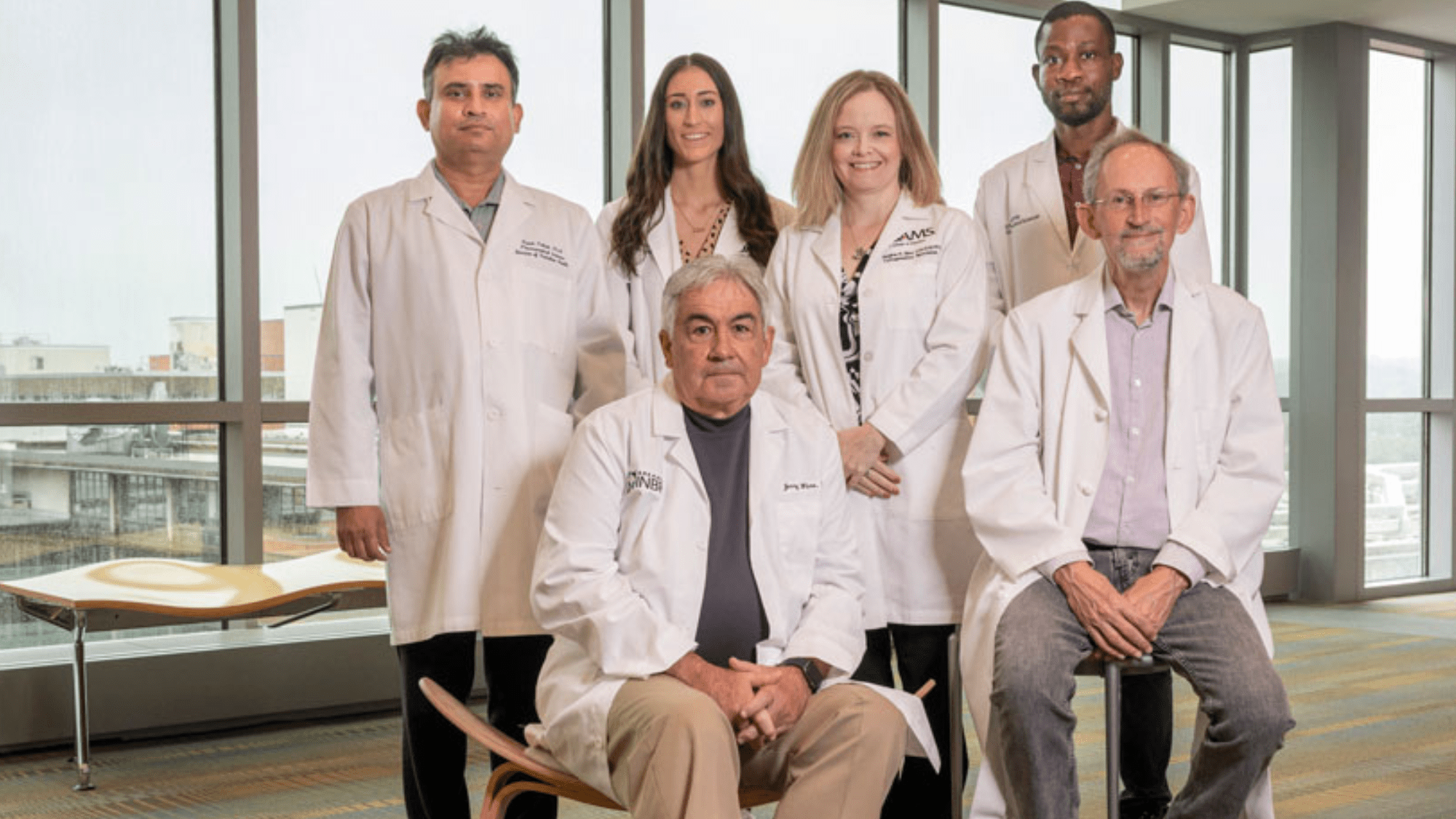
UAMS Receives $3.4 Million to Study Radiation Injuries Caused by Nuclear Accidents and Bioterrorism

By Marty Trieschmann

Aug. 24, 2022 | The University of Arkansas for Medical Sciences (UAMS) has received $3.4 million in funding from the National Institute of Allergy and Infectious Diseases, part of the National Institutes of Health, to study acute and delayed injuries caused by full-body radiation exposure from a nuclear accident or bioterrorism.

The five-year study entitled, “Platelets in Radiation-induced Immune Dysregulation,” is led by Rupak Pathak, Ph.D., assistant professor of Pharmaceutical Sciences, Division of Radiation Health in the UAMS College of Pharmacy; Martin Cannon, Ph.D., professor of Microbiology and Immunology in the UAMS College of Medicine; and Jerry Ware, Ph.D., professor of Physiology and Cell Biology in the UAMS College of Medicine.

While the FDA has approved some drugs to alleviate bone marrow injuries in people exposed to radiation, no drugs are available to treat the adverse effects in other organ systems. The study hopes to encourage drug development for therapies that will reduce radiation side effects.

https://news.uams.edu/2022/08/24/uams-receives-3-4-million-to-study-radiation-injuries-caused-by-nuclear-accidents-and-bioterrorism/