AFMC Initiates Substance Misuse Coalition in Hempstead and Howard Counties

United_States_Department_of_Justice.svg.png

LITTLE ROCK, ARK – June 4, 2020 – Families in Hempstead and Howard counties have a new opportunity to get help for their younger family members. AFMC, with funding from the U.S. Department of Justice (DOJ), is recruiting and leading a consortium of organizations that are serving people in the southwest region of Arkansas. Called the “Substance Abuse Resource Assistance Coalition” (SARAC), the coalition will coordinate services for young victims of opioid and substance misuse crime, and help families find resources and services.

Hempstead and Howard counties were chosen for the DOJ grant because, despite the federal government’s significant investments in Arkansas to combat substance abuse, these counties have not benefited through direct initiatives.

Residents of Hempstead and Howard counties live in a medically underserved area. Coupled with a scarcity of medical and social services, they also face a higher than average opioid prescription-drug rate and high levels of illicit drug misuse. The stigma about mental health treatment makes opioid use disorder (OUD) treatment and recovery particularly challenging.

Children and youth who are neglected by addicted parents or victimized in their communities are the most vulnerable population impacted by the opioid crisis. Children are caught in the middle without the health care and social service resources they need to build resilience against these upheavals.

These children can accumulate adverse childhood experiences (ACEs) at a high rate. ACEs can include abuse, neglect or household dysfunction that lead to an increased risk of physical and mental chronic disease, early death, and alcohol or drug misuse later in life. More than 15% of adults in Hempstead and Howard counties have experienced four or more ACEs.

Families can encounter the child welfare system while they are coping with their own or a family member’s substance use disorder (SUD). Because SUD treatment services do not coordinate with child welfare services, it can create complex problems for families seeking behavioral health, substance abuse and family violence services.

“Dealing with the threat of going to foster care plus trying to cope with family incarceration, overdoses, drug violence and other traumatic events are things no child should have to face alone. They need help and SARAC is poised to deliver it,” Ray Hanley, president and CEO of AFMC, said.

The SARAC coalition will provide families in crisis with comprehensive family-centered treatment services for both the child welfare and substance abuse treatment systems. AFMC will manage the SARAC call center that will respond to referrals initiated by community partners such as health care providers, law enforcement agencies, courts and schools. The call center can be reached at 866-253-1164 and is scheduled to be open July 1, 2020.

When children are identified by a care-delivery partner, the partner will submit a referral to the SARAC call center. SARAC staff will conduct an assessment to identify family needs and local resources. An individualized service coordination plan will be developed to ensure continued access to needed services to maximize healing, recovery, and resilience for these children and their families. Call center staff will assist families of youth ages 0 to 18 years by identifying and coordinating resources, finding medical providers, getting employment help, and applying for health insurance, nutrition programs and utilities assistance.

On a parallel path, AFMC will raise community awareness about ACEs and building resilience, specifically among medical and behavioral health providers. AFMC-certified trainers will work with SARAC’s frontline partners to provide trauma-informed care training and screening tools. A trauma-informed approach provides a framework that involves understanding, recognizing, and responding to trauma’s effect and building a sense of control and empowerment. SARAC will also offer comprehensive assistance to parents to address behaviors that predispose them to child maltreatment. While individual resilience is important, a community-wide focus on resilience and trauma-informed care will lead to healing.

UA Cossatot’s Secondary Career Center Awards 81 Certificates

Rhodes.J.png

The Secondary Career Center at UA Cossatot is a high school program designed to help teenagers earn college credit in technical programs while still in high school. UA Cossatot recently awarded 70 students from the Secondary Career Center with 81 certificates. The college also awarded 1,816 college credit hours to 227 students enrolled in the program for the spring 2020 semester.

High school students can enroll in the Secondary Career Center beginning their junior year of high school. Juniors and seniors can take college credit hours in automotive service technology, diesel service technology, medical professions, welding, and industrial technology. Students attend classes at a UA Cossatot campus during the morning or afternoon and can take up to half of their course requirements in high school to obtain their degree or technical certificate with the potential of Certificates of Proficiency being earned before high school graduation.

The Secondary Career Center at UA Cossatot helps high school students get a head start on college, but it also helps them save money. The classes offered through the Secondary Career Center are available to high school students at no charge.

The Secondary Career Center also provides students the opportunity to learn about technical careers they may be interested in or want to consider.

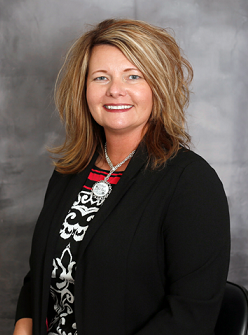
For more information about UA Cossatot’s Secondary Career Center or to enroll in available courses for the fall 2020 semester, please contact High School Programs Director, Julie Rhodes at 870-584-1343 or jrhodes@cccua.edu

Online Education is Affordable at UA Cossatot

uac 2018_bc-best-online-community-colleges-university-of-arkansas-cossatot.png

Due to the COVID-19 pandemic, many colleges and universities across the nation are offering the majority of their classes strictly online. With so much uncertainty about on-campus course work, college students are being encouraged to sign up for courses with an online format. UA Cossatot, the first college in Arkansas to offer a fully-accredited degree completely online, has been offering online education since 1997 and continues to offer several classes, certificates, and degrees online for students to take at a friendly price.

UA Cossatot has eight associate degrees, two associate of applied science degrees, five technical certificates, and two certificates of proficiency that can be completed 100% online. The majority of classes in other degrees and certificates at UA Cossatot can be completed online as well.

Students can earn degrees and certificates in general studies, business, agriculture, criminal justice, and psychology, to name a few, without ever stepping on one of UA Cossatot’s campuses.

Tuition at UA Cossatot is $74 per credit hour, meaning full-time in-district resident students taking 12 hours can expect to pay less than $1600 a semester. Additionally, UA Cossatot’s online courses generally require no textbook purchases, saving students over $500 each semester.

UA Cossatot was recently listed as one of the Top 60 Online Community Colleges in the nation. Out of 60 colleges, UA Cossatot was ranked at number 15 and was also listed as the most affordable online community college in the country, according to Intelligent.com, a trusted resource for online degree rankings and higher education planning.

UA Cossatot Student Accounts Officer, Tiana Kelly, said, “Taking classes at a community college is a great option. If students are going to have to pay for coursework online, they might as well take them at UA Cossatot, where they will be far cheaper! We are happy to welcome local, transfer, new, and returning students to our college. UA Cossatot students are given the option to make monthly payments through the mail, online, or over the phone. To set up payment plans, please call the business office at 870-584-1113. We would love to help you and answer any questions!”

For more information about online classes or online programs offered at UA Cossatot, please contact Student Services at studentservices@cccua.edu or 870-584-4471.


UA Cossatot Releases Three-Phase Plan for Reopening

UAC-Original-red.png logo.png

The purpose of this three-phase plan is to prepare UA Cossatot’s staff, students, and community for the gradual reopening of all UA Cossatot campuses.

Based on current guidance, UA Cossatot will employ a gradual return to normal for our students and community. Since the advent of COVID-19 in our community, UA Cossatot has shuttered campuses to students and visitors. Employees of UA Cossatot have been allowed to work from home (providing employees can effectively and productively complete their job duties) from the very beginning of the COVID-19 epidemic, while many employees have been coming to work on campus under strict social distancing and other CDC safety guidelines. This plan is designed to guide our college and inform our public through the summer to prepare for a full reopening this fall. UA Cossatot’s COVID-19 Task Force is currently preparing the reopening plan for fall of 2020.

This plan should be considered a fluid response to the COVID-19 epidemic and may be changed based on the prevailing or impending health conditions locally, statewide, and regionally.

null

null


Sevier County 4-H’er Wins 'Best in Show' in State Photography Contest

Monica Rivas won 1st place and Best of Show in the Ross Foundation 4-H Photography Contest at state competition with this non-living black and white photo.

Monica Rivas recently received first place and best in show for the 2020 State Ross Foundation 4-H Photography Contest. The contest provides an opportunity for Arkansas 4-H’ers to demonstrate, compete, and exhibit their photography skills. All 4-H members ages 9-19 are eligible and may enter a unique, original photo into each category. Categories are living color, non-living color, living black and white, and non-living black and white. Every year, hundreds of youth compete to win one of four places in the state competition. To view all winning photos, visit the Arkansas 4-H Photography Facebook Page.

Monica Rivas is the daughter of Jorge and Donna Rivas. She has been a member of 4-H for nine years.

For information about joining a 4-H club, contact Sevier County Extension Service at (870) 584-3013 or email kfrachiseur@uaex.edu.


De Queen Graduate, Emma Kersey, Receives Presidential Scholarship to Texas A&M - Texarkana

emma kersey.jpg

De Queen honor graduate Emma Kersey has been awarded the Presidential Scholarship at Texas A&M Texarkana totaling $34,000. She plans to major in Financial Business.

Emma is a member of National Honor Society, Spanish Club, Young Voters, FCCLA, FFA, and Gifted and Talented. She also participates in Lady Leopard softball, tennis and cheers for the Leopards.

Emma received the AVANT National Seal of Biliteracy for Spanish, Rotary March Student of the Month, and all A Honor Roll. She has also been accepted as an Honors Student at Texas A&M.


Arkansas Economic Recovery Task Force Recommendations In Line With “Dream Big For Arkansas”

During the 2019 Legislative Session, the Republican Women Legislative Caucus developed “Dream BIG For Arkansas: Bold Initiatives for the Good of Arkansas” which resulted in legislation in five key areas: healthcare, broadband, childcare, education and juvenile justice reform. All of these bills became Acts with nearly unanimous support from the General Assembly.

Yesterday during the Governor’s daily COVID-19 update, Governor Hutchinson outlined a number of recommendations from the Arkansas Economic Recovery Task Force chaired by Steuart Walton. Three of the key issues they identified as important to Arkansas's economic recovery and growth are completely in line with legislation our caucus passed: broadband, childcare, and healthcare.

Senator Missy Irvin (R- Mountain View) released the following statement: “Dream BIG for Arkansas successfully designed and passed “game-changing” legislation of policies that would dramatically advance Arkansas’s economic standing in our country. The leadership of these women in their communities and our shared experiences and passion for our citizens, led to great work during the past session. This work continues everyday as we respond to our constituents’ experiences and circumstances. Dream BIG strives to make Arkansans’ lives better. We have a lot of work left to do!”

Act 198: An Act to amend the Telecommunications Regulatory Reform Act of 2013; to provide additional access to Federal Communications Commission-Defined Broadband Service. This Act laid the foundation for the Rural Broadband ID Program that was passed this past fiscal session. Many members of the General Assembly - from both parties - have requested for this program to be fully funded as soon as possible. This program assists local communities along with their internet service providers with grants to meet the federal grant requirements available for expanding rural broadband access for federally eligible rural areas. It is a companion program for Governor Hutchinson’s AR Rural Connect Program, which has been fully funded. Now more than ever, our state must focus on increasing broadband access to the home for students, businesses, and patients.

Act 131: An Act to encourage Child Care Facility Entrepreneurship in Arkansas conferencing the duties of the Division of Child Care and Early Education within the Department of Human Services. This act lays the foundation for the reconnections of the Task Force. This legislation was designed to expand childcare options, especially in underserved areas, by making information more available through a website, reducing regulations as much as possible, and finding ways to fund and support entrepreneurship for child care facilities.

Act 181: An Act concerning the pursuit of a National Cancer Institute Designated Cancer Center at the Winthrop P Rockefeller Cancer Institute at the University of Arkansas for Medical Sciences; to create the University of Arkansas for Medical Sciences National Cancer Institute Designation Trust Fund. Clearly with the current pandemic, there is a great need for UAMS to be fully engaged in ALL areas of research and assistance In order to advance healthcare in Arkansas. UAMS has been a key partner with the Arkansas Department of Health in all areas of dealing with the Coronavirus Pandemic. Pursuing NCI designation has already brought great talent to UAMS and will raise our states opportunities for greater engagement for research and funding for these efforts. This legislation launched UAMS into a higher level of recognition and opportunities. This will be incredibly important for our citizens not just in cancer treatment, but in all areas of improving their health.

The Republican Women’s Legislative Caucus is working to continue our bold initiatives for the Good of Arkansas by building on these key areas of economic recovery and growth as identified by the Task Force, as well as education and workforce sustainability and development. We applaud their work and recommendations and are encouraged to continue our work for the good of Arkansas.

ar logo 5.jpg