Arkansas News

Farm Foundation names Malone 2023 Agricultural Economics Fellow

By John Lovett
University of Arkansas System Division of Agriculture
Arkansas Agricultural Experiment Station

FAYETTEVILLE, Ark. — Trey Malone, an agricultural economist with the Arkansas Agricultural Experiment Station, has been named Farm Foundation’s 2023 Agricultural Economics Fellow.

FARM FOUNDATION FELLOW — Arkansas Agricultural Experiment Station economist Trey Malone attends the Farm Foundation Roundation in Savannah, Georgia, on Jan. 11, 2023. (U of A System Division of Ag photo)

“The Farm Foundation Fellows program is a well-known and highly respected program that brings together some of the brightest minds in our profession to work and learn together on timely and important agricultural policy topics,” said John Anderson, head of the agricultural economics and agribusiness department. “With his broad interests and exceptional knowledge of policy issues and tools, Dr. Malone will be an outstanding addition to the Farm Foundation program. It will be great to have an Arkansas and Mid-South perspective on issues so well represented among this elite group of policy influencers.”

Farm Foundation’s Agricultural Economics Fellow program is a yearlong program for a faculty agricultural economist. Founded in 1933, Farm Foundation is a nonprofit, nonpartisan group that works to find solutions to issues in agriculture, from farmer health and market development to sustainability and implementing new technologies in agriculture. The agricultural economics fellows program started in 2021.

The 2023 fellowship is focused on sustainable food systems and will provide an opportunity to work with diverse stakeholders on integrated systems approaches to building more sustainable food systems, with a special focus on agricultural production approaches.

As a Farm Foundation Agricultural Economics Fellow, Malone will work with diverse stakeholders to build more sustainable food systems. For example, he will meet with staff in the U.S. Department of Agriculture’s Office of the Chief Economist and participate in the Farm Foundation and USDA Economics Research Service Ag Scholars program on a recurring basis. He will also meet with other participants in Farm Foundation’s suite of next generation programs as time allows.

Malone’s research for the experiment station, the research arm of the University of Arkansas System Division of Agriculture, focuses on agribusiness entrepreneurship and resiliency in agri-food supply chains.

“We are excited to welcome Dr. Malone to our Agricultural Economics Fellowship program,” said Martha King, vice president of programs and projects at Farm Foundation. “His perspectives on agribusiness and consumer behavior will be an invaluable resource and will serve as a unique springboard for collaboration.”

In addition to being mentored by staff in the USDA’s Office of the Chief Economist, Malone in turn will mentor participants in the Farm Foundation and USDA Economic Research Service Agricultural Scholars program, among other engagements.

Malone joined the Arkansas Agricultural Experiment Station in 2022. In November he was awarded the 2022 Presidential Award for Excellence in Research Communication from the Food Distribution Research Society.

In addition to teaching courses through the Dale Bumpers College of Agricultural, Food and Life Sciences at the University of Arkansas, Malone serves as co-editor of the Agricultural & Resource Economics Review and managing editor of the International Food & Agribusiness Review.

He holds master’s and doctorate degrees in agricultural economics from Oklahoma State University and a bachelor’s degree from Rockhurst University. 

To learn more about Division of Agriculture research, visit the Arkansas Agricultural Experiment Station website: https://aaes.uada.edu. Follow on Twitter at @ArkAgResearch. To learn more about the Division of Agriculture, visit https://uada.edu/. Follow us on Twitter at @AgInArk. To learn about extension programs in Arkansas, contact your local Cooperative Extension Service agent or visit www.uaex.uada.edu.

Arkansas Democrats speak out against new governor's policies

KUAR | By Josie Lenora

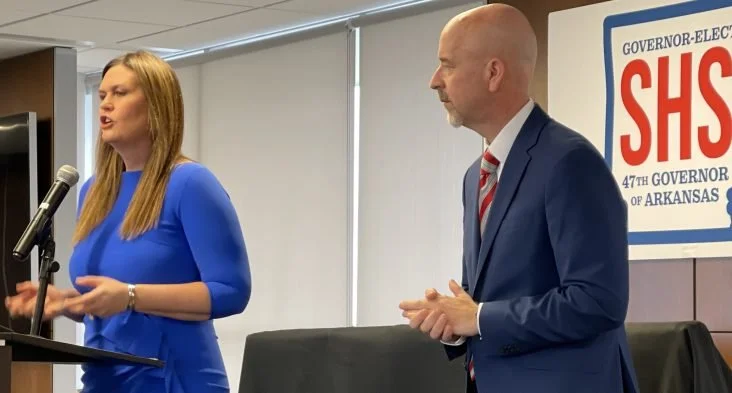
The Democratic Party of Arkansas held a press conference Wednesday to respond to Republican policy proposals espoused by the governor and legislature. House Minority Leader Tippi McCullough, D-Little Rock, was joined by Senate Minority Leader Greg Leding, D-Fayetteville, in the former Supreme Court chamber in the Arkansas State Capitol.

Both railed against policies supported by Gov. Sarah Huckabee Sanders, in particular those pertaining to education. Sanders has said she wants to be thought of as the “education governor,” and supports school choice policies and voucher programs as well as raising minimum teacher pay.

McCullough and Leding say they support teachers and raising their salaries, but not other more conservative education policies supported by Sanders. McCullough said the governor contradicted herself in the two different speeches she gave at her inauguration Tuesday.

https://www.ualrpublicradio.org/local-regional-news/2023-01-11/arkansas-democrats-speak-out-against-new-governors-policies

Josie Lenora/KUAR News

Senate Minority Leader Greg Leding, D-Fayetteville, hosts a press conference alongside House Minority Leader Tippi McCullough, D-Little Rock, at the Arkansas State Capitol Wednesday.

Gov. Sarah Huckabee Sanders signs executive orders on first day of term

KUAR | By Josie Lenora

Shortly after her inauguration Tuesday, Gov. Sarah Huckabee Sanders signed seven executive orders into law. The orders further conservative social causes and seek to limit government regulations.

The first one she signed institutes a promotion and hiring freeze for all state government workers. Another executive order will prevent government agencies from implementing new regulations without her approval.

“We are going to continue to limit the scope of government and empower Arkansans,” Sanders said.

https://www.ualrpublicradio.org/local-regional-news/2023-01-11/gov-sarah-huckabee-sanders-signs-executive-orders-on-first-day-of-term

Will Newton/AP

Incoming Arkansas Gov. Sarah Huckabee Sanders signed seven new executive orders into law Tuesday.

Broadband in Arkansas Survey

The State Broadband Office needs your help getting as many people in Arkansas as possible to check the FCC’s new broadband map and challenge any inaccuracies.  They are only accepting these challenges through Friday (1/13).

https://broadband.arkansas.gov/verify/

UAMS Mourns Loss of Susan Smyth, M.D., Ph.D.

By Yavonda Chase

Susan Smyth, M.D., discusses cardiology cases with clinical team members. (From left) Divya Nayar, M.D., neurology resident; Abdallah Malkawi, M.D., cardiovascular medicine fellow; and Tushar Tarun, M.D., assistant professor, cardiovascular medicine.Bryan Clifton

LITTLE ROCK — The University of Arkansas for Medical Sciences (UAMS) is sad to announce that Susan Smyth, M.D., Ph.D. executive vice chancellor and dean of the College of Medicine, died on Dec. 31, 2022, after a battle with cancer.

“Susan was a remarkable leader, colleague, and friend who will be deeply missed by many across our state, especially those of us fortunate enough to work with her,” wrote Chancellor Cam Patterson, M.D., MBA, in an announcement to UAMS employees and students. “Her death is a great loss for UAMS, our state, and all who knew her.”

She is survived by her husband, Andrew Morris, Ph.D., professor in the UAMS Department of Pharmacology and Toxicology, and their sons, Edward and William.

https://news.uams.edu/2023/01/03/uams-mourns-loss-of-susan-smyth-m-d-ph-d/

Governor Hutchinson Appoints Forrest Marks as ASP Colonel

LITTLE ROCK – Governor Asa Hutchinson today announced his appointment of Lt. Col. Forrest Marks as Colonel of the Arkansas State Police (ASP). Lt. Col. Marks is succeeding Col. Bill Bryant, who will retire on December 31, 2022.

Lt. Col. Marks has served in the Arkansas State Police since he began as a Trooper in 1994. Throughout his time at ASP, Lt. Col. Marks has served as Post Sergeant, Highway Patrol Assistant Troop Commander, Troop Commander, and Division Commander. He currently serves as Acting Lieutenant Colonel for Field Operations.

"I'm grateful for Lt. Col. Marks's nearly 30 years in law enforcement and his dedication to the Arkansas State Police," Governor Hutchinson said. "I appreciate his willingness to serve as Colonel, and I am confident he will lead our State Police with integrity and honesty."

Prior to joining the Arkansas State Police in 1995, Lt. Col. Marks served as a patrolman for the Hot Springs Police Department and as a military police officer for the United States Army.

Lt. Col. Marks's appointment will remain in effect until Governor-Elect Sanders's Colonel Designate, Captain Mike Hagar, assumes the position.

Cooperative Extension Service to co-host Arkansas Business Navigator informational session

BRINKLEY, Ark. — Do you need help growing or expanding your business? Is your business looking for financial assistance, but you don’t know what your options are? Is your inner entrepreneur in need of some guidance? An upcoming event, co-hosted by the Arkansas Procurement Technical Assistance Center, likely has the answers you’re looking for.

FINDING THE WAY — Arkansas Business Navigator is the newest program from the Arkansas Small Business Technology and Development Center, a function of the federal Small Business Administration that works through land grant universities and other institutions. (Division of Agriculture graphic.)

Arkansas Business Navigator is the newest program from the Arkansas Small Business Technology and Development Center, a function of the federal Small Business Administration that works through land grant universities and other institutions.

The informational session will be held Jan. 26 at the Brinkley Chamber of Commerce, located at 217 W. Cypress St. in Brinkley. Doors open at 5:30 p.m., and the program will begin at 6 p.m. There is no cost to attend.

The program is focused on supporting small business owners and entrepreneurs across Arkansas with an emphasis on support for rural, women-owned, veteran-owned and minority-owned businesses. It’s a joint project of the Cooperative Extension Service’s APTAC, the Monroe and Phillips County extension offices, the Brinkley Chamber of Commerce and East Arkansas Enterprise Community.

Kamelle Gomez, economic development program associate for the Division of Agriculture, said the Cooperative Extension Service — the outreach arm of the University of Arkansas System Division of Agriculture — is one of six partners supporting the program.

“We’re helping to provide no cost, one-on-one business consulting, business planning, market research, access to capital and industry-specific training,” Gomez said. “We want you to come learn how the Arkansas Business Navigator can help your business launch, grow, and plan for success.”

Interested individuals may contact Gomez at 501-671-2158 or kgomez@uada.edu.

To learn about extension programs in Arkansas, contact your local Cooperative Extension Service agent or visit www.uaex.uada.edu. Follow us on Twitter and Instagram at @AR_Extension. To learn more about Division of Agriculture research, visit the Arkansas Agricultural Experiment Station website: https://aaes.uada.edu/. Follow on Twitter at @ArkAgResearch. To learn more about the Division of Agriculture, visit https://uada.edu/. Follow us on Twitter at @AgInArk.

Follow important safety guidelines to enjoy outdoor activities

By Rebekah Hall
U of A System Division of Agriculture

LITTLE ROCK — During the cooler months in Arkansas, there are many opportunities for outdoor fun, such as hunting, camping and riding all-terrain vehicles. While enjoying these activities in the Natural State, it’s important to follow safety guidelines to avoid accidents and injuries.

ATV AND SHOOTING SAFETY — Jesse Bocksnick, extension 4-h outdoor skills coordinator for the University of Arkansas System Division of Agriculture, said it's important to ensure youth are of the correct age and size to operate ATVs or firearms. (Division of Agriculture photo.) 

Jesse Bocksnick, extension 4-H outdoor skills coordinator for the University of Arkansas System Division of Agriculture, said safely operating guns and ATVs can minimize the risk of accidents.

“Accidents happen — we can’t be 100 percent safe all the time,” Bocksnick said. “But the main thing is to practice good, safe operation of ATVs and safe gun handling so that when an accident does happen, we can minimize it and it’s just a scare – not a tragic story that we talk about years later as a teaching tool.”

Proper firearm handling

When it comes to safe gun handling, Bocksnick said three elements are key: muzzle control, action open and trigger control.

The muzzle is the part of the firearm where the bullet exits the gun. Keeping the muzzle pointed in a safe direction at all times can help prevent accidents or minimize the damage of an accident.

“Every year it seems like somebody gets hurt with an ‘empty gun,’ and that’s because they think it’s unloaded, and it’s not,” Bocksnick said.

The action on a gun is the part where the ammunition enters the chamber and is then extracted when the gun is fired. By keeping the action open, the user indicates to others that the gun is unloaded until it is time to shoot.

“When that action is closed, nobody knows if there’s a bullet in the chamber,” Bocksnick said. “You just assume that it’s loaded. We assume that all guns are loaded all the time – it just keeps things safer that way.”

Trigger control means “you keep your finger off the trigger until your sight is on the target,” Bocksnick said.

“A lot of folks, especially young folks, when you hand them a firearm, the first thing they do is wrap their hand around the grip and they’ve got a finger on the trigger,” Bocksnick said. “We don’t want to do that.”

For adults who are excited to introduce hunting and shooting sports to the young people in their lives, Bocksnick said it’s important to brush up on safety skills, as many adults develop poor safety habits over time.

“People are usually excited about training young folks and getting them out there,” he said. “It’s a family pastime, and they want to pass that tradition along to their family members, but sometimes they have unsafe habits, or they don’t realize how unsafe they actually are with a firearm. When they’re talking to kids and teaching them the basics of hunting, sometimes they may skip over or take for granted some of those basic firearm controls.”

When training youth on proper firearm handling, Bocksnick said another issue is handing off firearms to young people too soon.

“If they can’t physically work the action, hold the gun up, or handle the recoil, they’re too small,” he said. “You need to wait until the next year, or maybe the year after that. I see a lot of parents push kids too fast. They want them to be that hunting buddy so badly that they give them a little too much responsibility for their age.”

ATV and UTV safety

Riding ATVs and UTVs, or all-terrain and utility task vehicles, can be a fun way to explore the outdoors. But these vehicles can be very dangerous for riders if not handled safely.  

Bocksnick said that for ATVs and UTVs, the “number one thing to remember is to wear a helmet.”

“It is the single most important piece of safety equipment that a person – adult or youth – can wear,” he said. “It must be a Department of Transportation-approved helmet.”

It is also critical to follow the age recommendations of the vehicle’s manufacturer, Bocksnick said.

“Most ATVs and UTVs are 16 years old and up,” Bocksnick said. “Just because a youth can steer a machine or push the throttle doesn't mean they are capable of driving that machine. ATVs are ‘rider active’ machines that require the operator to use their body weight and active movement to properly ride the machine and make it handle properly. With UTVs, if a youth cannot sit in the seat properly with their back against the seat, buckled in, and reach all the controls, they are too young.”

Bocksnick said a common misconception about UTVs is that they are safe for children because they have a roll bar or rollover protective structures. But youth must be buckled in and using the seatbelts or harness systems for these protective measures to work.

“Unfortunately, ATV and UTV accidents are a major cause of head trauma, death and major injuries in the state among youth,” Bocksnick said. “Youth riding machines they are not old enough for, not wearing helmets, or carrying passengers on ATVs increases this problem exponentially.”

Hunting and campfire safety

During hunting season, many people get injured from their deer stands. Becky McPeake, extension professor and wildlife specialist for the Division of Agriculture, said scouting for the proper deer stand location before the hunt is important.

“Find a tree which is strong enough to support your weight,” McPeake said. “Sometimes the tree nearest an opening is smaller in diameter, and it is tempting to use that tree, but don’t. Be safe.”

McPeake said being in good shape is also key to successfully navigating a deer stand, as it takes physical strength to get in and out.

“If there are physical limitations, ground-hunt to be safe,” she said. “You can build your own blind using natural features or purchase a tent blind.”

Wearing a harness is also an “essential safety feature” for those using deer stands, McPeake said.

“Use a climbing rope, climb a little higher than your stand, and slip into the stand,” she said. “Then, use a rope to lift or lower your supplies and your unloaded firearm, and clip yourself in the tree once in place.”

Be sure to get plenty of rest and stay awake while in a deer stand, and let others know when heading out for a hunt.

“Tell your family or friends when you go hunting and when you expect to return,” McPeake said. “Leave them a map of where you will be hunting, since cell service sometimes doesn’t work in remote locations.”

While hunting, camping or simply spending time in the backyard, campfire safety guidelines should also be followed to avoid injury or an out-of-control blaze. Creenna Bocksnick, extension 4-H camping coordinator for the Division of Agriculture, said the first step to a safe campfire is checking the fire regulations in one’s area.

“Some locations don’t allow for open flames, and seasonal burn bans also need to be considered,” Bocksnick said. “Campers also need to remember general fire safety concerns: burns, keeping flammable liquids and materials away from the fire, and not leaning or stepping over the fire.”

Bocksnick said people should also pay close attention to their surroundings for other potential fire hazards, including “dead trees above their fire that can fall, tinder on the ground near their fire that can catch on fire, and tree roots under their fire that can also catch on fire without them knowing.”

People camping in a wilderness setting should also aim to “leave no trace” of their presence at the campsite after leaving.

“Campers should build, douse and cover remnants of their fires so that the next person doesn't know they were there,” Bocksnick said. “They should also not put items in the fire that will not completely burn and turn to ash during their stay.”

For more information about the 4-H shooting sports program and Arkansas 4-H ATV safety, visit the Arkansas 4-H Outdoor Skills website or contact Jesse Bocksnick at jbocksnick@uada.edu.

To learn about extension programs in Arkansas, contact your local Cooperative Extension Service agent or visit www.uaex.uada.edu. Follow us on Twitter and Instagram at @AR_Extension. To learn more about Division of Agriculture research, visit the Arkansas Agricultural Experiment Station website: https://aaes.uada.edu. Follow on Twitter at @ArkAgResearch. To learn more about the Division of Agriculture, visit https://uada.edu/. Follow us on Twitter at @AgInArk.

Economists predict ‘mild recession’ as Arkansas gears up for 2023 legislative session

KUAR | By Wesley Brown / Arkansas Advocate

A mild recession and a holiday spending hangover. That’s what economic forecasters predict for 2023 as lawmakers head to the state Capitol in January.

Rising interest rates and persistent inflation will push the economy into a downturn, experts say, and those economic clouds could also cause the 94th General Assembly to consider any robust spending programs in light of a possible nationwide slowdown.

As Gov. Asa Hutchinson winds down his administration, he recently reported to lawmakers that Arkansas’ budget coffers are overflowing with $2.78 billion of reserve funding.

https://www.ualrpublicradio.org/local-regional-news/2023-01-04/economists-predict-mild-recession-as-arkansas-gears-up-for-2023-legislative-session

Photo Courtesy Gov. Asa Hutchinson/Arkansasadvocate.Com

Arkansas Gov. Asa Hutchinson (left) and Sen. Jonathan Dismang (R-Beebe) talk before Hutchinson presents his fiscal year 2024 state budget at the Nov. 10, 2022, meeting of the Legislature’s Joint Budget Committee. The budget projects a surplus despite forecasts of a mild recession in 2023.

‘High growth’ in sales tax collections pushes Arkansas tax revenue up 6.4%

by Michael Tilley (mtilley@talkbusiness.net)

If the economy is slowing, no one told Arkansas businesses and consumers. In the December report, fiscal year-to-date Arkansas tax revenue totaled $4.145 billion, up 6.4% compared with the same period in 2021 and 3.3% above forecast.

Individual income tax revenue in the first six months of the fiscal year (July-December) was $1.768 billion, up 4.3% compared with the same period in 2021 and 1.9% above the budget forecast, according to Wednesday’s (Jan. 4) report from the Arkansas Department of Finance and Administration (DFA). The report said the net available revenue – surplus – at the end of the first six months was $125.2 million.

Sales and use tax revenue in the first six months was $1.691 billion, up 8.7% compared with the same period in 2021 and up 1.2% above the forecast. Corporate income tax revenue in the first six months was $406.9 million, up $34.9 million compared to the same period in 2021 and 20.6% million above the forecast.

https://talkbusiness.net/2023/01/high-growth-in-sales-tax-collections-pushes-arkansas-tax-revenue-up-6-4/

Gov.-elect Sanders selects Stubbs, Penn to top state military posts

by Talk Business & Politics staff (staff2@talkbusiness.net)

Gov.-elect Sarah Sanders announced Wednesday (Jan. 4) her intention to nominate Brigadier General Jon Stubbs as Secretary of the Military and The Adjutant General of the Arkansas National Guard, and Major General Kendall Penn as the Secretary of the Department of Veterans Affairs.

Penn now holds the title of Secretary of the Military, while he will replace Nate Todd, the Veterans Affairs secretary.

“I will be appointing two high-caliber individuals with decades of military experience who will lead with honor and integrity – BG Jon Stubbs as The Adjutant General of the Arkansas National Guard and Major General Kendall Penn as the Secretary of the Department of Veterans Affairs,” Sanders said. “BG Stubbs’ extensive Army National Guard experience makes him a clear choice to lead the Department of Military as The Adjutant General, ensuring our airmen and soldiers are standing at the ready to support the state of Arkansas and our nation. Major General Penn has done an excellent job leading our Department of Military, which is why I have asked him to continue to serve and take on the critical role of Secretary of Veterans Affairs. Together, we will ensure that the brave, selfless men and women who have served our country in uniform are always cared for and supported.”

https://talkbusiness.net/2023/01/gov-elect-sanders-selects-stubbs-penn-to-top-state-military-posts/

Five slated to enter Arkansas Agriculture Hall of Fame

by Talk Business & Politics staff (staff2@talkbusiness.net)

The Arkansas Agriculture Hall of Fame is slated to add five new members to its ranks this year. Class XXXV induction ceremonies are set for 11:30 a.m. March 3 at the Little Rock Convention Center.

Inductees include Arkansas Century Farm owner/operator and philanthropist Ellis Bell of Forrest City; Arkansas State University professor of agricultural economics Bert Greenwalt of Jonesboro; innovative rice farmer Chris Isbell of Humnoke; veteran cotton farmer and industry leader Steve Stevens of Tillar; and the late Jessie (J.D.) Vaught of Horatio, a pioneer in contract livestock production.

“It’s an outstanding class of inductees reflecting the broad and diverse impact of agriculture across Arkansas,” said Hall of Fame’s committee chair Debbie Moreland of Roland. “These five include many different areas of agriculture. Agriculture is one of the great success stories of our state and that is sometimes overlooked. We’re pleased to bring recognition to these individuals who have impacted our state’s largest industry in such a positive way.”

https://talkbusiness.net/2023/01/five-slated-to-enter-arkansas-agriculture-hall-of-fame/

UA Cossatot kicks-Off Spring 2023 Semester

UA Cossatot’s Spring 2023 regular classes will begin on Tuesday, January 17, and registration is open until Thursday, January 19. Two eight-week terms are also offered, one running January-March and the second March-May. The registration deadline for the second eight-week term is March 14.

Various in-person and online courses and career and transfer options are offered. Anyone interested in taking courses, including returning students, is encouraged to stop by UA Cossatot’s Student Services, where a friendly staff member can help with registration and enrollment questions. A complete list of courses and information on scholarships and financial aid can be found at www.cccua.edu. There are also funding opportunities for UA Cossatot students to attend free in spring 2023 through the ArFuture Grant. Arkansas resident students in select technical and high-demand fields such as Agriculture, Industrial Maintenance, EMT, Nursing, Welding, Cybersecurity, Education, and Science can have their tuition and fees paid for through the ArFutures grant. The full list of criteria, rules/regulations, and the online application can be found at https://sams.adhe.edu/Scholarship/Details/ARFUTURE. The application deadline is January 10 for spring 2023 and July 1 for fall 2023.

To speak with Student Services about registering for classes, please call 870-584-4471 or email studentservices@cccua.edu. Walk-ins are always welcome. UA Cossatot campus hours for De Queen, Nashville, and Ashdown are Monday through Friday from 8:00 am to 4:30 pm.

There is still time to apply for medical programs, too. If all program requirements are met by March 1st, students are eligible to apply. All prereqs must be completed or in progress during the spring semester. The program applications and TEAS score must be completed by March 1st. Please review the program requirements for each program at www.cccua.edu/programs-of-study/medical-education. For medical program questions, please contact 870-584-1211 or email ccooper@cccua.edu, rservante@cccua.edu, or mfoster@cccua.edu.

UA Cossatot’s Colts and Lady Colts are also gearing up this semester. They play a pair of home games this Thursday, January 5th, at the UA Cossatot Bank of Lockesburg Gymnasium. At 5 PM, the Lady Colts go head-to-head against Dallas Christian College. Then, at 7 PM, the Colts close out the night versus RA Prep. Contact Athletic Director and Head Coach Stan Asumnu for free season pocket schedules at 870-584-1145 or sasumnu@cccua.edu. ###

AUDIO: Governor Hutchinson’s Weekly Address | W.I.N.S. in 2022

LITTLE ROCK – As 2022 comes to an end, I have been reflecting on my time as Governor and looking forward to what is ahead.

In January, I announced my W.I.N.S. initiative for my final year as Governor. Each letter in W.I.N.S. stands for a pillar that I have focused on to boost Arkansas to success. Workforce Training, Infrastructure, New Economy Jobs, and Strengthening Arkansas Families all aim to push Arkansas to being the best place the state can be – and help Arkansas WIN.

Arkansas has continually grown economically over the past eight years. Thanks to the people of Arkansas, we have made this state one of the premier locations for business owners to put their roots down and conduct business that gives well-paying jobs to hard-working Arkansans and puts more money into our state.

As this year and my term is coming to an end, Arkansas has never been in better financial shape than we are right now. We have lowered taxes, funded services, and we have over $2 billion in reserve accounts.

Even in the face of a pandemic, the state’s economy, like Arkansans themselves, remained resilient. In 2021, Arkansas was ranked number two in the nation for states with the most pandemic-proof small businesses. That speaks not only to the hard work of business owners who have chosen to live in Arkansas, but to the small business environment, workforce support, and resource access our state’s infrastructure had in place, ready to help small businesses.

Arkansas small businesses were rightfully ranked as having the greatest potential to bounce back because they had the least to bounce back from. Arkansas never shut down throughout the pandemic. Our state kept working, and our consistently low unemployment rate over the past few years reflects that. In fact, there are over 120,000 more people employed now than when I took office in January 2015.

The future success of our state demands that we improve the training of our workforce. Now with initiatives like the ‘Ready for Life’ program, it is easier for employees and employers to find each other, and it will offer business leaders a quick snapshot of the employee pool in Arkansas as they recruit talent.

Our infrastructure is the backbone of everyday operations in this state, and it is worth investing in to create a better quality of living. That is why we have invested almost $500 million in rural broadband expansion in our state.

In terms of new economy jobs, we expanded our high-tech jobs from the steel industry to software development, and this growth will continue with the recommendations from the Council on Future Mobility Report.  

Lastly, but certainly not least of the pillars of my W.I.N.S. initiative – strengthening Arkansas families. Over the past year, my focus has been to give families the best chance of success and to protect Arkansas children from child abuse and crime.

In November, I announced a monumental expansion in rural health services with the ARHOME Medicaid program. Thanks to the great work of the teams at the Arkansas Department of Human Services, Life360 HOMEs will address the complex challenges facing many of Arkansas’s most vulnerable residents, including individuals in rural areas with serious mental illness and those in need of addiction services. I look forward to watching the full potential of this transformative program as it unfolds in the months and years to come.

As we conclude 2022, I am grateful for the W.I.N.S. we have had this year in improving our workforce, investing in our infrastructure, creating new economy jobs, and strengthening Arkansas families.

Severe weather threat in Arkansas on Monday, January 2nd

The new year will be accompanied by the risk for severe weather around the state, with severe thunderstorms possible on Monday, January 2nd. An enhanced risk encompasses much of central, southern and western Arkansas. Damaging wind gusts and tornadoes appear to be the main concerns Monday.

National Weather Service in Little Rock, AR

https://www.weather.gov/lzk/

Study shows no negative health effects on limit-fed diet in ‘high-risk’ cattle

By John Lovett
University of Arkansas System Division of Agriculture

Placing newly received, “high-risk” cattle on a limit-fed diet may result in greater performance with no adverse health effects, according to a study by the Arkansas Agricultural Experiment Station.

LIMITED DIET — A recent study at the Southwest Research and Extension Center found no negative health effects of placing newly received "high-risk" cattle on a limit-fed diet. (U of A System Division of Ag photo)

Less money spent on grain is an additional benefit to a limit-fed diet, said Daniel Rivera, associate professor of animal science with the experiment station, the research arm of the University of Arkansas System Division of Agriculture. Rivera is also director of the Division of Agriculture’s Southwest Research and Extension Center in Hope where the study was conducted.

Limit feeding restricts the amount of feed an animal receives but provides sufficient energy to achieve a targeted rate of weight gain. The practice has been shown to reduce waste and improve feed efficiency, Rivera said.

“One of the concerns people have with limit-feeding growing animals before they go to a feedlot finishing program is the fear it will lead to digestive upsets because they were restricted and then go into a sort of all-you-can-eat buffet,” Rivera said. “But that was not the case in our study.”

“High-risk” cattle include those with no history of vaccination or that were transported for an extended period and blended with other lots at a sale barn. Cattle could also fall into the “high risk” category if there is a lack of information about their past. Cattle that have undergone a preconditioning period with vaccinations and yearling cattle from a single source with a known health record are often considered “low-risk.”

Rivera said that typical management of "high-risk" cattle has often allowed for high levels of hay or forage. Conventional wisdom is that offering a feed that cattle are accustomed to — hay in this case — makes the transition to a milled diet easier. Rivera said data conflict regarding this topic, however, with some researchers noting that higher energy and less roughage results in better performance but greater health problems. One theory is that the energy is typically in the form of starch, which can result in sub-clinical acidosis, thereby increasing health problems. The current Arkansas study examined limited feeding complete feed pellets made up of high levels of byproducts and lower starch content. 

The study compared recently received cattle given 1.75 percent of their body weight in a grain byproduct pelleted feed with those given 2.25 percent of their body weight. Another group (the control group) was assigned 2 percent of their body weight in grain by product pellets and free access to Bermuda grass hay. All diets provided an antibiotic to control parasites. The study began in January 2022.

At about 2.8 pounds a day, the average daily weight gain for cows on a restricted diet of 2.25 percent body weight in grain pellets and no hay, was the same as those given free access to hay, along with 2 percent of their body weight in grain pellets. Newly received cattle on 1.75 percent body weight in grain pellets and no hay put on slightly less than 2 pounds per day.

Rivera noted that more work was needed to confirm the study’s findings. Cattle on restricted diets which were not responding well to treatment would recover faster once isolated from the group to have easier access to their rations. Rivera said animals tend to push out animals that show signs of weakness, which keeps them from accessing their feed and gaining energy to recover from illnesses.

The study was conducted at the Southwest Research and Extension Center in collaboration with Elanco Animal Health and Livestock Nutrition Center to gain information for producers on management practices for “high-risk” cattle. Following the 63-day study of 168 newly received cattle, results showed slightly better feed-conversion rates for the most restricted diet with only marginally lower average daily weight gain.

Rivera put the 168 yearling cows through a two-month preconditioning phase, including vaccination against respiratory and clostridial pathogens, deworming and treatment with long-acting antibiotics. The animals were also administered a growth-promoting implant. The cattle averaged 470 pounds when received from several sale barns in Texas and Arkansas. They came in two shipments one week apart. About half of them were bulls that required castration, and the other half were steers.

Cows were randomly assigned to pens containing seven cattle each. The three diet options were assigned to eight pens each. The animals were checked daily for signs of respiratory disease, and symptomatic animals were treated with antimicrobial therapy. Rivera said the cattle that did not initially respond to the treatment were separated and then able to regain health with easier access to feed. The cattle were fed twice daily and weighed on days 0, 21, 42, and 63 before being shipped to a feedlot.

To learn more about Division of Agriculture research, visit the Arkansas Agricultural Experiment Station website: https://aaes.uada.edu. Follow on Twitter at @ArkAgResearch. To learn more about the Division of Agriculture, visit https://uada.edu/. Follow us on Twitter at @AgInArk. To learn about extension programs in Arkansas, contact your local Cooperative Extension Service agent or visit www.uaex.uada.edu.

UAMS’ Fen Xia, M.D., Ph.D., Named Fellow of the American Society of Radiation Oncology

By Marty Trieschmann

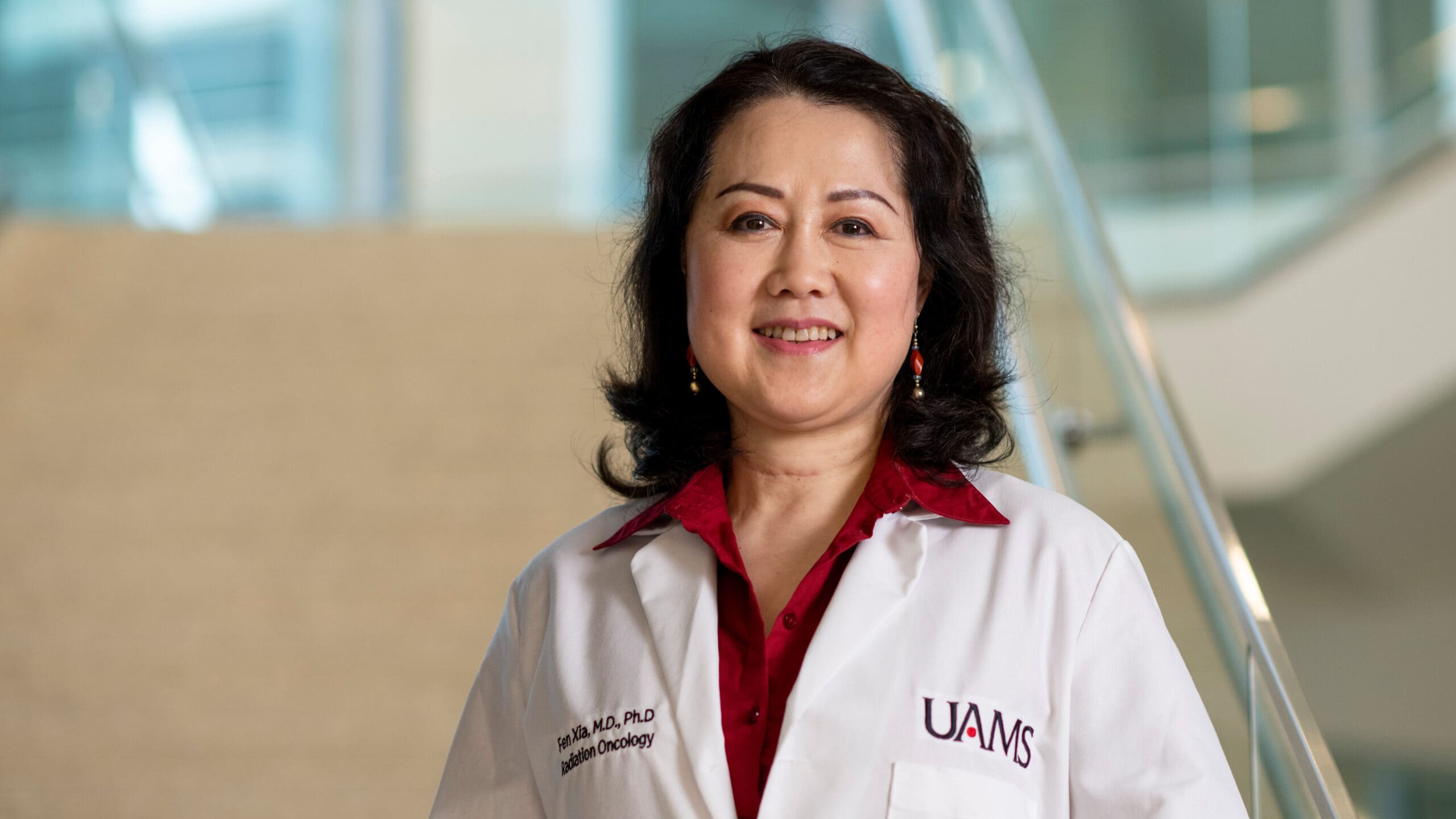
Fen Xia, M.D., Ph.D., chair of the Department of Radiation Oncology at the University of Arkansas for Medical Sciences (UAMS) Winthrop P. Rockefeller Cancer Institute, has been named a Fellow of the American Society of Radiation Oncology (ASTRO).

Xia is among 27 distinguished cancer specialists in the United States to be inducted into ASTRO’s 2022 Class of Fellows, which includes physicians from Stanford, Yale, The University of Texas M.D. Anderson Cancer Center, Dana-Farber Cancer Institute and the National Cancer Institute.

“We are so proud of Dr. Xia and her achievements,” said Michael Birrer, M.D., Ph.D., Winthrop P. Rockefeller Cancer Institute director and UAMS vice chancellor. “She runs one of the best radiation oncology departments in the United States.”

https://news.uams.edu/2022/12/20/uams-fen-xia-m-d-ph-d-named-fellow-of-the-american-society-of-radiation-oncology/

UAMS Garners Multiple Honors in 2022 while Fulfilling Missions

By Ben Boulden

Two years of battling the pandemic and its effects resulted in a 2022 that was the closest yet to a pre-COVID normal at UAMS.

The university never faltered in its devotion to its missions. UAMS seized the opportunity the year brought to renew its focus on them in a way that earned it praise and recognition.

U.S. News & World Report in April recognized the UAMS colleges of Medicine, Nursing and Public Health on its latest Best Graduate Schools lists.

https://news.uams.edu/2022/12/22/uams-garners-multiple-honors-in-2022-while-fulfilling-missions/

Gov.-elect Sanders names Jacob Oliva of Florida to education post

by Roby Brock (roby@talkbusiness.net)

Gov.-elect Sarah Sanders announced Thursday (Dec. 29) she would nominate Jacob Oliva of Florida as Arkansas’ next Secretary of Education. He will replace Johnny Key, the current education secretary.

Oliva is the senior chancellor for the Florida Department of Education and was a former teacher, principal, and superintendent in Flagler County, Fla., where he was hailed as a progressive and innovate educator and helped improve the district’s student achievement rankings.

“Education is the foundation for success, and, with my nominee for Secretary of Education and Commissioner of Elementary and Secondary Education, Jacob Oliva, we are ready to transform Arkansas education with bold reforms that will empower every kid to succeed,” Sanders said. “Jacob’s proven success increasing student achievement and his experience serving in many educational roles will make him an asset to my administration. Through my Arkansas LEARNS plan, we will expand access to quality education for every kid growing up in our state, empower parents, not government bureaucrats, and prepare students for the workforce, not government dependency, so everyone has a shot at a better life right here in Arkansas.”

https://talkbusiness.net/2022/12/gov-elect-sanders-names-jacob-oliva-of-florida-to-education-post/

Gov.-elect Sarah Sanders announces her Education Secretary pick, Jacob Oliva.

Gov.-elect Sanders names Joseph Wood to lead Department of Transformation and Shared Services

by Talk Business & Politics staff (staff2@talkbusiness.net)

Gov.-elect Sarah Sanders announced Friday (Dec. 30) her intention to nominate Washington County Judge Joseph Wood as Secretary of the Department of Transformation and Shared Services.

Wood is completing his second term as Washington County Judge after an unsuccessful run for the Republican nomination for Lt. Governor in 2022. He previously served in the Arkansas Secretary of State’s office.

Prior to public service, Wood was head of international recruitment for Wal-Mart Stores, Inc., and previously served as assistant director of recruitment for the University of Chicago Booth School of Business.

https://talkbusiness.net/2023/01/gov-elect-sanders-names-joseph-wood-to-lead-department-of-transformation-and-shared-services/