Arkansas News

Weekly Update from State Representative DeAnn Vaught

When you choose to shop at a small business you are choosing to invest in your community. It is estimated that for every $100 spent in a local business, $68 recirculates and remains in the local economy.

Local businesses are owned by people who live in your community. They donate to local causes and employ local people. In fact, 47.2% of employees in Arkansas work for a small business.

Saturday, November 26, 2022, is Small Business Saturday. It’s a day to celebrate and support small businesses and all they do for their communities. There are more than 260,000 small businesses in Arkansas. These businesses employ close to 500,000 Arkansans.

More than 43% of small businesses in Arkansas are owned by women. Veterans own 9.1% of small businesses and minorities 13% of small businesses in the state.

These owners took a chance on their dreams. As a result, the employees are more likely to be personally invested in the products or services they are selling. That often means they can provide more specific product expertise and a personalized shopping experience.

Whether it’s handcrafted jewelry or vintage furniture, locally-owned businesses are also more likely to offer unique merchandise.

The Arkansas General Assembly continually reviews proposals to make it easier to open and sustain small businesses. In recent years, we’ve reduced the red tape on licensing procedures, lowered taxes, and improved infrastructure. As we approach the 2023 Regular Session, supporting our small businesses will continue to be a priority.

Your small purchase this holiday season can make a big difference. Our small business owners are still emerging from a challenging economic time in our history. We encourage you to shop local throughout this holiday season.

HOLIDAYS: How to safely cook the Thanksgiving turkey

By Jessica Wesson
Center of Excellence for Poultry Science
U of A System Division of Agriculture

FAYETTEVILLE, Ark. — The traditional Thanksgiving meal revolves around the turkey, and food safety is a must to make sure holiday celebrations go off without a hitch.

BIRD’S THE WORD — On Thanksgiving, the day revolves around the turkey. Food safety should be a high priority. (U of A System Division of Agriculture file photo.)

Kristen Gibson, director of the Center for Food Safety, part of the Arkansas Agricultural Experiment Station, weighed in with some basic tips to keep the Thanksgiving feast safe. Her first piece of advice was to avoid washing the turkey.

“Once your turkey is thawed, most people want to get rid of the slimy feeling on the turkey by rinsing it in the sink,” Gibson said. “By doing that, you’re creating a really great situation for potential cross-contamination. Not only are you potentially spreading pathogens in your sink, but a lot of water can splash out that you don’t see.”

Gloving up

She recommends dabbing the turkey with paper towels to dry the skin and properly disposing of the paper towels in the trash can. Gibson also warned about the dangers of handling the turkey while preparing other foods for the holiday meal.

“You want to be sure your hands are properly cleaned before and after you touch the raw turkey,” Gibson said. “Wearing gloves may help further protect against potential cross-contamination, but you still need to wash your hands before putting gloves on.”

Be sure to change gloves and dispose of dirty pairs in between contact with the raw turkey.

Cooking by the numbers

Once the turkey is cooking, the most important thing to remember is temperature, Gibson said.

“The breast should reach 165 degrees Fahrenheit, and dark meat should reach 170 degrees Fahrenheit,” Gibson said. “You want to make sure you temp it in several spots and do it correctly. Most experts recommend going in at an angle rather than straight down to get into the meat instead of the cavity.”

She said simply cutting the turkey open and eyeballing the meat to determine whether it is fully cooked isn’t a reliable method because looks can be deceiving.

Storing leftovers

After the meal has been eaten and cleanup commences, do not forget about the turkey.

“Don’t leave the turkey on the counter for several hours so people can pick on it throughout the day,” Gibson said. “Put it in the fridge so that it’s stored at the correct temperature.”

For more tips on Thanksgiving food safety, check out this blog post    from White County Family Consumer Science agent Katie Cullum.

The Arkansas Agricultural Experiment Station is the research arm of the University of Arkansas System Division of Agriculture.

To learn about extension programs in Arkansas, contact your local Cooperative Extension Service agent or visit www.uaex.uada.edu. Follow us on Twitter and Instagram at @AR_Extension. To learn more about Division of Agriculture research, visit the Arkansas Agricultural Experiment Station website: https://aaes.uada.edu. Follow on Twitter at @ArkAgResearch. To learn more about the Division of Agriculture, visit https://uada.edu/. Follow us on Twitter at @AgInArk.

Extension’s Ford receives Lifetime Achievement Award for forestry contributions

By Tracy Courage
U of A System Division of Agriculture

LITTLE ROCK — Victor L. Ford, associate vice president for agriculture and natural resources for the University of Arkansas System Division of Agriculture, has received the Lifetime Achievement Award from the Ouachita Society of American Foresters for his 40-year career in forestry.

A LIFETIME OF ACHIEVEMENT — Victor L. Ford, associate vice president for agriculture and natural resources for the University of Arkansas System Division of Agriculture, has received the Lifetime Achievement Award from the Ouachita Society of American Foresters for his 40-year career in forestry. (Division of Agriculture photo.)

The award, presented Nov. 10 at the society’s banquet in Oklahoma, honors a person who has made considerable contributions to the forestry industry and to the Ouachita Society of American Foresters. The Ouachita Society of American Foresters includes foresters from Arkansas and Oklahoma and is part of the Society of American Foresters, the professional organization for foresters.

“It has been a labor of love over the past 40 years to give back to my profession,” Ford said. “I came to Arkansas and attended meetings with foresters who managed the virgin pine forests. These pioneers gave me a sense of history and along with others in my career were treasured mentors. I hope that I can give that sense of our place in history to the next generation of foresters.”

Ford has been a member of the society since 1982. He was named Forestry Educator of the Year for the Ouachita Society of American Foresters in 2013 and named Fellow of the Society of American Foresters in 2014.

He has held numerous positions within the organization, serving as secretary, vice chair and chair of the Silviculture Working Group. He served on the Ethics Committee, which he chaired for two years, and he co-chaired the Certification Review Board, which oversees professional credentialing. He currently serves on the Board of Directors for the Society of American Foresters and is the first Arkansan to serve in this capacity.

Ford’s career has always involved forestry — 20 years in private industry and another 20 with the Cooperative Extension Service. Before becoming associate vice president for agriculture and natural resources in the Division of Agriculture, Ford worked five years as an extension forester at the Southwest Research and Extension Center in Hope and later served as director of the center for eight years.

To learn about extension programs in Arkansas, contact your local Cooperative Extension Service agent or visit www.uaex.uada.edu. Follow us on Twitter and Instagram at @AR_Extension. To learn more about Division of Agriculture research, visit the Arkansas Agricultural Experiment Station website: https://aaes.uada.edu/. Follow on Twitter at @ArkAgResearch. To learn more about the Division of Agriculture, visit https://uada.edu/. Follow us on Twitter at @AgInArk.

Arkansas ag econ professor awarded by Food Distribution Research Society

By John Lovett
University of Arkansas System Division of Agriculture

FAYETTEVILLE, Ark. — Trey Malone, assistant professor in the agricultural economics and agribusiness department for the Arkansas Agricultural Experiment Station, was recently awarded the 2022 Presidential Award for Excellence in Research and Communication from the Food Distribution Research Society.

RESEARCH AWARD —Trey Malone was recently awarded for his work on a Journal of Food Distribution Research article. (Photo courtesy Caroline Kraft Malone)

He was selected for his work on a Journal of Food Distribution Research article titled “The Changing Role of Fat Perceptions in Fluid Milk Labeling: Would the Dairy Industry Sell More if 2% Milk Was Called 98% Fat Free?” Malone’s co-authors and fellow award recipients include Oishi Kazi and Steven Miller from Michigan State University and Christopher Wolf from Cornell University. Malone conducts research for the experiment station, the research arm of the University of Arkansas System Division of Agriculture, and teaches in the Dale Bumpers College of Agricultural, Food and Life Sciences at the University of Arkansas.

“This is certainly a well-deserved award,” said John Anderson, head of the agricultural economics and agribusiness department. “Dr. Malone has an exceptional ability to identify relevant problems, to conceptualize those problems in ways that provide unique insights, and to apply appropriate methods to address researchable questions.”

Anderson, who is also director of the Fryar Price Risk Management Center of Excellence, said the project Malone was awarded for is an example of how “effective and impactful his approach to research can be.”

The milk marketing study explored how perceptions of fat content may have changed over the past few decades. Malone said these changes are particularly relevant for the dairy industry as fluid milk is marketed with several fat content options. The article explored the consequences of how fat is described on the fluid milk label. Their research indicated that consumers would pay less for 2 percent fat milk if labeled “98% fat-free milk.”

“At the end of the day, even though people have different beliefs about milk fat, there is no evidence that changing the label would lead to a positive nudge in consumer willingness to pay,” Malone said.

In the research article, Malone and his co-authors note the scientific consensus regarding the link between fat and health risks has changed relative to prior decades. Studies that influenced government recommendations in the 1970s and 80s on dietary fat and cholesterol, for example, were turned on their head by 2015 when dietary guidelines from the U.S. Department of Agriculture and Department of Health and Human Services dropped “fat” as a “nutrient of concern” and imposed no upper limit on total fat consumption but recommended keeping saturated fat intake within less than 10 percent of total calorie intake. The article pointed to studies that found inconsistent evidence of an association between whole-fat dairy and cardiovascular disease, obesity, and diabetes.

Total sales of fluid milk, compared to cheese and butter, have continued a downward trend over the past 50 years, but not all varieties of fluid milk are in decline, the journal article noted. Between 2010 and 2015, trends in whole milk, 2 percent (reduced fat) milk, and skim milk sales seem to have reversed compared to prior years. Skim milk sales peaked in 1998 and have decreased to 1975 levels. Meanwhile, following decades of decline, aggregate whole milk consumption has increased each year since 2013 with 2019 being 17 percent higher than six years earlier. In 2018, whole milk passed 2 percent (reduced fat) milk as the largest milkfat category consumed.

“This article was fun to write, as it showcases the importance of cognitive processes for consumer decision-making in the agri-food industry,” Malone said.

Malone, a former professor at Michigan State who joined the experiment station in 2022, will teach a food and agricultural marketing undergraduate course at the University of Arkansas in the spring of 2023.

“I’m excited to start teaching students in the Dale Bumpers College of Agricultural, Food and Life Sciences. I’d like to think that my approach to food and agricultural marketing is like a behavioral supply chain logistics course.”

“We are excited to have him bringing his practical, problem-solving perspective to food marketing into the classroom in the agricultural economics and agribusiness department,” Anderson said.

Malone will also teach an agribusiness entrepreneurship course in the spring of 2023.

Malone has conducted studies to assist stakeholders in many agricultural value chains, including dairy, beef, eggs, hops, hemp and morel mushrooms.

In addition to preparing grant proposals and advising Ph.D. students, Malone is working on a new tool for business owners called the Food and Agriculture Systems Sentiment Index in collaboration with Brandon McFadden, Tyson Endowed Chair in Food Policy Economics for the experiment station. The index is in review and expected to be available for use by the public early next year. Malone was also recently appointed as a mentor for the Venture Mentor Service with the University of Arkansas Office of Entrepreneurship and Innovation.

To learn more about Division of Agriculture research, visit the Arkansas Agricultural Experiment Station website: https://aaes.uada.edu. Follow on Twitter at @ArkAgResearch. To learn more about the Division of Agriculture, visit https://uada.edu/. Follow us on Twitter at @AgInArk. To learn about extension programs in Arkansas, contact your local Cooperative Extension Service agent or visit www.uaex.uada.edu.

Fire ant quarantine expands to include seven new Arkansas counties

By Ryan McGeeney
U of A System Division of Agriculture

LITTLE ROCK — The U.S. Department of Agriculture has expanded an Imported Fire Ant quarantine in Arkansas to include seven new counties, bringing the quarantined area in the state to 50 counties.

NORTHWARD MARCH — The U.S. Department of Agriculture has expanded an Imported Fire Ant quarantine in Arkansas to include seven new counties, bringing the number of quarantined counties in the state to 50. (Image courtesy Arkansas Dept. of Agriculture.)

The quarantine, issued through USDA’s Animal and Plant Health Inspection Service, confirms the presence of the invasive species in Cross, Franklin, Johnson, Lee, Monroe, St. Francis and Woodruff counties. The new quarantine area essentially includes the southern two-thirds of Arkansas.

Kelly Loftin, extension entomologist for the University of Arkansas System Division of Agriculture, said that the ants have been introduced northward over the decades through the movement of plant nursery items, grass sod, soil and baled hay. But that doesn’t mean business owners in these industries must shut down.

“If you’re running a nursery or sod farm, it’s just a matter of entering a compliance agreement with the Arkansas State Plant Board, agreeing to certain procedures that will help enforce the quarantine,” Loftin said. “It means you have to follow certain, very specific treatment programs to make sure that product is free of fire ants.”

Loftin said the red imported fire ant was first confirmed in Arkansas in Union County in 1958, having first crossed the southern border of the United States in the 1930s. Previous efforts to eradicate them in Arkansas have failed.

“That was tried decades ago, and it was unsuccessful,” Loftin said. “And that was at a time when you had products with a lot of residual presence — you also had products that weren’t as restricted, in terms of where they were used. So, if it didn’t work then, when the products were longer lasting, it sure won’t work now.”

Paul Shell, head of the Arkansas State Plant Board’s plant inspection and quarantine efforts, said the insect’s progress northward is primarily limited by cold seasonal temperatures.

“They are suppressed by sustained cold weather,” Shell said. “There’s a northern limit to where they’re going to be perennial.”

Shell said the fire ants will often overwinter near asphalt sidewalks or in parking lots, where the artificial surfaces help to radiate heat into the ground, helping the ants to survive longer.

Within the quarantine area, homeowners who encounter the red imported fire ants on their property should refer to the Cooperative Extension Service publication FSA7036, “Fire Ant Control in Two Easy Steps,” available here.

If an individual outside of the quarantined area in Arkansas suspects an infestation of the imported fire ants, Loftin said he or she should contact their local Cooperative Extension Service agent about collecting sample insects for identification. A directory of county agents can be found here.

To learn about extension programs in Arkansas, contact your local Cooperative Extension Service agent or visit www.uaex.uada.edu. Follow us on Twitter and Instagram at @AR_Extension. To learn more about Division of Agriculture research, visit the Arkansas Agricultural Experiment Station website: https://aaes.uada.edu/. Follow on Twitter at @ArkAgResearch. To learn more about the Division of Agriculture, visit https://uada.edu/. Follow us on Twitter at @AgInArk.

UAMS Invests Susan S. Smyth, M.D., Ph.D., in Arkansas Medical Society Distinguished Dean’s Chair

By Andrew Vogler

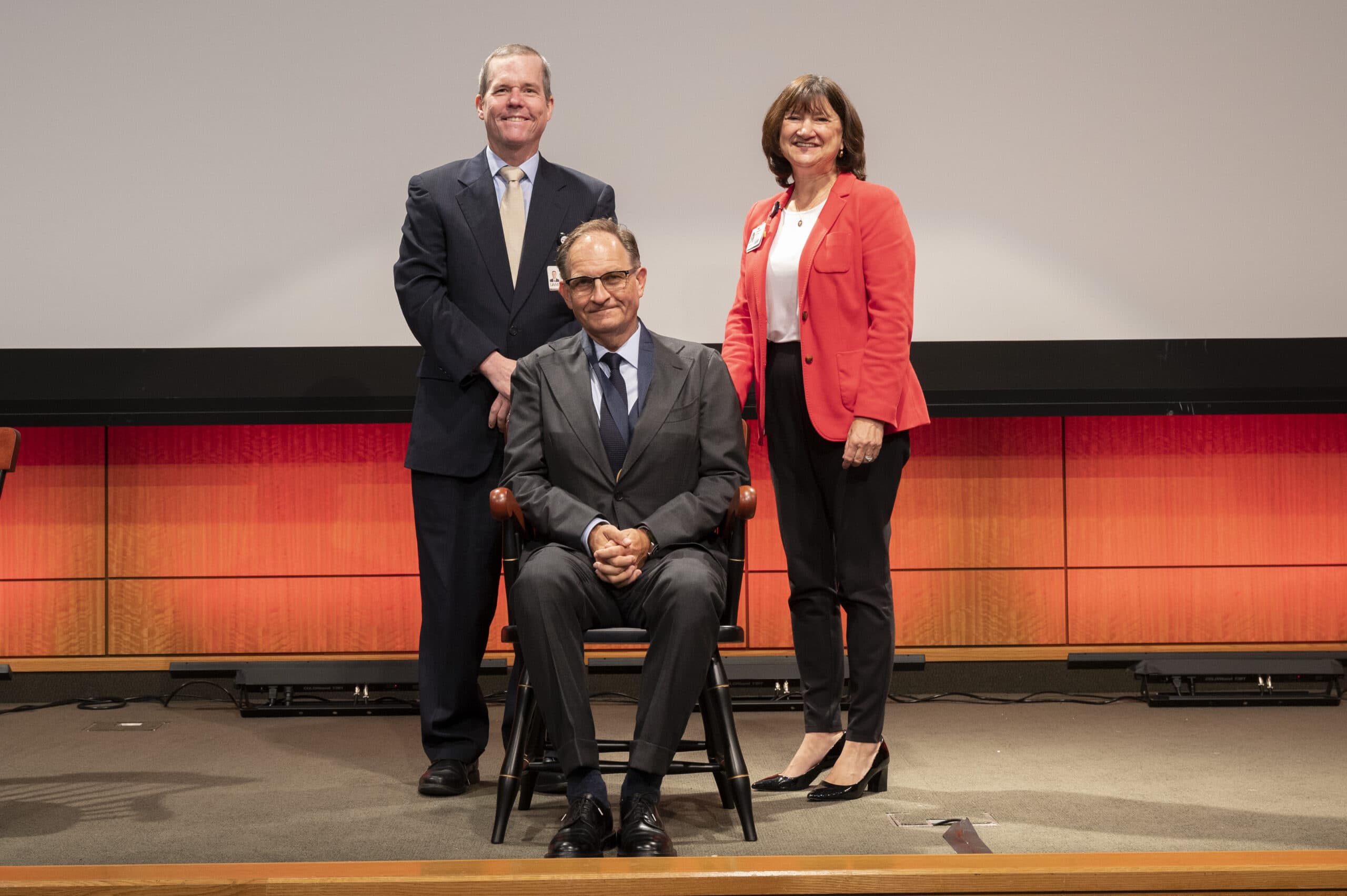
The University of Arkansas for Medical Sciences (UAMS) College of Medicine invested Susan S. Smyth, M.D., Ph.D., UAMS executive vice chancellor and College of Medicine dean, in the Arkansas Medical Society Distinguished Dean’s Chair during a Nov. 9 ceremony.

“Serving as the Dean of the College of Medicine is an incredible honor, and today I am privileged to be invested in the Arkansas Medical Society Distinguished Dean’s Chair,” said Smyth. “I am particularly appreciative of the confidence that the chancellor and provost placed in me and the opportunity to further the vision of UAMS to make Arkansas a healthier state in partnership with eminent organizations such as the Arkansas Medical Society.”

Smyth is a nationally known cardiologist and translational scientist who brings extensive experience in educational, clinical and research program leadership. Since joining UAMS in June 2021, Smyth has launched and expanded numerous initiatives to improve health in Arkansas while also increasing the College of Medicine’s national standings in primary care and other aspects of education, research and clinical care. She has made the pursuit of health equity, diversity and inclusion a top priority for the college.

UAMS Invests Andrew J. Morris, Ph.D., in Mehta/Stebbins Chair in Cardiovascular Research

By Andrew Vogler

The University of Arkansas for Medical Sciences (UAMS) College of Medicine invested Andrew J. Morris, Ph.D., professor in the Department of Pharmacology and Toxicology, in the Mehta/Stebbins Chair in Cardiovascular Research during a Nov. 9 ceremony.

“I am honored to have this chair, and as I learn more about UAMS, I am grateful for the opportunity to be part of its community and to contribute to its history,” said Morris. “I’ve been an independent researcher for almost 30 years, and I am lucky in that I’ve had a very rewarding career.”

Morris also serves as a research investigator at the Central Arkansas Veterans Healthcare System. His work is related to understanding interactions between genetic, behavioral and environmental risk factors for non-communicable diseases using multidisciplinary approaches that combine biochemical, molecular genetic and cell biological methods with preclinical models and population health studies.

Ammunition maker announces $42 million Little Rock plant

KUAR | By Daniel Breen

An Italian ammunition manufacturer is expanding its presence in central Arkansas. Fiocchi of America announced Tuesday it’s investing $42 million in a new facility at the Port of Little Rock.

It’s the second manufacturing facility for the company in the city, with the first opening in far southeast Little Rock in 2020. The new plant is expected to create 120 jobs.

Speaking to reporters on the future 281-acre site of the facility, Arkansas Commerce Secretary Mike Preston credited Gov. Asa Hutchinson with fostering a business-friendly environment in the state.

https://www.ualrpublicradio.org/local-regional-news/2022-11-15/ammunition-maker-announces-42-million-little-rock-plant

Daniel Breen/KUAR News

Arkansas Gov. Asa Hutchinson greets Fiocchi Munizioni CEO Maurizio Negro at the site of a future ammunition plant at the Port of Little Rock Tuesday.

Walmart to pay $3.1 billion to settle opioid litigation

KUAR | By Kim Souza / Talk Business & Politics

Walmart has reached a settlement in litigation relating to the national opioid epidemic totaling $3.1 billion. The settlement will effectively resolve all opioid lawsuits by state, local and tribal governments, according to the retailer.

The hefty settlement dinged Walmart’s earnings per share by $1.11 in the third quarter, helping to drive a net loss of 66 cents per share for the retail giant. The deal also comes on the heels of settlements reached by competitors Walgreens and CVS last week totaling $10 billion.

“Walmart believes the settlement framework is in the best interest of all parties and will provide significant aid to communities across the country in the fight against the opioid crisis, with aid reaching state and local governments faster than any other nationwide opioid settlement to date, subject to satisfying all settlement requirements,” the company noted in the release.

https://www.ualrpublicradio.org/local-regional-news/2022-11-16/walmart-to-pay-3-1-billion-to-settle-opioid-litigation

./Walmart

The Arkansas-based company is the latest retailer to agree to a settlement over the dispensing of addictive opioid medications. Walmart had previously vowed to fight the litigation.

University of Arkansas board names Charles Robinson as Fayetteville chancellor

KUAR | By Paul Gatling/ Talk Business & Politics

The University of Arkansas System Board of Trustees has selected Charles Robinson as the chancellor of the Fayetteville campus. The vote was unanimous during the board’s regular meeting Wednesday in Monticello.

Robinson, the provost and executive vice chancellor for Academic and Student Affairs at the UA, has been interim chancellor since Aug. 16, 2021.

The University of Arkansas confirmed the board’s decision with a social media post on Wednesday morning. A public vote by the board was to be held on Friday on the Fayetteville campus to determine who will be the flagship university’s next chancellor. However, board chairman Cliff Gibson left open the possibility the issue could be resolved before then.

https://www.ualrpublicradio.org/local-regional-news/2022-11-16/university-of-arkansas-board-names-charles-robinson-as-fayetteville-chancellor

Russell Cothren/University Of Arkansas

Interim Chancellor Charles Robinson delivering the annual State of the University on Oct. 12, 2021. On Wednesday, he was chosen by the UA System Board of Trustees to become chancellor of the flagship Fayetteville campus.

Medical professionals encourage vaccinations as influenza and COVID cases predicted to spike

by George Jared (gjared@talkbusiness.net)

Dr. Christine Hartford, an assistant professor of clinical medicine at New York Institute of Technology College of Osteopathic Medicine at Arkansas State University, is warning local residents to get the influenza vaccine.

She works as a pediatric hospitalist at St. Bernards Medical Center and during the last week or more she’s noticed a significant uptick in respiratory illnesses at the hospital.

“I worked two hospital shifts last week and every single pediatric admission I had was a respiratory virus infection,” Hartford said. “They were all either RSV (Respiratory Syncytial Virus), flu or both. We anticipate an increase in COVID infections over the next couple of weeks as well. All things combined, it makes it as important as ever to get vaccinated to protect yourself and others.”

https://talkbusiness.net/2022/11/medical-professionals-encourage-vaccinations-as-influenza-and-covid-cases-predicted-to-spike/

Gasoline prices fall before Thanksgiving; crude oil prices remain stable

by Jeff Della Rosa (JDellaRosa@nwabj.com)

According to the AAA, Arkansas motorists are paying the fourth-lowest average price for gasoline amid flat crude oil prices ahead of a long holiday weekend.

In Arkansas, the average price is $3.20 for a gallon of regular unleaded fuel, which is 7 cents less compared to last week and 15 cents more than this time last year. Nationwide, motorists are paying an average of $3.72 per gallon of regular unleaded, which is 8 cents less than last week and 31 cents more than this time last year.

The Arkansas average has reached a two-month low the week before 48.7 million Americans are expected to drive at least 50 miles for leisure this Thanksgiving. Prices have been trending down, and the decline can be attributed to the global cost of crude oil, the key ingredient of gasoline. The price of crude oil has flattened to a range of about $85 to $92 per barrel for several weeks.

https://talkbusiness.net/2022/11/gasoline-prices-fall-before-thanksgiving-crude-oil-prices-remain-stable/

Thanksgiving dinner costs on average up more than 20%

by Kim Souza (ksouza@talkbusiness.net)

Consumers should not be surprised that a Thanksgiving dinner for a party of 10 will cost more than 20% this year thanks to inflation, fueled in part by higher prices charged by food companies.

The overall cost is roughly $6.50 per person or $64.05 this year for a traditional Thanksgiving day turkey dinner, up from $53.31 last year. According to the American Farm Bureau (AFB) survey, higher prices are not dampening plans to celebrate. Families who will also add ham, russet potatoes and green beans to their overall meal will spend on average $81.30, a gain of 18% over last year’s average price of $68.72, AFB reported.

“Spending time with family and friends at Thanksgiving remains important for many Americans, and this year the cost of the meal is also top of mind,” according to Roger Cryan, AFB chief economist.

https://talkbusiness.net/2022/11/thanksgiving-dinner-costs-on-average-up-more-than-20/

Nucor, Nucor-Yamato Steel donate $1 million to Cold War Museum project

by George Jared (gjared@talkbusiness.net)

Nucor Steel Arkansas and Nucor-Yamato Steel Co. have each donated $500,000 to the Cold War Museum project in Blytheville. The $1 million donation will aid ongoing efforts to make the center a major Delta tourism destination by sharing the unique history of one of the most pivotal conflicts in history.

Nucor Steel Arkansas and Nucor-Yamato Steel each operate steel mills in Blytheville. A timetable for completing the project has not been set.

“Nucor is proud to support The National Cold War Center. Once complete, the center will be a treasure for residents and an attraction for people from all over the world,” said Jon Witherow, Vice President and General Manager of Nucor-Yamato Steel Company. “We succeed when Mississippi County succeeds, and we couldn’t be more excited to give back to our community by supporting the continued development of The National Cold War Center.”

https://talkbusiness.net/2022/11/nucor-nucor-yamato-steel-donate-1-million-to-cold-war-museum-project/

With GOP taking House majority, Rep. Westerman in line for committee chairmanship

by Roby Brock (roby@talkbusiness.net)

With Republicans taking control of the U.S. House of Representatives, U.S. Rep. Bruce Westerman, R-Hot Springs, is poised to lead the House Natural Resources Committee.

Westerman, who was first elected to Congress in 2014, is the ranking member on the committee. A forester and engineer by trade, he was re-elected earlier this month to his fifth term.

While there are still a handful of close House races to be called, Republicans have won 218 seats, enough to secure the majority. Democrats have presently been declared victors in 210 House seats. There are still seven races too close to call.

https://talkbusiness.net/2022/11/with-gop-taking-house-majority-rep-westerman-in-line-for-committee-chairmanship/

National Weather Service Winter Weather Briefing for Arkansas

We are still on track to seeing some wintry weather over parts of northern and western Arkansas late today and tonight. Rain will mix with and eventually changeover to all snow by early this evening, across the Ozark and Ouachita Mountains. Snow accumulations of one to two inches remain possible, especially in the highest elevations.

While this will be a quick hitting event, there may be minor travel impacts. Roads in some areas may become snow/slush covered, with icy patches on bridges and overpasses.

USDA funds Arkansas research on grain production greenhouse gas emissions

By John Lovett
U of A System Division of Agriculture

FAYETTEVILLE, Ark. — Most greenhouse gas emissions in commercial poultry operations are linked to feed production, and methods to reduce those emissions are the focus of a U.S. Department of Agriculture grant to the University of Arkansas System Division of Agriculture.

CLIMATE-SMART — Soybeans grow in a field at the Rice Research and Extension Center near Stuttgart. Soybean meal is one of the primary components of poultry feed. A new study will measure greenhouse gases produced in crops that go into poultry feed. (U of A System Division of Ag photo by John Lovett)

The Arkansas Agricultural Experiment Station, the research arm of the Division of Agriculture, has been tapped to conduct measurements of greenhouse gas emissions on farms that grow the two main components of poultry feed — corn and soybean. The measurements will be used to quantify the differences in practices such as conventional tillage and conservation tillage to develop value-added, “climate-smart” products.

Kris Brye, University Professor of applied soil physics and pedology with the Arkansas Agricultural Experiment Station, will lead the emissions measurements, and Mike Daniels, professor and soil and water conservation scientist with the Cooperative Extension Service, will lead an outreach and educational component of the grant.

The Division of Agriculture’s program includes plans for a monitoring and verification system of greenhouse gases that include carbon dioxide, methane and nitrous oxide. It will also evaluate local market opportunities for direct sale and tracking of grain to broiler operations.

Arkansas is third in the nation for production of chicken broilers. The state harvested over 3 million acres in soybeans and 830,000 acres in corn for grain in 2021, according to the 2022 Arkansas Agriculture Profile. A 2020 life cycle assessment found that feed production contributed about 72 percent of greenhouse gas emissions associated with broiler production.

As part of the USDA’s Partnership for Climate-SMART Commodities program, the Division of Agriculture will be funded for at least three years to demonstrate the viability of growing more climate-friendly grains for sale to poultry feed operations. SMART stands for “Scaling Mechanisms for Agriculture’s Regenerative Transformation.”

Support for the project includes funding to create a companion education program with post-doctoral and graduate students, as well as a Climate-SMART instructor and a technician in the Division of Agriculture’s crop, soil and environmental sciences department.

The project will take place on selected Arkansas Discovery Farms and other private landowners’ fields that produce soybean and corn crops. The Division of Agriculture’s Discovery Farms program engages farmers in conservation through collaborative research. There are about a dozen farms in Arkansas associated with the Discovery Farms program.

Mississippi State University is the lead partner in the grant titled “Developing Climate-Smart Grain Markets in the Mid-South through Diverse Partnerships and a Farming-Systems Approach to Practice Integration to Reduce Greenhouse Gas Emissions.” Other partners include Alcorn State University in Mississippi, Southern Ag Services Inc., and Conservation Solutions LLC.

The USDA states that the Climate-SMART program will reach across 28 states and aim to “catalyze a self-sustaining, market-based network to broaden farmer access, scale adoption of climate-smart practices, and sustainably produce grain and dairy commodities with verified and quantified climate benefits.”

The Division of Agriculture will also take part in these projects funded through the USDA Partnerships for Climate-SMART Commodities program: 

  • Climate-Smart Cotton through a Sustainable & Innovative Supply Chain Approach, with Bill Robertson, professor and extension agronomist.

  • Climate-Smart Grasslands: The Root of Agriculture Carbon Markets, with Dirk Philipp, associate professor of animal science

To learn more about Division of Agriculture research, visit the Arkansas Agricultural Experiment Station website: https://aaes.uada.edu. Follow on Twitter at @ArkAgResearch. To learn more about the Division of Agriculture, visit https://uada.edu/. Follow us on Twitter at @AgInArk. To learn about extension programs in Arkansas, contact your local Cooperative Extension Service agent or visit www.uaex.uada.edu.

UAMS, Washington Regional Team Up for New Internal Medicine Residency Program in Northwest Arkansas

By David Wise

FAYETTEVILLE — The University of Arkansas for Medical Sciences (UAMS) and Washington Regional Medical Center launched a new internal medicine residency program that will bring eight new medical residents to Northwest Arkansas each year.

The UAMS-Washington Regional Internal Medicine Program is a community-based, academic-affiliated residency program rooted in training skilled internists. The curriculum consists of clinical experiences at Washington Regional, the region’s largest hospital, with access to every internal medicine subspecialty, a dedicated research-training curriculum and a comprehensive didactic curriculum.

The two medical institutions are actively recruiting for the first residency class, which will start in July 2023. The program is accredited through the Accreditation Council for Graduate Medical Education (ACGME).

https://news.uams.edu/2022/11/07/uams-washington-regional-team-up-for-new-internal-medicine-residency-program-in-northwest-arkansas/

Arkansas governor-elect Sanders announces transition team

KUAR | By Talk Business & Politics Staff

Attorney Kevin Crass will lead the transition team for Governor-elect Sarah Sanders, she announced in a statement on Thursday.

Crass is a senior partner in the Litigation Practice Group at Friday, Eldredge & Clark, LLP in Little Rock. He will serve as executive director of the transition, which includes nine other staff members.

“Kevin Crass has been a trusted friend and accomplished attorney for many years, and I am pleased to announce that he has agreed to serve as the Executive Director of the transition,” Sanders said. “Kevin brings significant knowledge and relationships to this role, and I have complete confidence in his abilities to help me be ready to assume the role of governor on day one and begin taking our state to the top. Kevin will also be assisted in this important work by several individuals who were a part of our historic victory on election night and who bring their own incredible experiences and expertise. There is a lot of work to do and a short time to do it, but this team will get it done.”

https://www.ualrpublicradio.org/local-regional-news/2022-11-10/arkansas-governor-elect-sanders-announces-transition-team

Michael Hibblen/KUAR News

Republican Sarah Huckabee Sanders submitting paperwork on Feb. 22, 2022 to run for governor of Arkansas.

Arkansas Senate picks Hester as leader, draws committee assignments

KUAR | By Roby Brock / Talk Business & Politics

The Arkansas State Senate drew committee assignments, revised a rule, punished a member, and officially selected its new leader on Thursday.

Sen. Bart Hester, R-Cave Springs, who will be a guest on this week’s edition of Talk Business & Politics, was voted in as Senate President Pro Tempore for the 94th Arkansas General Assembly, which begins in January.

“It feels really good to get a vote of confidence from your colleagues. And now it feels pretty heavy to represent them, and hopefully, the Senate will do a great job these next two years,” Hester told TB&P.

https://www.ualrpublicradio.org/local-regional-news/2022-11-11/arkansas-senate-picks-hester-as-leader-draws-committee-assignments

Michael Hibblen/KUAR News

Steps leading up to the Arkansas Senate chamber in the state Capitol.