Arkansas News

Walmart tries again to improve beef offering in stores

by Kim Souza (ksouza@talkbusiness.net)

Walmart has over the years made several attempts to improve the beef quality it sells. Last week, the retail giant invested a minority stake in Sustainable Beef, a rancher and beef producer-owned company that sells Angus beef into retail.

Walmart did not disclose the amount of the investment but said the deal will increase the amount of quality Angus beef it sells.

The deal calls for Sustainable Beef to open a processing center in North Platte, Neb. They will break ground next month and create about 800 jobs in that community. Lehr said Walmart will get a majority of the beef produced at the new facility which is expected to open in late 2024. With the investment, Walmart also gets a board seat at Sustainable Beef.

https://talkbusiness.net/2022/09/walmart-tries-again-to-improve-beef-offering-in-stores/

Agricultural land values up 4.7% in Arkansas

by George Jared (gjared@talkbusiness.net)

Inflation has impacted consumers for the better part of a year, but it has also led to increased cropland acre values, according to the U.S. Department of Agriculture. The USDA’s National Agricultural Statistics Service “2022 Land Values Summary” indicates that agriculture acre values in Arkansas are up 4.7% to $3,550 per acre.

Values in the Natural State are slightly lower than the national average. The average farm acre in the U.S. is valued at $3,800, up more than 12% from the previous year. California led the nation with an agri acre value of $12,000, the report states. New Mexico has the least valuable agri acres with an average value of $610 per acre.

Scott Stiles, extension economist for the University of Arkansas System Division of Agriculture, said farmland values in Arkansas have increased four consecutive years, though the rise between the 2021 report and this year’s wasn’t as high as the national average.

https://talkbusiness.net/2022/09/agricultural-land-values-up-4-7-in-arkansas/

Weekly Update from State Representative

Labor Day is a time to reflect on the social and economic achievements of American workers. The labor force in Arkansas and its forecasted potential is worth celebrating. 

The most recent report from the Arkansas Division of Workforce Services (ADWS) shows unemployment in our state at 3.2 percent. The jobless rate nationwide stands at 3.5 percent. 

According to an ADWS report titled Long-Term Industry and Occupational Projections, Arkansas will add 124,387 new jobs by the year 2030. That’s a 9.05% increase.  

Goods-Producing industries are expected to add 14,340 new jobs, while the Services-Providing industries should see most of the growth, with 114,345 new jobs being added. 

Food Preparation and Serving Related Occupations is estimated to add 21,219 jobs during the projection period, a 21.11 percent increase, making the major group the top and fastest growing in the state. Restaurant cooks are slated to be the second fastest growing occupation in the major group, increasing employment by 51.77 percent. 

Nurse Practitioners are slated to be the fastest growing occupation statewide, increasing by 54.04 percent. Healthcare Support Occupations is projected to add 11,271 jobs by 2030 and be the second fastest growing major group, increasing the workforce by 20.13 percent. 

Fastest growing occupations by expected percentage changes also include fundraisers, occupational therapy assistants, speech pathologists, and operation research analysts. 

When it comes to the highest paying jobs in the state, Obstetricians and Gynecologists topped the list with an annual salary of $258,940. Anesthesiologists, with an average annual salary of $234,970, ranked second on the Occupations Paying the Most list. Surgeons, physicians, and pediatricians are also in the top 5. 

Whether you are searching for the right job or the right person for the job, the Division of Workforce Services can help. ADWS offers a variety of services, like job search and résumé assistance, career counseling, workforce readiness training, and referrals to employers who are hiring. Learn about the labor market and the occupations that are most in-demand in your area by visiting www.dws.arkansas.gov .

Jeff Tollett of Four States Fiber at De Queen Lions Club

Jeff Tollett, Manager of the Four States Fiber Outside Fiber Plant, updated De Queen Lions Club at Tuesday's noon meeting. As part of the Diamond State network, a coalition of 13 Arkansas Electric Cooperatives, the wholesale broadband provider in the state aims to provide high-speed internet access to 1.25 million rural Arkansans. Southwest Arkansas Electric Cooperative was awarded $53 million in FCC funding to provide high-speed fiber service to over 26,000 homes in Arkansas, Texas, Oklahoma, and Louisiana. The benefits include 100 megabits per second upload/download for $49.95/month and 1 gigabit per second upload/download speeds for $79.95. Tollett also talked about the service reliability focus of Four States Fiber.

ATTORNEY GENERAL ALERT: DON’T GET TACKLED BY A TICKET CON

LITTLE ROCK – As mild temperatures arrive, so do fall sports. When Arkansans decide to take in a live football game at any of our great institutions, it is important they don’t get tackled into buying fake tickets. Oftentimes scammers will try to take advantage of fans by selling tickets that are fake, duplicates or don’t exist at all. They may use high-pressure-sales tactics to scam Arkansans in to buying tickets using deals that seem unbelievable and many times are.

“Enjoying sports is a cherished fall tradition in Arkansas,” said Attorney General Leslie Rutledge. “Everyone deserves to cheer on a favorite team without worrying about trick plays from scammers trying to steal cash.”

Arkansas Attorney General Leslie Rutledge issued the following tips to help Arkansans protect themselves when looking to buy game tickets during the upcoming football season.

  1. Research the seller or broker with the Better Business Bureau and ensure it is a member of the National Association of Ticket Brokers.

  2. A legitimate ticket broker will offer a refund policy. Only buy tickets from a reseller that provides clear details about the terms of the transaction.

  3. Always use a credit card to make a ticket purchase because credit card laws provide buyers with some recourse if the tickets are fraudulent.

  4. Check the seats before purchasing. Ask for section, row and seat numbers to avoid obstructed views and purchasing tickets that do not exist.

  5. Stick with well-known ticket sellers who offer guarantees and policies that protect buyers and have the ability to investigate and restrict accounts of merchants who violate the policies.

  6. If a deal seems too good to be true, it probably is. Refuse to be rushed. Scam artists often try to hurry prospective buyers into making a decision.

According to AARP, nearly 5 million consumers receive fraudulent concert, sporting event and theme park tickets each year.  We can all do our part by ensuring our neighbors, friends, and families are educated on the deceptive practices of scammers and ways to avoid them.

Consumers who think they may have purchased a counterfeit ticket can contact the National Association of Ticket Brokers at 630-510-4594 or the Arkansas Attorney General’s Public Protection Department.

For more information on other tips to avoid being scammed and other consumer-related issues, visit ArkansasAG.gov or call the Arkansas Attorney General’s Office at 800-482-8982.

Lawmaker’s Staff Visits UAMS to Learn More about Research of Veterans’ Exposure to Burn Pits

By David Robinson

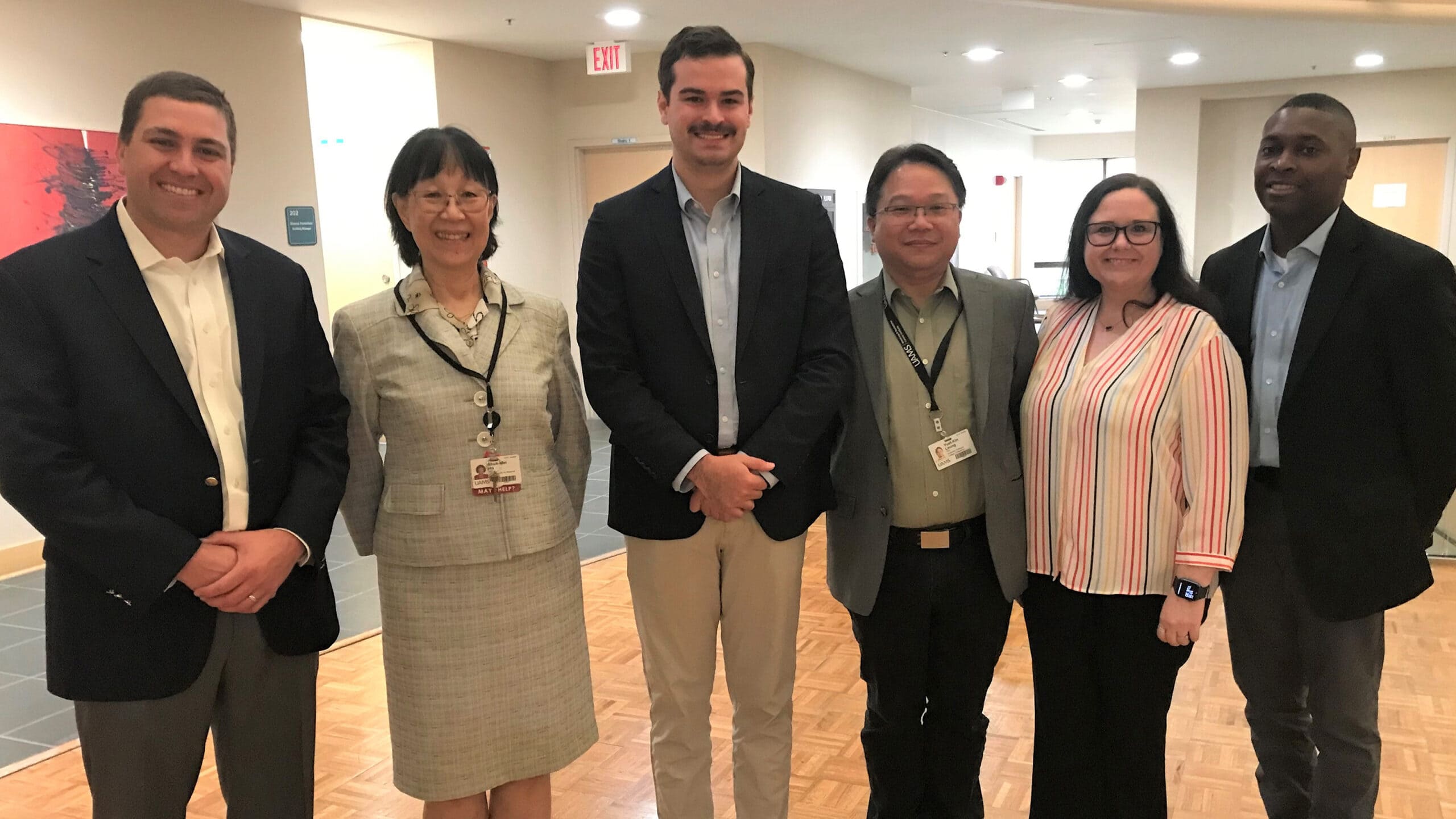
UAMS’ Shuk-Mei Ho, Ph.D., provided an overview of the burn pit exposure research to members of Sen. John Boozman’s staff.

During a recent visit with University of Arkansas for Medical Sciences (UAMS) researchers, Patrick McGuigan from U.S. Sen. John Boozman’s office said the research team’s newly funded project will help ensure that veterans who were exposed to open burn pits receive appropriate health care.

Shuk-Mei Ho, Ph.D., UAMS vice chancellor for Research and Innovation and co-principal investigator on the study, presented an overview of the project and answered questions from McGuigan and two other staff members from Boozman’s office.

“Senator Boozman greatly appreciates the research being conducted at UAMS and the Central Arkansas Veterans Healthcare System,” said McGuigan, Boozman’s military legislative assistant and a veteran who served in both Iraq and Afghanistan as a U.S. Army field artillery officer.

https://news.uams.edu/2022/09/02/lawmakers-staff-visits-uams-to-learn-more-about-research-of-veterans-exposure-to-burn-pits/

Registration opens for Walk Across Arkansas Fall 2022

By Rebekah Hall
U of A System Division of Agriculture

LITTLE ROCK — As fall arrives and busy schedules resume for many families, it’s important to carve out time for exercise. Walk Across Arkansas, an eight-week, group-based exercise program supported by the Cooperative Extension Service, is designed to help Arkansans get active.

GET MOVING — Walk Across Arkansas encourages Arkansans to log their physical activity minutes during competitions in the spring and fall. (Division of Agriculture photo.)

The free program is offered each spring and fall by the Cooperative Extension Service, part of the University of Arkansas System Division of Agriculture. Participants record the total number of minutes spent being physically active each day. Any moderate to vigorous physical activity that boosts the heart rate counts – not just walking. Teams can register and log their exercise minutes at walk.uada.edu/walk/. Registration for the fall 2022 session opened Aug. 29. The competition begins on Sept. 12 and ends on Nov. 6.

Teams can consist of one person to 30 people. Heather Wingo, extension health program associate for the Division of Agriculture, suggested that teams consist of three to eight participants. Wingo said past Walk Across Arkansas participants have reported many health benefits from the program, including improved strength and stamina as well as lower stress levels.

“The benefits of participating in Walk Across Arkansas include not only improved physical health but also improved mental health,” Wingo said. “Program participants are encouraged to explore the Natural State while practicing healthy mind and body habits.”

In the Spring 2022 Walk Across Arkansas session, 87 teams, consisting of 359 people from 37 of the state’s 75 counties, participated. Together, they reported 776,360 physical activity minutes.

Anyone can participate in the Walk Across Arkansas program. Division of Agriculture employees must use a personal email address, not their work email address, to register. Visit walk.uada.edu/walk/ to learn more and register or talk to your local county extension agent.

To learn about extension programs in Arkansas, contact your local Cooperative Extension Service agent or visit www.uaex.uada.edu. Follow us on Twitter and Instagram at @AR_Extension. To learn more about Division of Agriculture research, visit the Arkansas Agricultural Experiment Station website: https://aaes.uada.edu. Follow on Twitter at @ArkAgResearch. To learn more about the Division of Agriculture, visit https://uada.edu/. Follow us on Twitter at @AgInArk.

RUTLEDGE HOSTS 3RD ANNUAL ELDER ABUSE CONFERENCE

LITTLE ROCK—Arkansas Attorney General Leslie Rutledge hosted today the 3rd annual statewide Elder Abuse Conference at The Church at Rock Creek in Little Rock. More than 150 attendees heard from the experts about issues faced by loved ones and the providers who assist seniors and adults with developmental disabilities. 

“Too many times our seniors have experienced despicable abuse,” said Attorney General Leslie Rutledge. “It is my office’s responsibility to protect the state’s elderly and disabled population from abuse, neglect and financial exploitation–a duty I do not take lightly.”

The conference covered a broad range of topics including elder maltreatment, senior financial abuse, prescription drug abuse by caregivers and tools for the prevention of elder abuse. Attorney General Leslie Rutledge who keynoted the Summit, launched the event and training in 2020 after the Office’s Medicaid Fraud Control Unit (MFCU) continued to experience record numbers of complaints, arrests and convictions. According to the U.S. Department of Health and Human Services, MFCUs nationwide recovered over $1.7 billion in payments illegally claimed by providers in 2021.

Medicaid fraud occurs when Medicaid providers use the Medicaid program to obtain money to which they are not entitled. To report Medicaid fraud, abuse or neglect in nursing homes or Social Security disability fraud, call the Attorney General’s Medicaid fraud hotline at (866) 810-0016 or submit a complaint online.

Additional trainings offered by the Attorney General’s Office may be located on the website.

UAMS, AmeriCorps Announces Food Security Initiative in Arkansas

By David Wise

WASHINGTON, D.C. – AmeriCorps, the federal agency for national service and volunteerism, announced more than $255,000 in American Rescue Plan grant funding to the University of Arkansas for Medical Sciences as part of the AmeriCorps VISTA program’s food security initiative over the next three years.

The AmeriCorps VISTA initiative, launched in 2020, is a comprehensive and collaborative approach to end hunger which affects one in eight Americans and more than 400,000 Arkansans. AmeriCorps has awarded over $2 million in grants to organizations addressing the impact of hunger in their state during the pandemic.

The UAMS Office of Community Health & Research collaborates with Arkansas organizations who serve diverse food-insecure populations. Together with national and local experts, AmeriCorps and UAMS will work to improve the local food system.

https://news.uams.edu/2022/08/25/uams-americorps-announces-food-security-initiative-in-arkansas/

Grants from Walmart Foundation, Alice L. Walton Foundation to Support Double Your Dollars Food Assistance Program

By Andrew Vogler

LITTLE ROCK — The University of Arkansas for Medical Sciences (UAMS) received grants from the Walmart Foundation, $250,000, and the Alice L. Walton Foundation, $100,000, to support the Northwest Arkansas (NWA) Farmers’ Market Alliance’s Double Your Dollars program, an initiative that provides residents access to affordable, healthy foods at farmers markets.

Created in 2012 to address food insecurity of low-income residents in Northwest Arkansas, the Double Your Dollars program provides recipients of Supplemental Nutrition Assistance Program (SNAP) and the Senior Farmers Market Nutrition Program (SFMNP) vouchers with one-to-one dollar matched tokens for purchasing healthy, locally grown food at participating farmers markets. In 2020, the program was expanded to accept Pandemic SNAP assistance.

“Increasing access to healthier food is critical for the well-being of communities,” said Rachel Spencer, senior manager of strategic initiatives at Walmart.org. “The Double Your Dollars program helps connect people with the nutritious foods they need to thrive, and we’re excited to support this program.”

https://news.uams.edu/2022/09/01/uams-receives-350000-in-grants-from-walmart-foundation-alice-l-walton-foundation-to-support-double-your-dollars-food-assistance-program/

ACLU pleased with appeals court decision on transgender healthcare

KUAR | By Josie Lenora

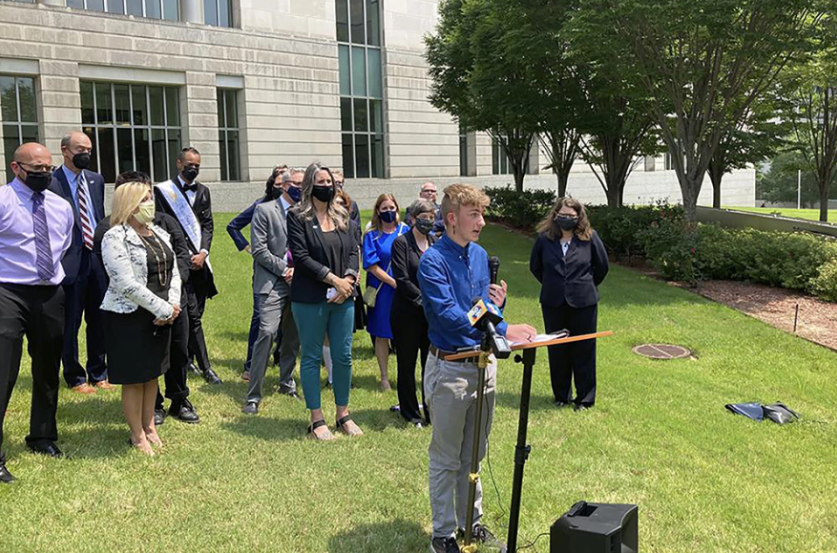
The American Civil Liberties Union is preparing for a lawsuit to go to trial challenging an Arkansas law banning gender-affirming healthcare for children. The suit was filed on behalf of the families of four transgender children and two doctors.

Last week, a three-judge panel of the 8th U.S. Circuit Court of Appeals upheld a judge’s decision blocking the law from going into effect until the lawsuit could be heard. Attorney General Leslie Rutledge is asking the full 8th Circuit Court of Appeals to reconsider the decision.

Holly Dickson, executive director of the ACLU of Arkansas, says she is confident they will prevail at trial.

https://www.ualrpublicradio.org/local-regional-news/2022-09-02/aclu-pleased-with-appeals-court-decision-on-transgender-healthcare

Report: Hay and pasture land losses could hit $100 million

KUAR | By George Jared / Talk Business & Politics

The economic impact of a drought that impacted Arkansas for much of the summer could approach $100 million in losses when it comes to hay and pasture field forage losses, according to a report by the Fryar Risk Management Center of Excellence. At least 20 counties in Arkansas have been designated as disaster areas due to drought, according to the U.S. Department of Agriculture.

About 75% of hay and other pasture fields in Arkansas are deemed in poor or very poor condition, the USDA’s Crop Progress report in August indicated. Arkansas livestock farmers use pasture lands to feed their animals during the spring, summer and fall. Many cut hay to feed their livestock during the winter.

“Based on the 2017 U.S. Agriculture Census, Arkansas has 3.189 million acres of permanent pasture land. Assuming changes in acreage between 2017 and 2022 are negligible, 3.189 million acres is the basis for valuing forage production intended for grazing. The 2022 USDARMA county base value of forage production for grazing is $54.51/acre in Arkansas. This implies the total value of grazing acreage in Arkansas is $174 million,” the Fryar report states.

https://www.ualrpublicradio.org/local-regional-news/2022-08-30/report-hay-and-pasture-land-losses-could-hit-100-million

Group pushing for recreational marijuana in Arkansas releases first TV ad

by Marine Glisovic (msglisovic@sbgtv.com)

A new TV ad pushing for recreational marijuana is set to hit the airwaves on Wednesday (Aug. 31).

Responsible Growth Arkansas (RGA) is highlighting where some of the taxes derived from recreational cannabis sales will go in this new ad.

Whether Arkansans will see a recreational marijuana use question on the November ballot is yet to be determined as it is still being reviewed by the Arkansas Supreme Court. The State Board of Election Commissioners denied certification of the ballot title, but an appeal from the group’s supporters is being heard by the state’s high court. The court conditionally certified the measure to be on the November ballot while it decides whether the votes will count.

https://talkbusiness.net/2022/08/group-pushing-for-recreational-marijuana-in-arkansas-releases-first-tv-ad/

Sales tax gains push Arkansas tax revenue up 4.4% in August report

by Talk Business & Politics staff (staff2@talkbusiness.net)

Arkansas tax revenue in the first two months of the fiscal year (July-August) is $1.23 billion, up 3.5% thanks in large part to an 8.5% increase in sales and use tax collections. The year-to-date tax revenue is also 3.3% above the budget forecast.

After ending the previous fiscal year in June with a $1.62 billion surplus, the surplus after the first two fiscal months is 46 million, according to Friday’s (Sept. 2) report from the Arkansas Department of Finance and Administration (DFA).

Individual income tax revenue in the first two months was $518.5 million, up 2.3% compared to the same period in 2021, and 1% above the budget forecast. Sales and use tax revenue in the first two months was $560.5 million, up 8.5% compared with the same period in 2021 and up 6.9% above the forecast. Corporate income tax revenue was $42.1 million, down $9 million compared to the same period in 2021, and 0.5% below the forecast.

https://talkbusiness.net/2022/09/sales-tax-gains-push-arkansas-tax-revenue-up-4-4-in-august-report/

Pre-Labor Day gasoline prices highest since 2014

by Jeff Della Rosa (JDellaRosa@nwabj.com)

Headed into Labor Day weekend, retail gasoline prices have been the highest since 2014, but Arkansas has the lowest gasoline prices in the United States, according to recent reports.

On Aug. 29, the average prices in the United States were $3.83 per gallon, 69 cents per gallon, or 22%, higher than at the same time last year, according to the U.S. Energy Information Administration (EIA). On June 13, the prices reached a peak and have since fallen by $1.18 per gallon.

According to the AAA, Arkansas has the least expensive gas price average in the United States at $3.32 per gallon. The price is 7 cents less than last week but 48 cents more than last year.

https://talkbusiness.net/2022/09/pre-labor-day-gasoline-prices-highest-since-2014/

UA chancellor search zeroes in on 4 finalists, including interim chancellor Robinson

by Paul Gatling (pgatling@nwabj.com)

University of Arkansas System President Donald Bobbitt announced Friday (Sept. 2) four finalists to be the next chancellor for the UA campus in Fayetteville.

They are listed with their date of public forums:

  • Charles F. Robinson, Ph.D., interim chancellor, University of Arkansas, Fayetteville (Sept. 12)

  • Jay T. Akridge, Ph.D., provost and executive vice president for academic affairs, Purdue University (Sept. 14)

  • Daniel A. Reed, Ph.D., presidential professor of computational science, University of Utah (Sept. 16)

  • Cynthia Y. Young, Ph.D., founding dean of the College of Sciences, Clemson University (Sept. 19)

The finalists were selected with the help of a search committee chaired by Dr. Kim Needy, chair of the College of Engineering. According to a news release, the finalists will each participate in a public forum as a part of two-day visits to campus, including meetings with students, faculty, staff and university supporters.

https://talkbusiness.net/2022/09/ua-chancellor-search-zeroes-in-on-4-finalists-including-interim-chancellor-robinson/

Photo credit: Michael Barera

Researcher employs microorganisms to counter major disease affecting beef industry

By Fred Miller
U of A System Division of Agriculture

FAYETTEVILLE, Ark. — The little things living in a calf’s nose could be key to combating bovine respiratory disease, the single most costly illness affecting the beef industry.

MICROBIOMES — Jiangchao Zhao, associate professor of animal science, conducts research on the bovine respiratory microcbiome with an eye toward preventing or mitigating bovine respiratory disease in weaned calves. (U of A System Division of Agriculture photo by Fred Miller)

Jiangchao Zhao, associate professor of animal science at the Arkansas Agricultural Experiment Station, uses next-generation sequencing to identify the microorganisms populating the bovine nasal cavities, known as the respiratory microbiome. He has correlated those results with the presence or absence of bovine respiratory disease, also known as BRD, in calves to discover which microbiota benefit the animal’s health and which ones impair it.

The Agricultural Experiment Station is the research arm of the University of Arkansas System Division of Agriculture.

Costly disease

Zhao said BRD costs the beef industry as much as $2 billion per year, including animal death, reduction in feed efficiency and other ill effects, as well as for prevention and treatment costs. U.S. feedlots alone see up to $900 million in annual losses from BRD, according to an article, “Economic Effects of Bovine Respiratory Disease,” published in the Journal of Animal Science (https://bit.ly/3SWJRLg).

Feedlots, especially for calves that go straight there after weaning, present the greatest risk to the animals for acquiring BRD, Zhao said. More than 90 percent of large feedlots in the U.S. reported BRD as the most frequent disease, according to a report from the USDA’s National Animal Health Monitoring System in Fort Collins, Colorado.

“The calves are subjected to significant stress, going from weaning to shipping to the feedlot,” Zhao said. “Commingling with other animals adds to the risk. The first month at the feedlot is the highest period of vulnerability to the disease.”

Backgrounded calves, those that continue on pasture at a stocker operation after weaning, are less susceptible to BRD, Zhao said, but not immune. The animals are still under stress during transportation from the cow-calf farm to the backgrounding farm, which lowers their immune response when exposed to the disease.

Zhao said that backgrounding presents less stress and less exposure to BRD than going directly to a feedlot. “It’s a good practice. The calves develop healthier immune systems and are bigger and stronger when they finally go to the feedlot.”

However, more than half of U.S. calves go directly to feedlots after weaning, he said.

Microbiome correlation

Microbiomes are colonies of bacteria — good, bad or indifferent — that occupy cavities in animal bodies. Zhao and his research team investigate these microbiota in agricultural animals to determine how the populations affect the animals’ health.

In this study, funded by a four-year $400,000 grant from USDA’s National Institute of Food and Agriculture, Zhao is identifying microbiota species that correlate with occurrences of bovine respiratory disease in each animal.

Zhao’s research is being conducted in 30 calves at each of three Division of Agriculture research locations — the Milo J. Shult Agricultural Research and Extension Center in Fayetteville, the Southwest Research and Extension Center at Hope and the Livestock and Forestry Research Station near Batesville.

Zhao is collaborating on this research with animal science colleagues Beth Kegley and Jeremy Powell, Division of Agriculture statistician Jung Lee, and animal scientists John Richeson of West Texas A&M University and Sarah Capik of Texas A&M University.

“We’re working to understand the mechanisms of causation for the disease,” Zhao said.

BRD is almost always a co-infection, he said. A calf picks up a virus — not unlike humans catching a cold or flu — and then a pathogenic bacteria takes advantage of the animal’s compromised immune system.

“When you know what causes the illness,” Zhao said, “then you have a target for intervention.”

Using the next-generation sequencing, Zhao has been observing which genes are transcribed during a BRD infection, including genes both in the pathogen and in the animal’s immune system.

“Tracking the interaction between pathogen and host is very complicated, big data work,” Zhao said.

This study is combined with culturomics, Zhao said, to isolate both good and bad bugs from the bovine respiratory system. Microbiome samples from the swabs are spread onto petri dishes with different growth media and gases to simulate the respiratory system environment — a process known as “plating.” Then the bacterial colonies on the plates are analyzed for identification and characterization.

Zhao’s lab team has identified several potential probiotics based on big data analysis. Samantha Howe, a Ph.D. student in Zhao’s lab, was able to culture some of the bacteria. “She is working to verify the beneficial effects of these bugs to see if they can kill or inhibit the growth of pathogens,” Zhao said.

In follow up research, Zhao will feed those “good” bacteria back to the calves to see if they are able to stop or reverse a BRD infection.

This research could lead to the development of probiotic products that use the good bacteria as an intervention to cure or prevent BRD, Zhao said. Such products can be safer and more effective than antibiotics, to which bacteria can build resistance.

Advances in detection

In related research, Zhao has developed an easier method for detecting BRD or the pathogens that can lead to the disease.

The standard method for detecting BRD in sick or vulnerable cattle is to swab the nasopharyngeal cavity with a rhinostatics nasal swab. Zhao said the bovine nasopharyngeal cavity, the location of the respiratory microbiome, is very deep, reaching the entire length of the animal’s head to the top of the esophagus. Swabbing for a sample is a difficult procedure, and the cattle don’t much like it, either.

Zhao investigated the use of shorter swabs to sample the front of the calves’ nasal passage — the area immediately inside the nose. He was able to demonstrate that this easier method is as accurate as the standard method while causing far less discomfort to the animal. He is developing a test kit that beef producers can use in the field to collect samples that can be submitted to a lab for analysis.

In a second phase of the research, he wants to develop a self-test kit that uses a system similar to the now-familiar home test kits for COVID-19. After sampling, the swab is smeared on a prepared test paper that will indicate whether the animal is BRD positive or negative.

Such a test may be used to determine if a calf has a higher concentration of either the “bad” bacteria that may lead to BRD infection or of the “good” bacteria that help prevent it.

Being able to identify which animals are at higher or lower risk of infection means veterinarians can focus intervention on fewer animals, saving money and lowering the risk of developing antibiotic-resistant bacteria.

To learn more about Division of Agriculture research, visit the Arkansas Agricultural Experiment Station website: https://aaes.uada.edu/. Follow us on Twitter at @ArkAgResearch and on Instagram at @ArkAgResearch. To learn more about the Division of Agriculture, visit https://uada.edu/. Follow us on Twitter at @AgInArk.

RUTLEDGE JOINS COALITION SUPPORTING RELIGIOUS LIBERTY OF NAVY SEALS

LITTLE ROCK– Arkansas Attorney General Leslie Rutledge joined 21 attorneys general in filing an amicus brief before the U.S. Court of Appeals for the Fifth Circuit in support of the religious liberty of Navy SEALs seeking exemptions from the Biden Administration’s pursuit of universal COVID-19 vaccination requirements.

“The men and women of our armed forces have sworn to fight for our constitutional freedoms, including our religious freedoms. Now it is time we fight for theirs,” said Attorney General Leslie Rutledge. “The Biden Administration’s attempts to discount the religious beliefs of our servicemen contradict everything we stand for as Americans.”

The Biden Administration is urging the courts to defer to the executive branch regarding the vaccine mandate, even if it overrides constitutional, fundamental religious freedoms. The coalition argues that states have successfully balanced freedoms and sensitive state interests during the COVID-19 pandemic, and that Americans should be skeptical of the Biden Administration’s claims of broad legal authority.

The case has previously reached the Supreme Court of the United States. On an emergency motion, the Biden Administration asked the Court to partially stay an injunction against the vaccine mandate for the SEALs. The Supreme Court only allowed the requirements to remain if the mandates affected assignments, deployments or operational decisions. The case now continues in the Fifth Circuit.

The brief is led by Mississippi and signed on to by Attorneys General of Alabama, Alaska, Arizona, Arkansas, Florida, Indiana, Kansas, Kentucky, Louisiana, Missouri, Montana, Nebraska, New Hampshire, Oklahoma, South Carolina, Tennessee, Texas, Utah, Virginia, West Virginia and Wyoming in U.S. Navy SEALs 1-26 v. Biden, which can be found here.

Sevier County Judge, Greg Ray, passed away on Tuesday, August 30th, at age 61

Gregory Emmett Ray, Sr. age 61, a resident of De Queen, Arkansas died Tuesday, August 30, 2022 at his home.

Greg was born August 13, 1961 in De Queen, Arkansas. He was, and loved being, the Sevier County Judge. He was a Baptist and loved fishing, the Razorbacks and spending time with family.

He was preceded in death by his father, R.L Ray; two fathers in law, Tommy Jordan and Don Smith.

He is survived by his wife, Leslie Jordan Ray; one son and daughter-in-law, Emmett and Jennifer Ray; two granddaughters, Emma and Andi Kate Ray; his mother, Polly Ann Willis Ray Williams; one brother, Tony Bob Ray; one sister and brother-in-law, Melinda and Ricky Munn and a number of nieces and nephews.

Funeral services for Greg will be held at 10:00 a.m., Saturday, September 3, 2022 in the First Baptist Church in De Queen with George Frachiseur officiating. Burial will follow in West Otis Cemetery under the direction of Wilkerson Funeral Home in De Queen.

Family will receive friends from 5:00 p.m., to 7:00 p.m., Friday, September 2, 2022 at the funeral home.

You may leave a condolence online at www.wilkersonfuneralhomes.com

Relinda Ruth of UA Cossatot contributing to OER and OEN national events

Relinda Ruth of the UA Cossatot OER and Arkansas OEN

Our money-saving textbook policy is one aspect of a UA Cossatot educational experience that is different from many other colleges. Relinda Ruth not only heads up our Open Education Resources, but she is a recognized leader in the state in this field. Relinda was recently interviewed by the Open Education Network. That interview can be found at https://open.umn.edu/.../member-spotlight-arkansas...

Recently, the ACC joined the OEN. The OEN recently interviewed Relinda Ruth about Arkansas’s move toward OER and the ACC’s recent membership to the OEN. They published the interview on their blog- https://open.umn.edu/oen/blog-and-events 

As the Arkansas OEN leader, Ruth participated in a 3-hour synchronous Zoom session on Wednesday morning. The presenters for the train-the-trainer event were Meggie Mapes, Introductory Course Director at the University of Kansas, and Cheryl Casey, Open Education Librarian at the University of Arizona. 

There are 8 OEN delegates around the state, and institutions can select three individuals to serve as OER ambassadors. Arkansas can have 75 Open Educational Resource (OER) ambassadors among the ACC’s institutions. Ambassadors will be trained to bring expertise, mentorship, and best practices back to their member community. They will learn to facilitate workshops to engage and support faculty through a train-the-trainer event.